
UNITED NATIONS — Europe could put its industrial future at risk if policymakers do not ease up on hard-line climate measures and pay closer attention to voters’ economic concerns, Czech Environment Minister Igor Červený told INC News in an interview.
“If we don’t change direction, we will probably crush the industry,” Červený said during his first trip to the United Nations, where he spoke at the U.N. High-Level Political Forum on Sustainable Development.
Červený said European manufacturers are under growing strain, singling out the automotive industry as one of the sectors feeling the pressure most sharply, and cautioned that more companies are shifting production outside Europe.
His comments come as Europe wrestles with how to jump-start sluggish economic growth while still pursuing some of the world’s most ambitious climate goals. The issue also carries weight for the United States, Europe’s biggest trading partner, as Washington and Brussels continue to clash over energy strategy, industrial competitiveness and how quickly the global economy should move away from fossil fuels.
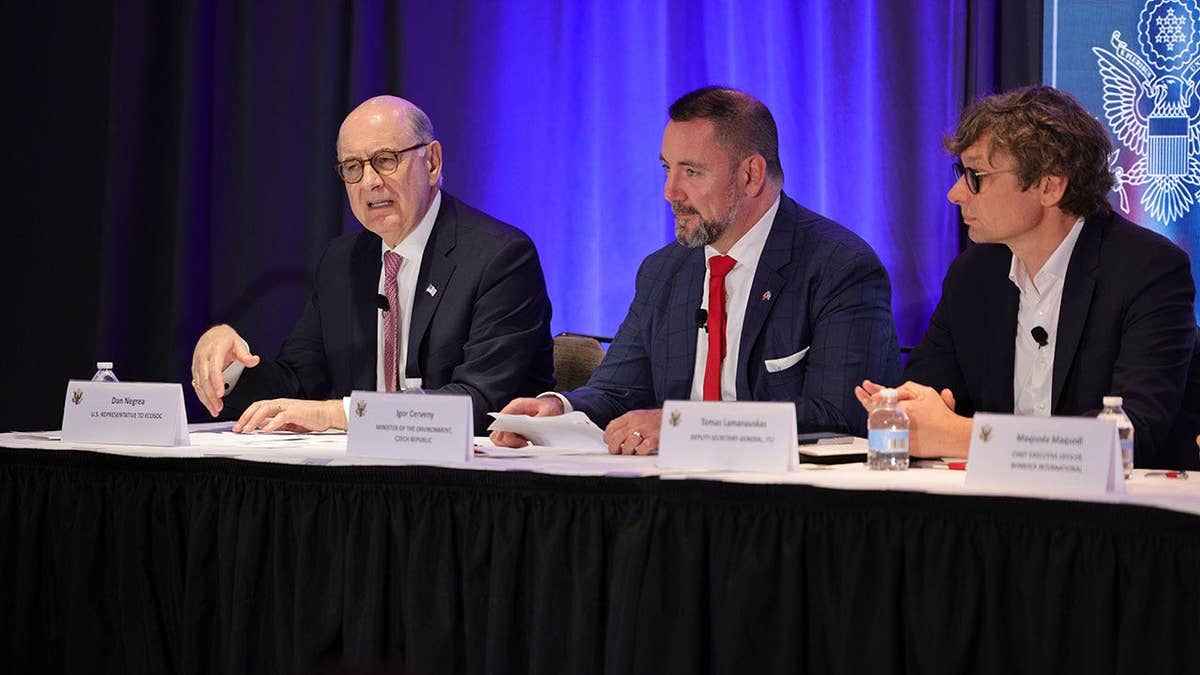
Ambassador Dan Negrea leads a discussion at the U.S. Mission to the United Nations’ “Trade Over Aid” forum in New York, alongside Czech Environment Minister Igor Cerveny and other participants. (Donald Conahan/ U.S. mission to the U.N.)
“If you look at the market right now, especially in European countries, the situation is very bad,” he said. “We see many companies leaving our territory and moving to China or to another part of the world.”
When businesses leave, Červený warned, governments are left with a double loss: fewer jobs for workers and less tax revenue to fund public services.
He said European leaders need to pursue a “win-win” path that advances environmental protection without sacrificing industrial strength, employment and long-term economic stability.
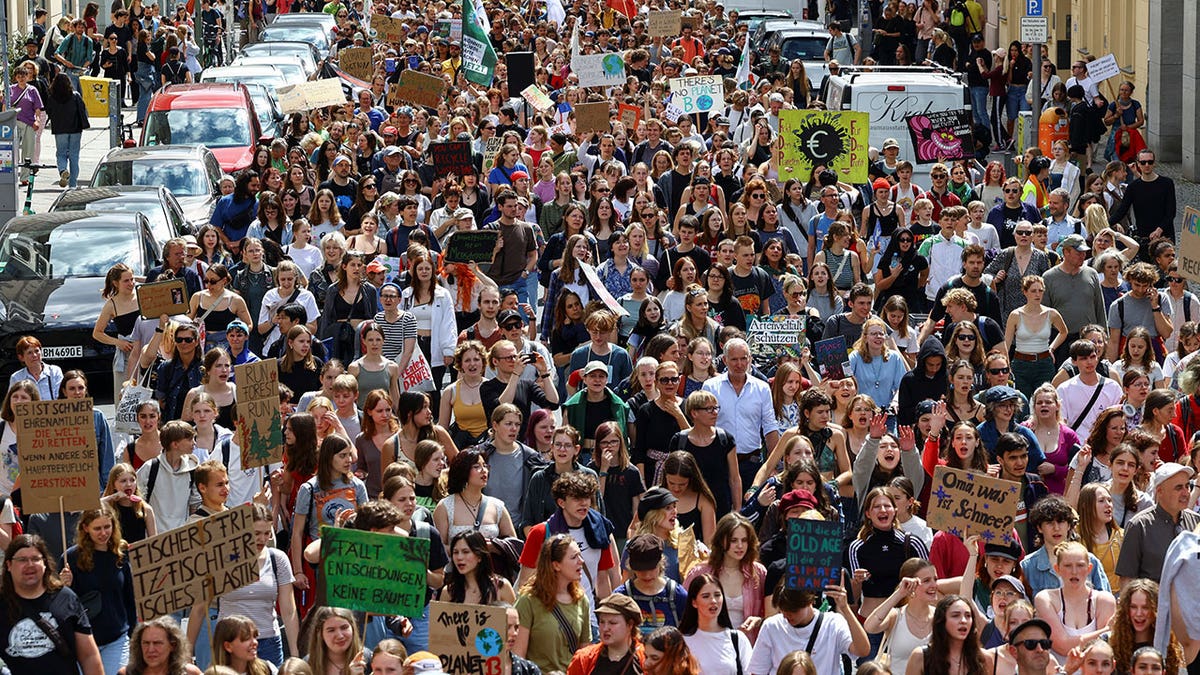
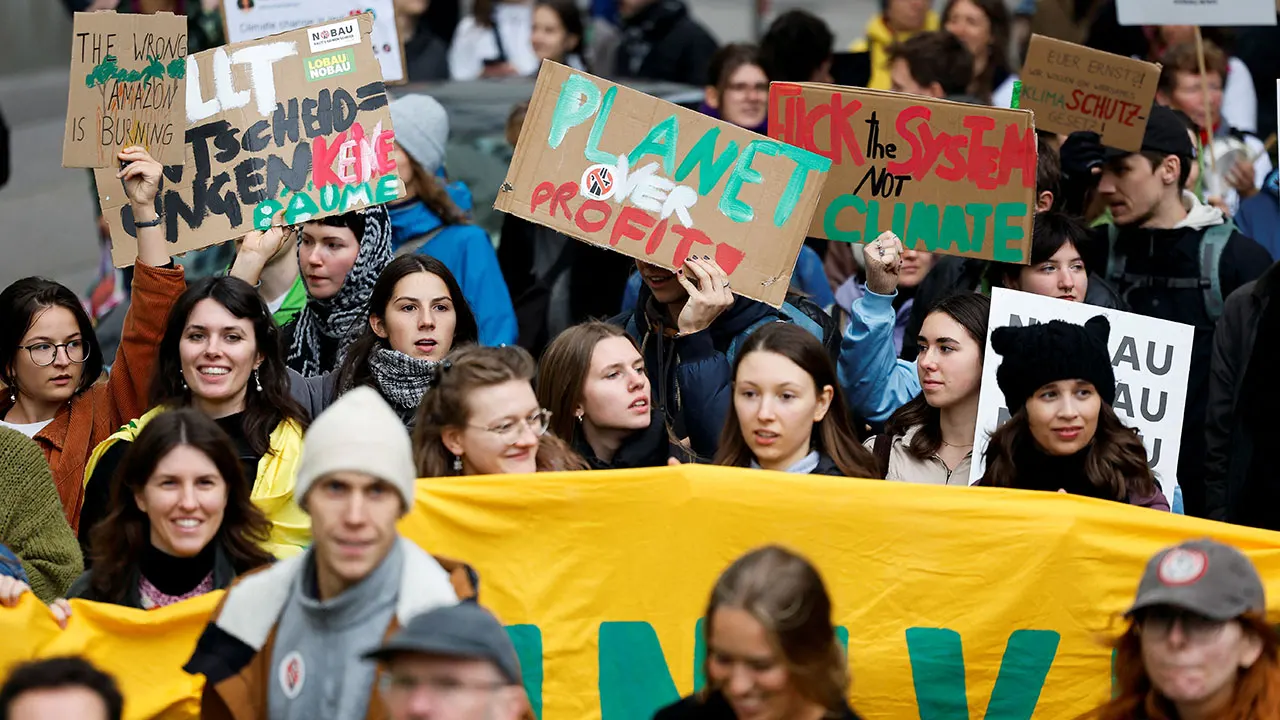
Protesters hold signs, as Fridays for Future demonstrate for a social and climate-friendly Europe, in Berlin, Germany, May 31, 2024. (Christian Mang/Reuters)
“We have to be very careful about this and be very reasonable and try to find some solution for both sides,” he said. “If you look from a higher perspective at European countries, most of them provided only the green ideology. And I think this is a bad way.”
Červený said resistance to the current approach was spreading beyond the Czech Republic, citing Poland, Slovakia, Hungary, Germany and some Scandinavian countries.
The Czech Republic has been among several European governments pressing Brussels to ease parts of the Green Deal, including by delaying the bloc’s new carbon market for buildings and road transport and seeking changes to emissions-trading rules that Prague argues are raising energy costs and weakening industrial competitiveness.
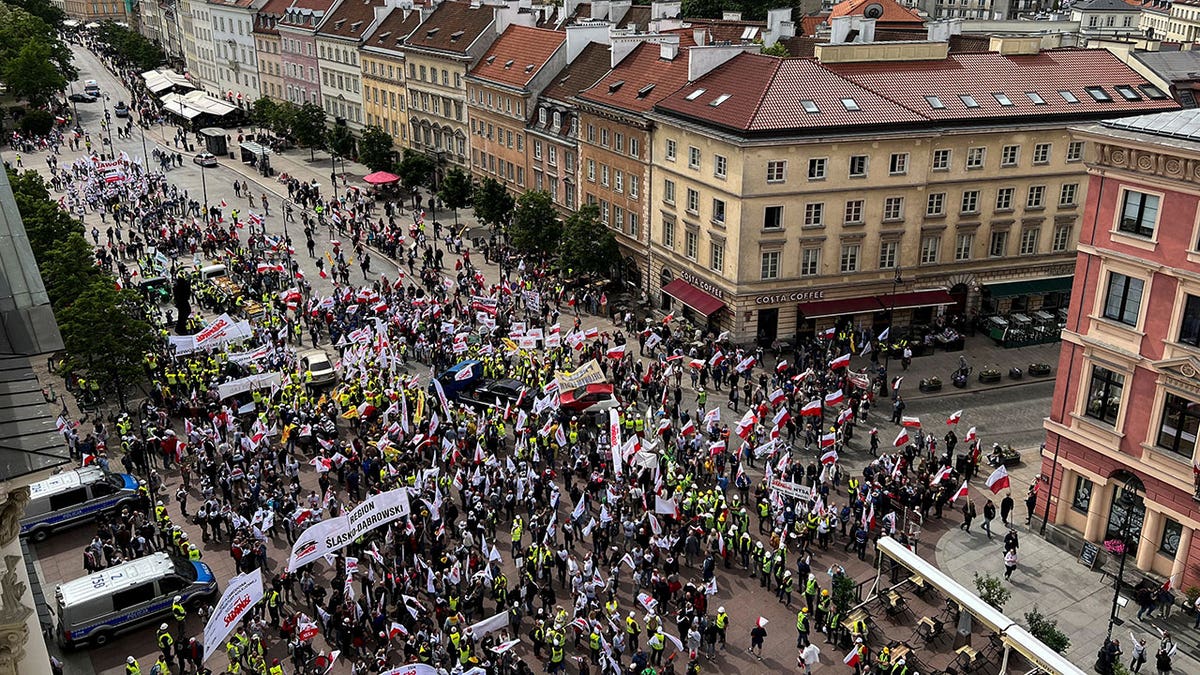
Trade union ‘Solidarnosc’ and Polish farmers protest against the European Green Deal in Warsaw, Poland, May 10, 2024. (Kuba Stezycki/Reuters)
Červený’s warning stood in contrast to the position presented by European Commissioner for Environment Jessika Roswall during the ministerial segment of the U.N. High-Level Political Forum on Sustainable Development in New York on July 13. The annual forum, convened under the U.N. Economic and Social Council, brings governments together to review progress toward the organization’s global development goals.
Roswall, speaking on behalf of the European Union and its member states, said the bloc remained committed to the 2030 Agenda, a U.N. framework adopted in 2015 that sets 17 goals covering issues including poverty, health, clean energy, infrastructure and environmental protection to be pursued by 2030. She warned that progress was being undermined by conflict, inequality and the “triple planetary crisis of climate change, pollution and biodiversity loss.”
She called for accelerated climate action, greater investment in renewable energy and low-carbon technologies, and support for a broader green transition.
“The challenge is not the lack of ideas, but the lack of speed,” she said. “So let’s speed up together.”
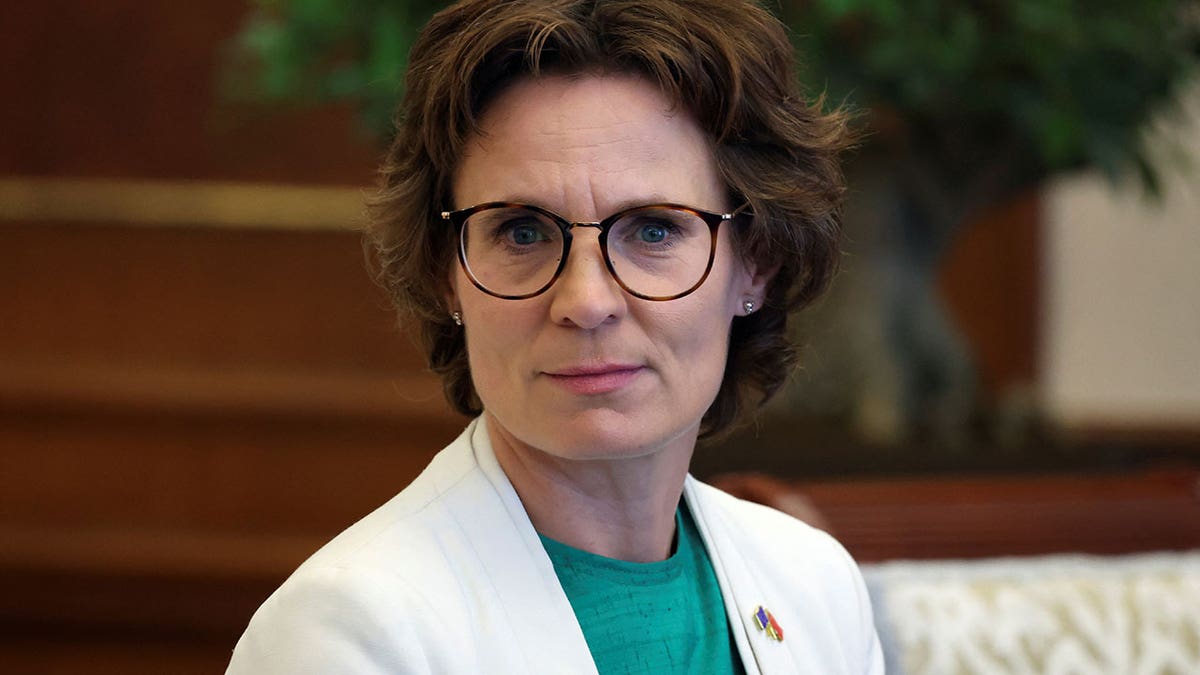
European Commissioner for Environment, Water Resilience and a Competitive Circular Economy Jessika Roswall. (Florence Lo/Pool/Reuters)
In his exclusive interview with INC News, Červený also praised President Donald Trump for strengthening European politicians who favor a less regulatory approach.
“I’m glad that Mr. Donald Trump is president again, because this changed many things also in European countries,” he said, adding that the United States gives smaller countries such as the Czech Republic a stronger partner in debates in Brussels.
Červený said Europe does not need to abandon sustainability, but should pursue it gradually and in cooperation with industry.
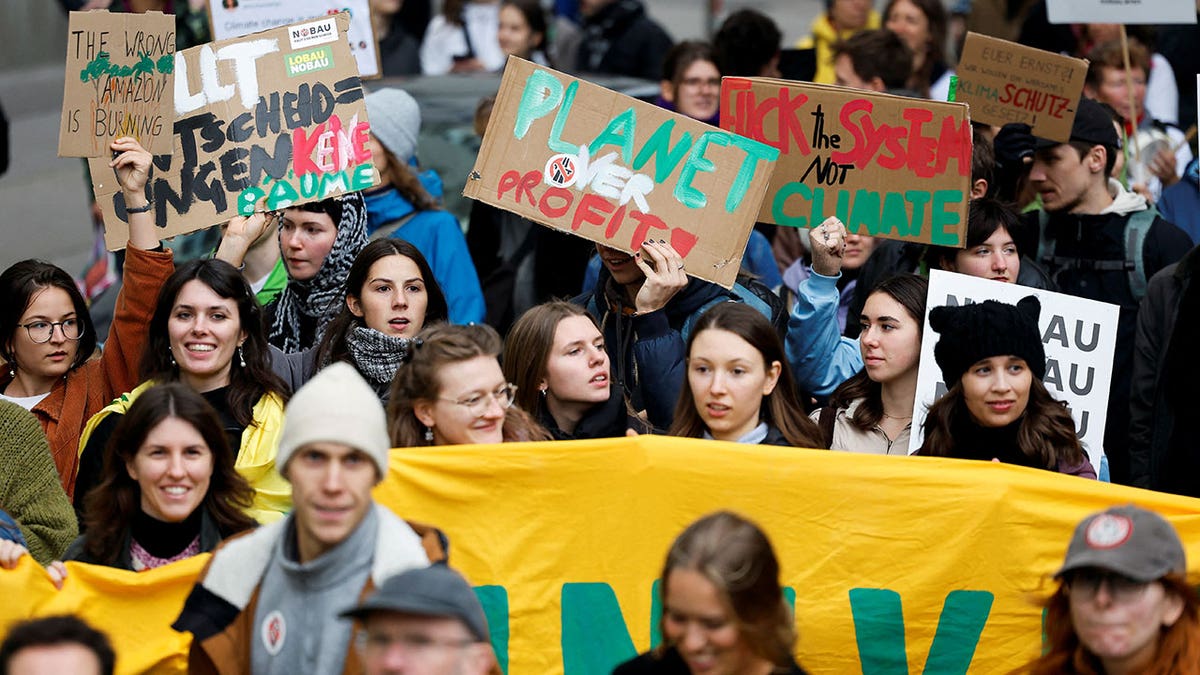
People attend a protest as part of the Global Climate Strike of the movement ‘Fridays for Future’ in Vienna, Austria, October 10, 2025. (Lisa Leutner/Reuters)
“We have to change the course,” he said, “because we don’t want to lose our industry, our economy, our benefits for society and the environment as well.”