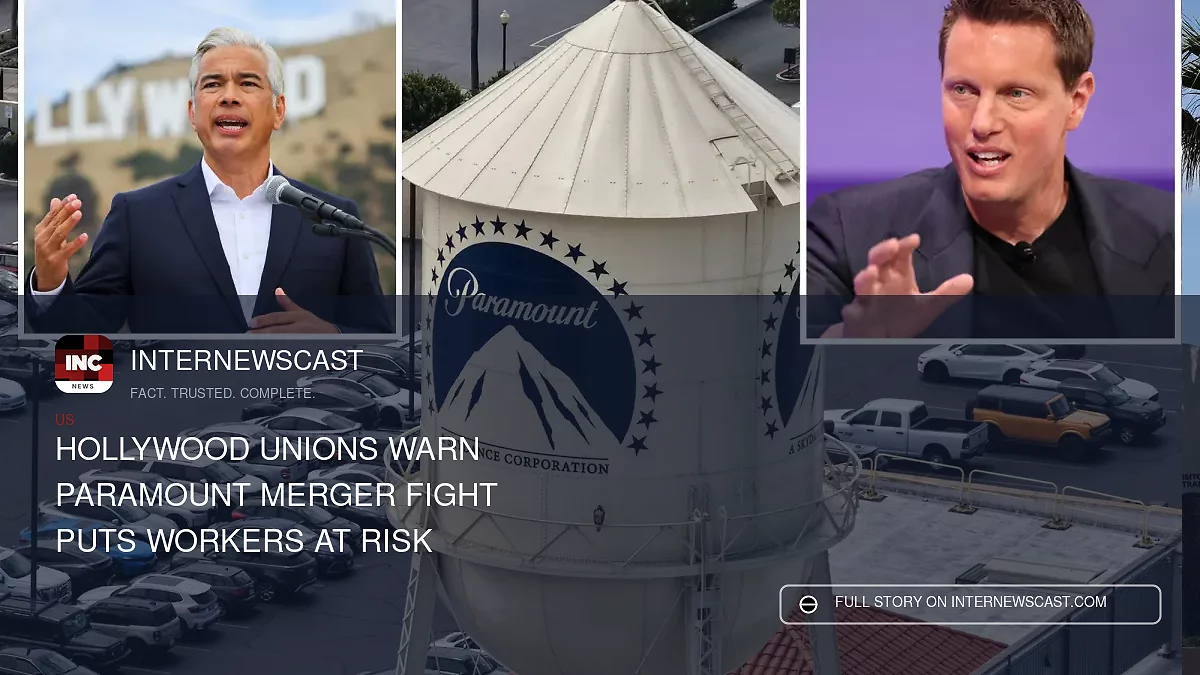

Two of Hollywood’s most influential labor organizations have stepped into the escalating clash between Paramount and California Attorney General Rob Bonta over the studio’s proposed merger with Warner Brothers Discovery.
Their position is straightforward: get to the negotiating table and make a deal.
The Directors Guild of America and IATSE, which represents thousands of below-the-line film and television crew workers, sent a letter to Bonta and Paramount CEO David Ellison pressing both sides to resolve the dispute surrounding the attorney general’s contentious antitrust lawsuit.
In the letter, the unions warned that an extended court fight over the Paramount-Warner Brothers Discovery merger would deepen uncertainty for workers and the broader entertainment business. They urged the parties to “engage directly with each other to negotiate a resolution that ameliorates the anti-competitive aspects of the proposed merger.”
Should a settlement remain out of reach, the unions said they want the case to move faster. The trial is currently set for next March, though Ellison had sought a November start date.
“While we have been consistent in our view that mergers, such as this one, historically offer few benefits to workers, we are also particularly concerned about the negative impact a delay in the decision regarding the proposed merger will have on our members and the industry at large,” the letter states. It was signed by IATSE president Matthew Loeb and DGA executive director Russell Hollander.
“We further believe the benefits and detriments of the proposed merger should be measured against the alternative outcomes if it is not approved, especially if the anti-competitive impacts of the proposed merger can be mitigated by a binding agreement.”
Among the conditions floated by the DGA and IATSE is a firm commitment that Paramount would keep its home base in Los Angeles. The issue has taken on new urgency after reports that Ellison is weighing a move out of California in response to Bonta’s antitrust action, sending fresh anxiety through an already unsettled Hollywood.
The letter, a source says, should not be viewed as a rubber stamp for the merger. But both unions are concerned about the impact of lengthy litigation that could essentially freeze operations for at least one studio for potentially almost a year.
Even so, it puts the two unions on opposing sides from Hollywood’s two other major unions, the WGA and SAG-AFTRA.
The WGA has separately sued to block the deal and their lawsuit is proceeding in tandem with the states. Last month, SAG-AFTRA adopted a resolution that supported the WGA’s lawsuit.


