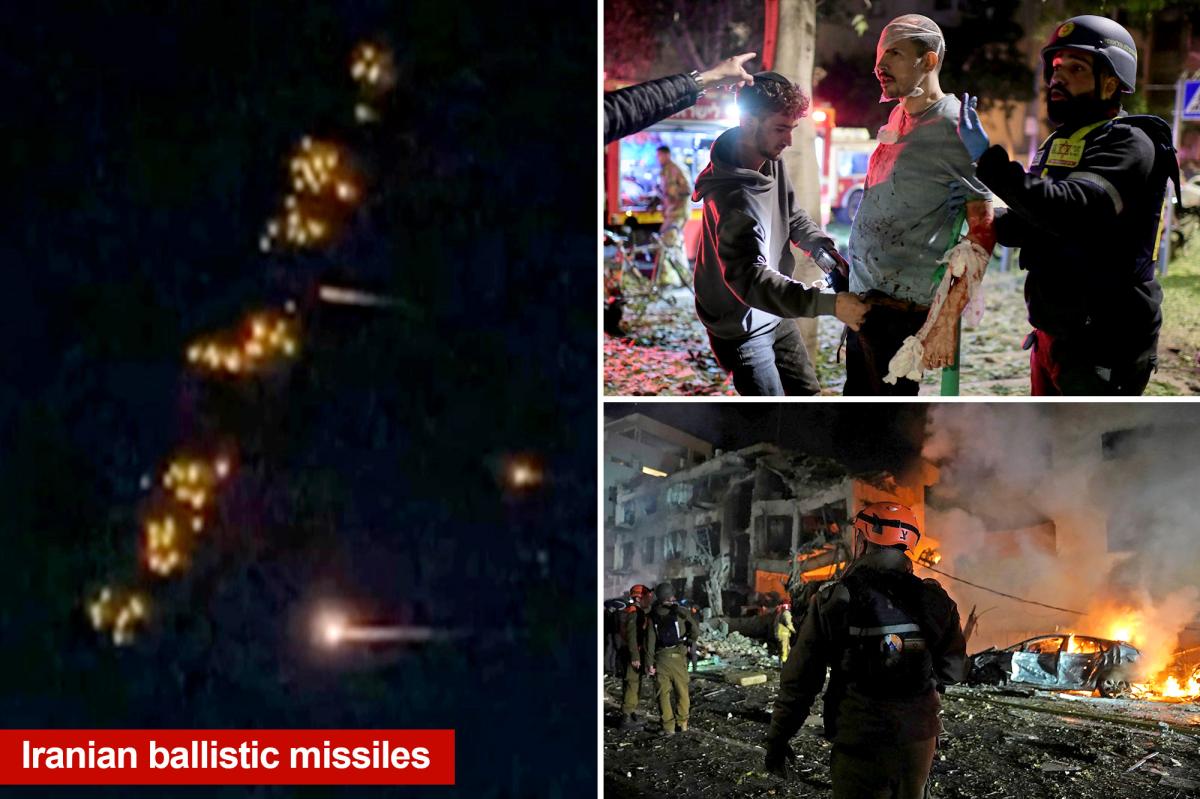


Iran’s use of cluster bombs in its assaults on Israeli cities is complicating efforts by Israel’s already stretched air defense systems, officials have reported.
Recent images of Tehran’s retaliatory strikes indicate that missiles fired by the Islamic Republic are dispersing bomblets over vast areas, a clear sign of cluster bomb usage. These weapons pose a significant challenge for interception, even by Israel’s renowned Iron Dome system. Tragically, a strike at a construction site in central Israel resulted in the deaths of at least three individuals on Tuesday.
Iran faces continuous allegations of deploying cluster bombs in civilian regions, a practice condemned globally due to the perilous unexploded bomblets left behind, which pose ongoing risks to communities.
While Israel typically maintains a degree of secrecy regarding the specifics of Iranian attacks, it has opted to release more comprehensive information to raise public awareness about the hazards these unexploded bomblets present.
Cluster bombs, true to their name, are designed to release multiple smaller explosives over a target area, effectively increasing their destructive potential and complicating defensive measures.
What are cluster bombs?
As the name implies, cluster bombs carry multiple submunitions within them that are scattered once the missile reaches its target.
The bomblets can be spread across several miles for widespread damage, effectively trading precision for mass coverage.
They were first used by Nazi Germany during the blitzkrieg campaign on the United Kingdom during World War II.
While cluster munitions are not banned under international law, they are barred by the Geneva Conventions for use in civilian areas, with more than 120 nations agreeing not to use the weapons.
Too many bombs to counter
While Israel’s Iron Dome and other air defense systems are capable of intercepting most projectiles, there is little that can be done to counter a cluster bomb once the warhead splits, Yehoshua Kalisky, a senior researcher at Israel’s Institute for National Security Studies, told the Associated Press.
Israel’s interceptor missiles are specifically designed to catch small rockets being fired from short ranges and lower altitudes, which has proven effective against the neighboring Hamas and Hezbollah terror groups.
The Iron Dome, however, struggles to destroy the clusters once they’ve dispersed into dozens of bomblets.
Roughly half of the projectiles that Iran has been firing at Israel since the war began have been cluster munitions, an Israeli military official said, with the strikes killing at least 12 people.
A future danger to civilians
What makes cluster bombs extremely dangerous is the fact that many of the bomblets can fail to explode upon initial impact, effectively creating land mines that can detonate later and kill civilians.
The Open Source Munitions Portal, which authenticates publicly sourced images of munitions worldwide, has published multiple photos of unexploded submunitions found in Israel this week.
The bombs’ dangerous aftermath was clear during America’s bombing campaigns in Vietnam and Laos, which left unexploded bomblets for decades.
Hundreds of thousands of unexploded bombs were also left across southern Lebanon following the 2006 war with Israel.
Despite backlash against the weapon, Iran has been accused of favoring the cluster bombs, with Amnesty International slamming Tehran’s “deliberate use of such inherently indiscriminate weapons” as “a blatant violation of international humanitarian law” during last year’s 12-day war.
With Post Wires