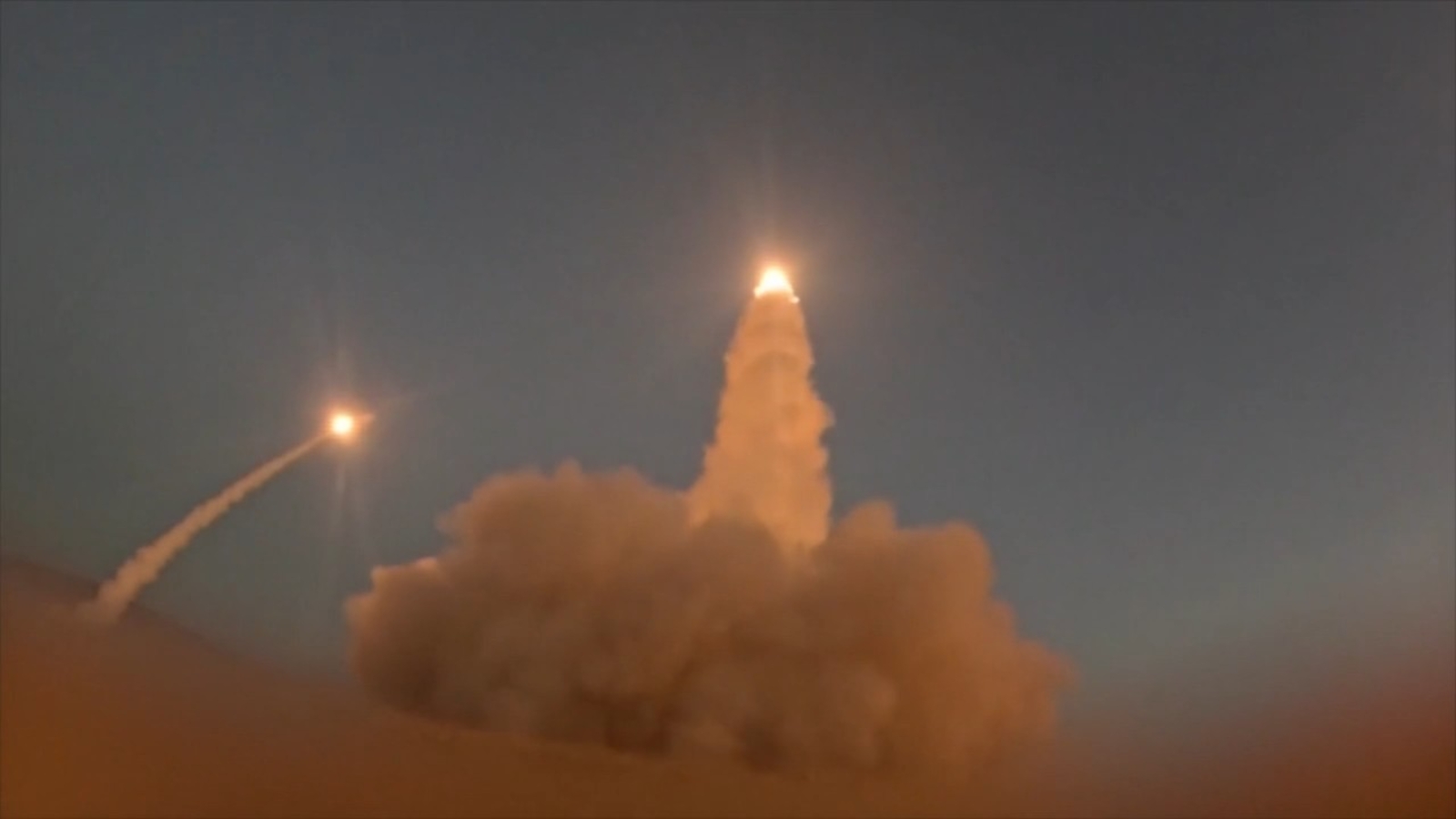

The United States and Iran traded new blows on Saturday, striking infrastructure and military sites as hopes for diplomacy dimmed further. An Iranian negotiator said Tehran had stopped honoring its obligations under an interim agreement with Washington, cutting yet another fragile link in a conflict that shows little sign of easing.
The fighting sharpened around the Strait of Hormuz, the vital maritime corridor that once carried roughly one-fifth of the world’s crude oil. As the conflict increasingly centers on control of the strategic waterway, the expanding attacks have raised fears for civilians, basic services such as drinking-water desalination plants, and a global economy already bracing for fresh energy shocks.
U.S. Central Command said early Saturday that American forces carried out a seventh consecutive night of strikes, targeting what it described as “surveillance sites, military logistics infrastructure, underground weapons storage, and maritime capabilities.”
Kazem Gharibabadi, Iran’s deputy foreign minister, told state television that the United States had breached the commitments it made under the deal signed about a month earlier. As a result, he said, Iran is “no longer implementing them.”
There was no immediate update on any renewed mediation efforts.
Kuwait sees the most striking damage
Saturday’s most serious reported damage from Iranian strikes was in Kuwait, where authorities said a water desalination facility and an oil installation were hit. Kuwait officials and the Kuwait Petroleum Corporation confirmed the attacks but did not disclose the locations.
Several people were wounded at the oil site, while a fire at the desalination plant forced multiple power generation units out of service. It marked the second strike in two days on a desalination facility in the small desert country, which relies on desalination for about 90% of its drinking water.
The Kuwait Fire Force said several firefighters and one worker were hurt while responding to two additional fires triggered by Iranian strikes. Kuwait briefly shut its airspace because of missile threats, while Kuwait Airways announced it was rescheduling most flights in and out of the capital.
Meanwhile, Iraq said it shot down attack drones over the city of Irbil. Jordan’s state-run Petra news agency said the kingdom’s air defense systems had downed Iranian missiles, while air sirens sounded multiple times in Bahrain throughout the day and in Saudi Arabia in the morning, according to their governments.
US strikes hit infrastructure in Iran
U.S. airstrikes hit an electricity and desalination plant in Iran’s southern Hormozgan province, Iranian state TV reported. IRNA said the Bonji desalination plant was destroyed, cutting off water supplies to about 10,000 people, and that a desalination plant on strategic Qeshm Island inside the strait was damaged.
Overnight strikes damaged two tunnels and a bridge, disrupting one of the main highways toward Bandar Abbas, Iran’s main port that sits near the narrowest part of the strait, according to Iran’s state-run news agency. IRNA said three bridges were hit Saturday, including one on a route to Bandar Abbas.
Iran acknowledged “attacks on power infrastructure” during the U.S. airstrikes for the first time Friday when its Energy Ministry issued a call for people to use less power in southern provinces “experiencing extreme heat.” It did not specify what was hit.
The Islamic Revolutionary Guard Corps stepped up its warning that countries hosting U.S. forces should be “prepared to receive a corresponding response,” according to Iran’s state TV.
Iranian authorities said at least 50 people have been killed and more than 500 wounded in U.S. strikes in the past three weeks, including eight killed in a strike on a bridge Friday.
U.S. officials acknowledged 13 additional U.S. service members – 10 Army soldiers and three Navy sailors – had been injured since Monday, but offered no details. Since the war began, 14 U.S. service members have been killed and 427 wounded.
Iran and US vie for Strait of Hormuz
Iran effectively closed the strait to shipping traffic after the war started with U.S. and Israeli strikes on Feb. 28. That sent the price of oil soaring and has given Tehran significant leverage in negotiations.
Iran has said the strait must be under its sole control and that vessels should pay fees to Tehran, even though the world for decades has considered it an international waterway. It fired on ships on recent days. Crossings through the strait fell to a three-week low, according to an international shipping tracker.
Trump has resumed threats to target power stations and bridges to try to compel Iran to loosen its hold. The U.S. in the past week reimposed a naval blockade on Iranian ports to halt its shipments of crude oil.
A growing amount of the region’s energy is being shipped through pipelines, but not nearly enough to offset the decline in shipping.
Before the war began, the U.S. had been in talks with Iran over its nuclear program. Trump now faces political pressure to end the war and avoid the kind of prolonged Middle East conflict he had campaigned against.
___
Ezzidin reported from Cairo. Associated Press writers Amir Vahdat in Tehran; Melanie Lidman in Tel Aviv, Israel; Stella Martany in Irbil, Iraq; and Konstantin Toropin in Washington contributed to this report.
Copyright © 2026 by The Associated Press. All Rights Reserved.