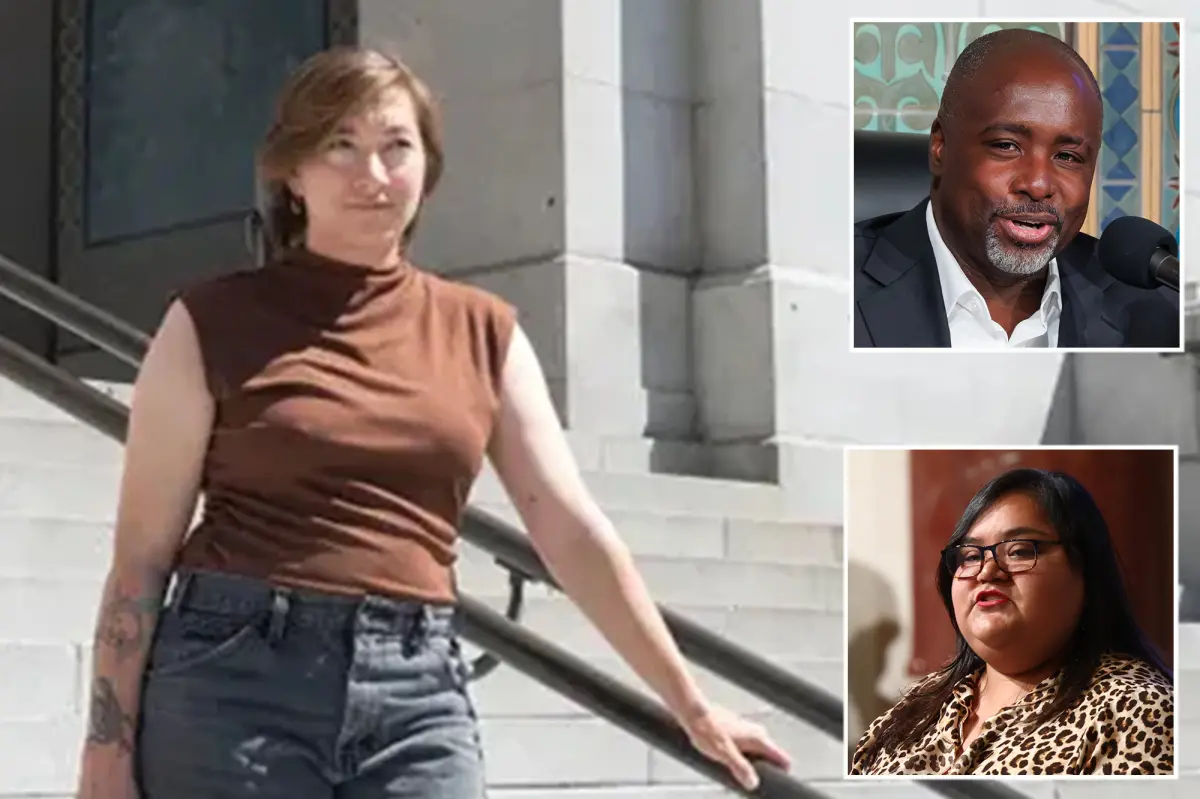

Los Angeles officials appear to be heading straight into a major First Amendment clash after moving to restrict what members of the public may say inside City Council meetings.
The city is now under legal pressure from two prominent free speech organizations over a disputed policy that prohibits public speakers from uttering two highly offensive slurs while addressing council members.
Those groups contend that Los Angeles has stepped over a constitutional boundary by outlawing particular words, raising a potentially consequential legal question: can elected officials dictate which language is forbidden in a government-run public forum?
The Foundation for Individual Rights and Expression, known as FIRE, and the First Amendment Coalition have given city officials 30 days to scrap Council Rule 7 and issue an “unconditional commitment” that it will no longer be enforced.
Should the city refuse, the organizations say they are prepared to sue on behalf of Los Angeles resident Stacey Segarra-Bohlinger, who, according to the groups, has already been penalized twice under the rule.
“The Constitution forbids the government from banning words,” FIRE said Thursday, maintaining that even language widely considered hateful or deeply offensive can still fall under First Amendment protection.
The policy, adopted unanimously by a 14-0 vote on July 30, 2025, prevents members of the public from saying the so-called “N-word,” the “C-word,” or “any variation” of those terms during public comment at Los Angeles City Council meetings and committee hearings.
The restriction also reaches beyond the exact words themselves.
It also outlaws plural forms and versions created by adding suffixes such as “-ish,” “-y,” “-ly” and “-ing.”
Anyone who violates the rule can be thrown out of the remainder of the meeting and barred from attending any other council meetings held later that day.
Repeat offenders can be banned from future meetings for up to six business days, according to FIRE.
Council President Marqueece Harris-Dawson introduced the measure in March 2025, arguing repeated use of the slurs had inflamed tensions, nearly sparked physical confrontations and discouraged residents from participating in city business.
Supporters pointed to the Supreme Court’s 1942 decision in Chaplinsky v. New Hampshire, which carved out the narrow “fighting words” exception to First Amendment protections.
But FIRE and the First Amendment Coalition argue Los Angeles has gone far beyond that limited exception by punishing people simply for saying forbidden words, even when they’re criticizing the city’s own censorship policy.
ALSO READ: Kai Trump Reveals Her Special 80th Birthday Gift for Grandfather Donald Trump
Their legal challenge centers on Segarra-Bohlinger, a regular speaker during public-comment periods.
According to a letter sent to Harris-Dawson and City Attorney Hydee Feldstein Soto, Segarra-Bohlinger criticized the council’s speech restrictions during an Oct. 31, 2025, meeting by saying the council was “afraid of the word ‘c–t.’”
She then added: “Kind of insane how you’re more offended by bad words than police brutalizing citizens and journalists in the streets.”
The advocacy groups say her remarks stayed on topic, remained within her allotted speaking time and did not disrupt the meeting or interfere with council business.
Still, Councilmember Heather Hutt objected to the language and urged Council President Pro Tempore Bob Blumenfield, who was presiding over the meeting, to enforce the rule.
Blumenfield warned Segarra-Bohlinger that using the prohibited word again would get her removed.
On Dec. 3, 2025, that warning became reality.
Segarra-Bohlinger again used the word while criticizing the policy, was ejected from the meeting and barred from attending any additional council meetings scheduled that day.
In their letter, FIRE staff attorney Zachary Silver and First Amendment Coalition legal director David Loy argue the rule violates both the First Amendment and California’s Brown Act because it discriminates based on viewpoint, imposes unreasonable restrictions on public comment and allows officials to remove speakers whose remarks don’t actually disrupt meetings.
The groups are urging the city to scrap the word ban and its enforcement provisions before the dispute lands in court.
“We hope the council will take this opportunity to bring its meeting rules into compliance with the First Amendment and Brown Act without need for litigation,” the letter states.
Harris-Dawson has also suggested the current ban may only be the beginning.
“This is as much a step as we can take at this moment, we believe. But we think it will open us up to take additional steps in the future,” he said.
In another instance, he added, “We’re going to try to get in all the terms.”
According to FIRE, Harris-Dawson has also publicly stated he is “eager to get in front of a judge.”
The 15-member LA City Council consists of 10 Democrats, 4 democratic socialists, and 1 Independent, with 0 Republicans.