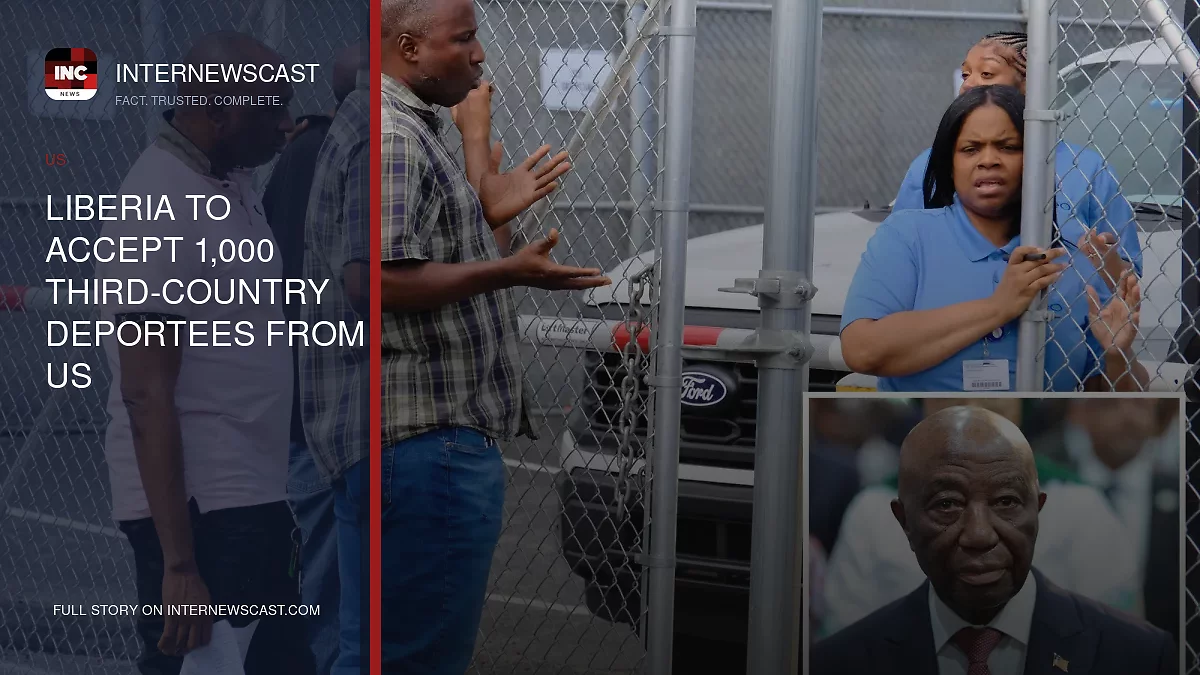

Liberia has reached an agreement with the United States to take in as many as 1,200 deported migrants from other countries, officials in the West African nation said Tuesday, marking one of the biggest third-country deportation deals tied to the Trump administration’s intensified immigration enforcement agenda.
The arrivals are expected to take place over the course of a year, Information Minister Jerolinmek Piah told journalists, with an initial group of 20 deportees scheduled to land on Thursday. Piah said the group of up to 1,200 people will include migrants from African nations, as well as individuals from North America, South America and the Caribbean.
Immigration advocates say the Trump administration has relied on a network of agreements, many of them not publicly disclosed, to send thousands of deportees to nearly two dozen countries other than their own. Roughly 10 of those destination countries are in Africa, according to advocates tracking the policy.
One of the most contentious elements of these arrangements is that they may include migrants who have been granted protection by a U.S. immigration judge, barring their removal to their home countries because they could face danger if returned.
Piah did not clarify whether any of the people expected to be transferred to Liberia fall under those protection orders.
After arriving in Liberia, the deportees “may wish to seek asylum” there or “can leave the country whenever they desire,” Piah said.
He also said Liberia will receive assistance from the United States to help run the program and improve the country’s broader migration management system.
“Liberia’s gesture is entirely humanitarian and in keeping with the country’s longstanding traditions,” Piah said.
“The government of Liberia intends to provide the transferred persons with the necessary support to seek protection in Liberia and to be safe during their stay here.”
Immigration lawyers have said the Trump administration uses deportations to third countries as a legal loophole to indirectly force asylum seekers back to their home countries.
In many cases, migrants are deported to countries they’ve never been to or where they face safety risks and are left with little choice than to return to the home countries they were fleeing from.