
Amsterdam has made history as the first capital city worldwide to prohibit public advertisements for meat and fossil fuels. This move effectively removes promotions for burgers, gas-powered vehicles, and airlines from the city’s billboards, tram stops, and metro stations.
Since May 1, visitors and residents of the Dutch capital, a popular tourist destination, have witnessed a significant change in its advertising landscape. Ads featuring chicken nuggets, SUVs, and low-cost flights have been replaced by those promoting cultural attractions such as museums and concerts, as reported by BBC News.
City officials assert that this bold initiative is a crucial part of an ambitious climate strategy. Their objectives include achieving carbon neutrality by 2050 and reducing meat consumption by half, according to the report.
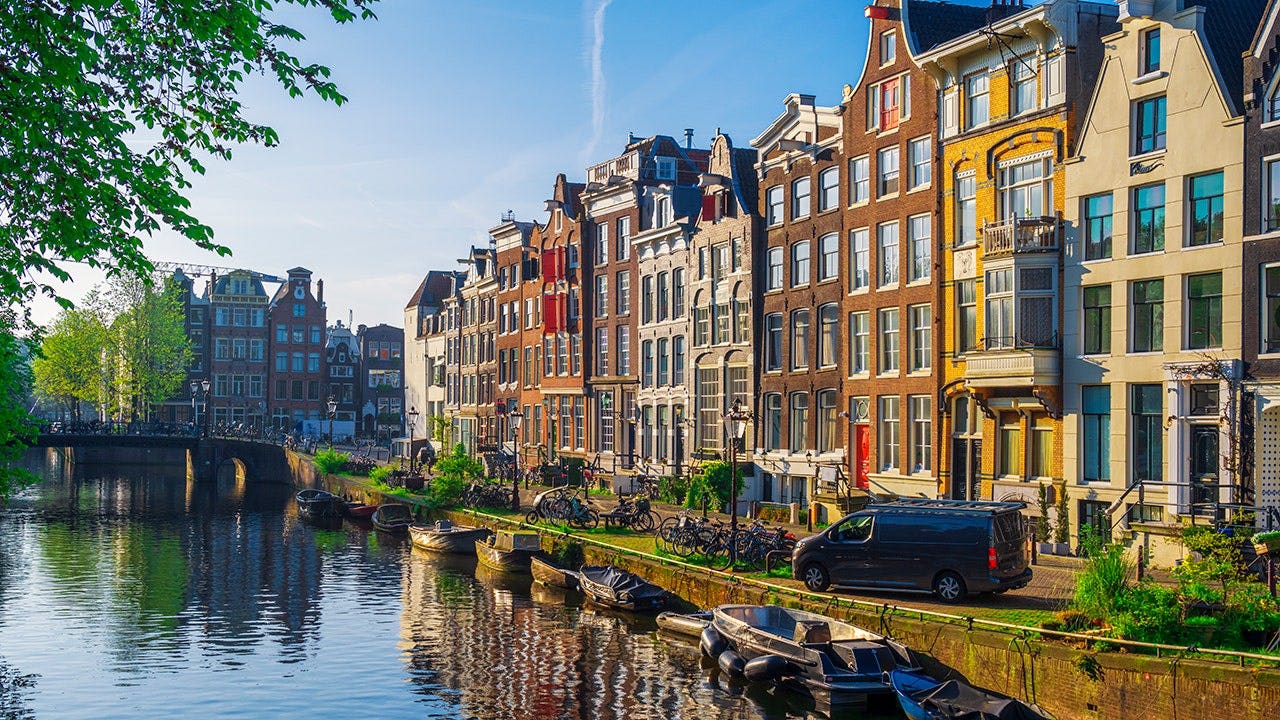
A picturesque view of Amsterdam’s canals can be seen in the city center. (iStock)
Anneke Veenhoff of the GreenLeft Party emphasized the urgency of addressing the climate crisis, stating, “If you want to lead in climate policies and yet allow advertisements that contradict those goals, what message are you sending?”
However, the policy has faced criticism, with some opponents labeling it as an overreach that seeks to dictate personal choices, according to BBC News.
The Dutch Meat Association blasted the ban as “an undesirable way to influence consumer behavior,” warning that meat provides essential nutrients and should remain visible and accessible, the outlet reported.
Meanwhile, travel industry leaders say the restrictions unfairly target businesses.
An ad is displayed at a tram stop in Amsterdam, Netherlands, on Nov. 16, 2023. (Peter Boer/Bloomberg)
The Dutch Association of Travel Agents and Tour Operators called the ban on airline advertising a disproportionate blow to commercial freedom, according to BBC News.
Supporters, however, are framing the policy as a broader cultural shift — even comparing meat ads to cigarette campaigns of decades past.
“Because if I look now back at like old pictures, you have Johan Cruyff,” Hannah Prins, a paralegal at Advocates for the Future, told the outlet. “The famous Dutch footballer. … He would be in advertisements for tobacco. That used to be normal. He died of lung cancer.”
Prins added, “I don’t think it’s normal to see murdered animals on billboards. So I think it’s very good that that’s going to change.”
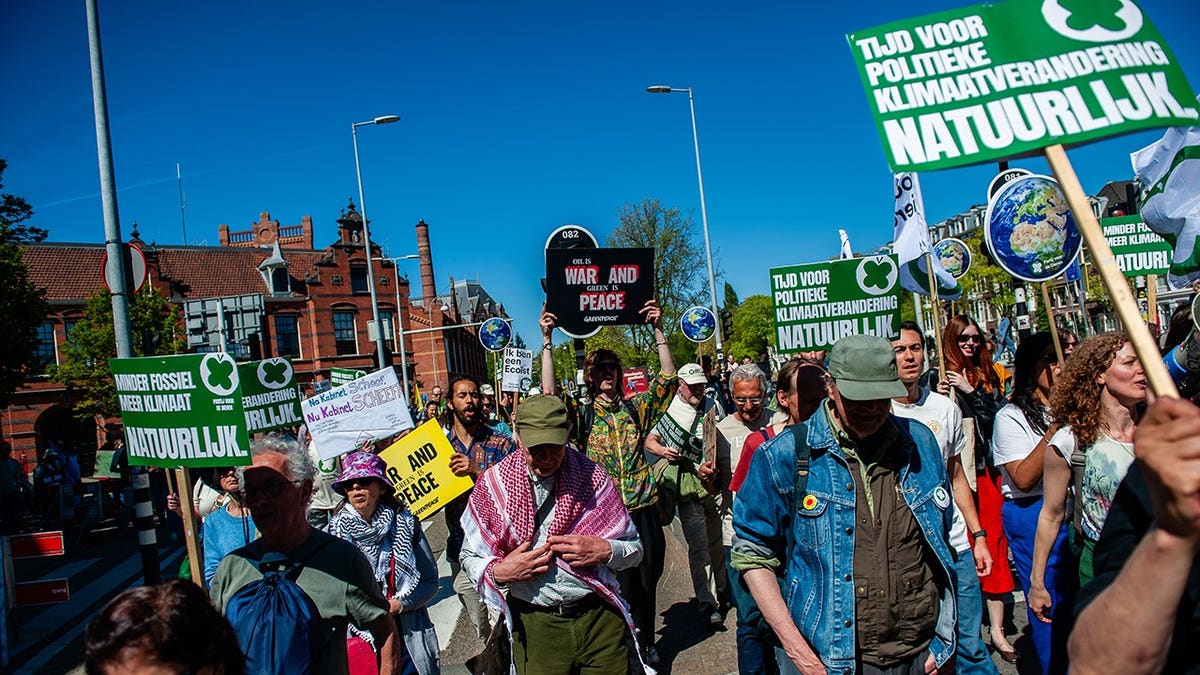
Climate activists hold posters demanding peace during a march in Amsterdam on May 1, 2026. (Ana Fernandez/SOPA Images/LightRocket/Getty Images)
Other Dutch cities — including Haarlem, Utrecht and Nijmegen — have rolled out similar restrictions, while cities across Europe continue pushing to curb fossil fuel advertising, BBC News reported.
Meanwhile, in the United States, federal officials have taken a markedly different approach to food policy.
The Department of Health and Human Services earlier this year unveiled updated dietary guidance featuring an inverted food pyramid. The top of the pyramid, now the wider part of the structure, is built on meat, fats, fruits and vegetables, while whole grains are at the narrow bottom.