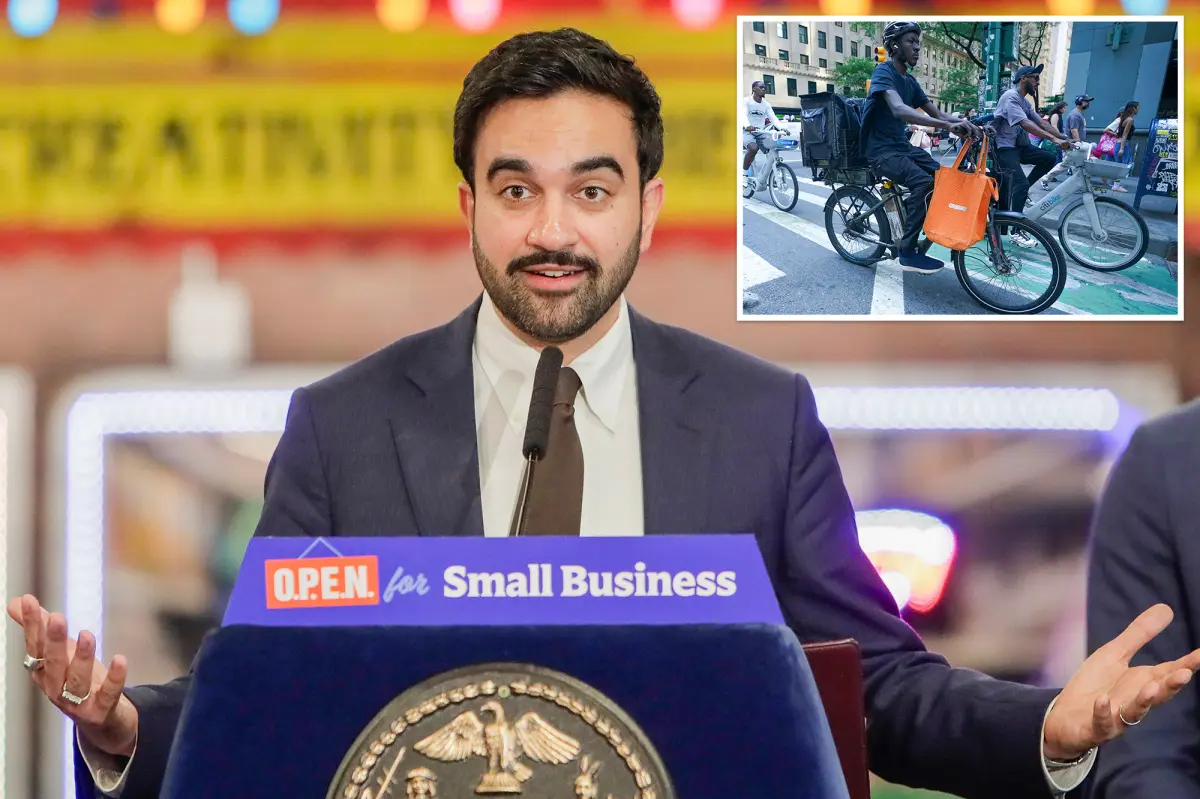

Mayor Zohran Mamdani’s administration is seeking to give the Department of Transportation broad new authority to approve bike and bus lanes, arguing the change would move projects at least 33% faster while intensifying an already heated battle over how New York City streets are used.
The Commission on Government Efficiency, known as COGE, was expected to formally approve five proposed changes to the City Charter, setting them up to appear before voters on the November ballot.
One measure, listed as “Question 3,” would eliminate inter-agency consultation rules that opponents — including firefighters, disabled New Yorkers and neighborhood coalitions — have relied on to slow down or stop recent bike lane plans.
The amendment would also remove the requirement that DOT finish presentations to community boards before construction starts. Instead, the transportation commissioner could cite an “immediate need” and allow work to begin first.
In a press release outlining the five ballot questions, Mamdani’s office said the proposal would “Speed up street safety projects, including bike lanes, by at least 33%.”
New York City currently has more than 1,316 miles of cycling lanes, including over 140 miles of on-street protected bike lanes, according to DOT figures.
The department added 27.9 miles of new protected bike lanes in fiscal year 2025. DOT Commissioner Mike Flynn told the City Council in early March that the agency expected to exceed that total in 2026, though he did not provide a specific target.
Councilwoman Joann Ariola, a Republican from Queens, criticized the proposed charter change as “an extremely dangerous precedent.”
“This mayor is truly showing the totalitarian colors that so many of us warned about,” Ariola said. “What he’s doing is effectively using a handpicked charter commission to create a carefully engineered question meant to eliminate a law that he doesn’t agree with.”
Ariola sponsored a 2025 law requiring DOT to consult with local firehouses about safety before implementing bike lanes and other major street redesigns.
Question 3 would let DOT skip those consultations.
“Today it is Local Law 6. Tomorrow, it might be any other law that the administration finds inconvenient,” Ariola said.
Opponents had relied on that law when suing over the safety of a bike lane in Queens that they warned would keep firefighter’s ladder trucks from reaching upper floors.
Janet Schroeder, director of the NYC E-Vehicle Safety Alliance, said the amendment would leave pedestrians more exposed.
“This is a pedestrian city first. Bike lanes do not protect pedestrians from an e-vehicle speeding, running lights or leaving the scene of a crash,” Schroeder said. “This is an authoritarian-like street take over and we at NYC EVSA represent the majority opinion and will not allow this.”
But a spokesperson for the mayor’s office framed the amendment as “common sense.”
“This commonsense change will help the City deliver safer streets, more reliable bus service, and a better-connected bike-lane network more quickly, while ensuring safety and accessibility remain central to every street redesign,” the spokesperson said.
If commissioners approve the amendment as drafted and certified to the Board of Elections by early August it would be placed before voters on the November 3 ballot.
The bike-loving mayor’s first budget put about $23 million toward a new bike network development program through 2031 and more than $11 million next year for 45 new cycling-focused staff at DOT.
His budget also puts about $272 million toward buses for new bus lanes and bus infrastructure through 2033, including 70 new bus-focused staff at DOT.
Less than 10% of New Yorkers regularly bike, according to DOT data.
Schroeder also questioned whether the DOT was working with accurate crash data. The agency relies on NYPD reports to track pedestrian injuries caused by e-vehicles, but many pedestrians who are struck go directly to the hospital and never file a police report, Schroeder said.
“DOT should not lay down one more bike lane without accurate e-vehicle crash stats considered,” Schroeder said. “This is dangerously incorrect. There are thousands of serious e-vehicle crashes, with serious injury in New York City every year and growing exponentially.”
An NYU Langone study published in April of more than 900 trauma patients at Bellevue Hospital found that “micromobility” crashes grew from under 10% of bike and scooter trauma cases in 2018 to more than half by 2023, and now account for nearly 7% of all trauma admissions.