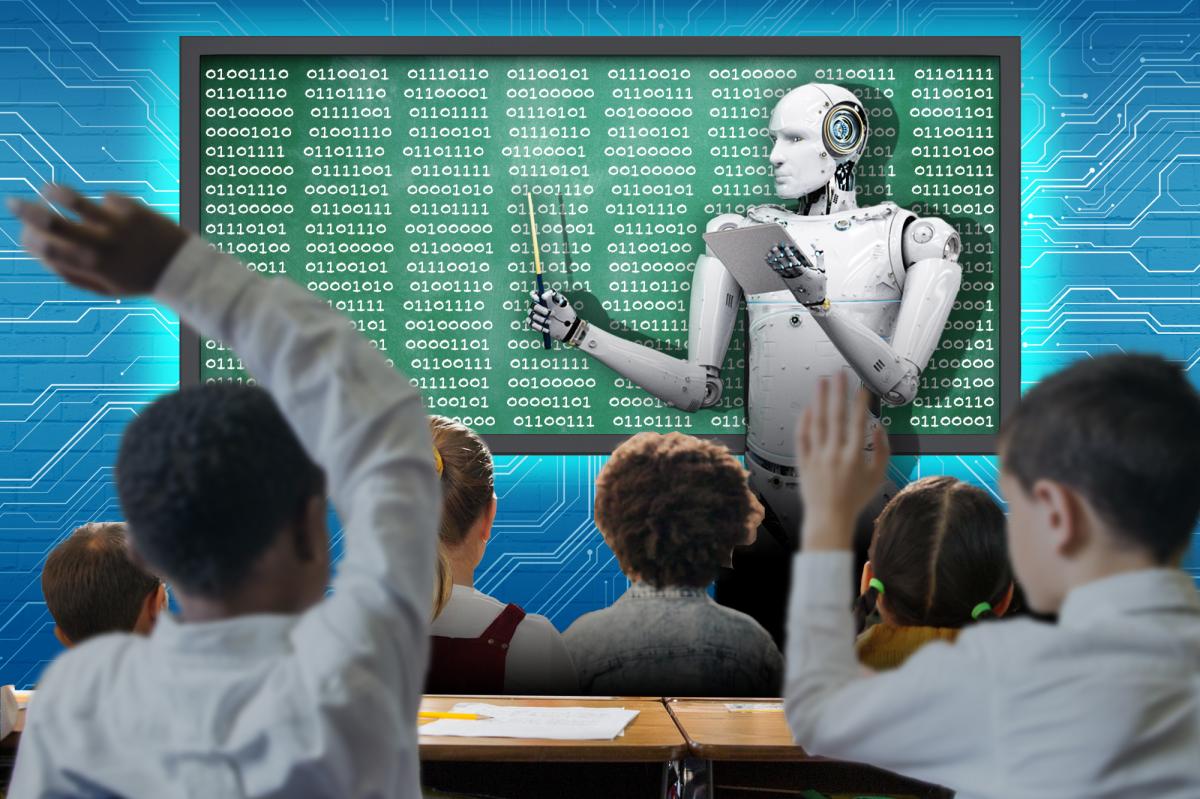


Concerns are mounting over the city’s decision to incorporate artificial intelligence into public school systems, with critics fearing it may negatively impact students by reducing their critical thinking skills and fostering an over-reliance on technology.
In a recent public consultation, spanning 45 days and concluding last Friday, over 6,000 comments were submitted by concerned parents and educators. The feedback overwhelmingly expressed skepticism about the readiness of the Department of Education’s AI initiative for classroom integration.
The Parent Coalition for Student Privacy voiced strong opposition, criticizing the consultation as a superficial exercise. “We reject the DOE’s sham 45-day process and inadequate, cramped survey for what is clearly a foregone conclusion to embrace big tech at the expense of our students,” the advocacy group stated.
Originally unveiled in March, the city’s AI plan is structured around a “stoplight” system to categorize AI usage in schools. According to the guidelines, “red” signifies AI applications that are prohibited, “yellow” indicates uses that require careful judgment and adult supervision, while “green” represents those that are approved and encouraged.
Jennifer Weber, a fellow for K-12 Education Policy at the Manhattan Institute currently researching AI in education, noted, “The guidelines are very teacher-focused.” However, she highlighted a significant gap: the lack of direction on how students should integrate AI into their studies and where to draw the line between AI support and academic dishonesty.
But they lack guidance on how exactly students should be incorporating AI into their academic routines — or establish where the line between AI-assistance and outright cheating is drawn.
Approved “green” uses mainly pertain to teachers employing the tech to brainstorm, schedule, translate and draft materials.
The “yellow” usages — slammed as the most ambiguous — include students using AI for “research, exploration and creative projects.”
Teachers can use the technology to interpret data about their students and for translations for diverse learners or “critical communications” as long as they are reviewed by the appropriate specialist before being finalized. These usages are also “yellow.”
Forbidden “red” uses include placement decisions, discipline, grading, special education plans, behavioral monitoring, counseling and data protection — areas the city says AI will never touch.
The guidelines don’t address students’ developing brains — and what the tech crutch will mean for it.
“I think the focus needs to be on the developmental side for kids and right now New York City’s guidelines have focused all on the teachers,” said Weber.
She’s concerned AI could “replace learning,” especially for the city’s youngest students who lack fundamental skills.
“We’re not really teaching critical thinking anymore and in many ways kids don’t even really know how to ask questions,” she said.
The city has been embracing AI through its partnerships. The department has a longstanding relationship with Kaplan, which recently rolled-out AI add-ons. The department’s governing body recently approved a $500,000 contract with the company, according to Chalkbeat.
In 2023, city schools partnered with Microsoft to launch Gen AI, a chat bot for students meant to support study habits and “supplement classroom learning.”
Weber referenced how detrimental “one-to-one” learning was during the pandemic — when students only learned through a screen — and fears students using AI as a “crutch” would trigger a crisis far worse.
Advocates and lawmakers are demanding a tech moratorium until there is more transparency.
“I’ve never been an activist before, but I feel so strongly about this,” one Park Slope mom said at a nearly seven-hour meeting of the PEP in front of Chinatown’s MS 131 on April 29, according to Chalkbeat.
“It is starting. Gen Z is turning against AI; I’m turning against AI. The city is telling us that AI is inevitable, but won’t tell me what devices and applications my children are using.”
A petition with more than 3,300 signatures is calling on Mayor Mamdani and Chancellor Kamar Samuels to prevent new DOE contracts with products or curricula using AI, and halt all products currently being used to collect student data.
Brooklyn Assemblyman Robert Carroll introduced a bill in November 2025 to put a moratorium on using AI in K-8 instruction.
“I think it’s detrimental for children,” Carroll said. “Detrimental in their social emotional learning, in creative brainstorming.
Mamdani spokesperson Julia Lyle reference the AI guidelines and said the department will continue to update families and educators as “it develops a more comprehensive approach to AI in our schools.”
Samuels did not respond to requests for comment. DOE spokesperson Isla Gething assured the administration is committed to students’ learning.
“We believe strong policy is built with communities, not for them, which is why we established a 45-day public feedback period to gather meaningful input,” she wrote.
“We will conduct a thorough review and analysis of all responses to help inform the next phase of this work. We remain grounded in a core principle: AI can never replace the care, love, and dedication that defines exceptional teaching.”