
As policymakers debate ways to strengthen Social Security, one proposal would raise the age for full retirement benefits. Another plan takes the opposite approach, calling for a lower eligibility age for certain workers.
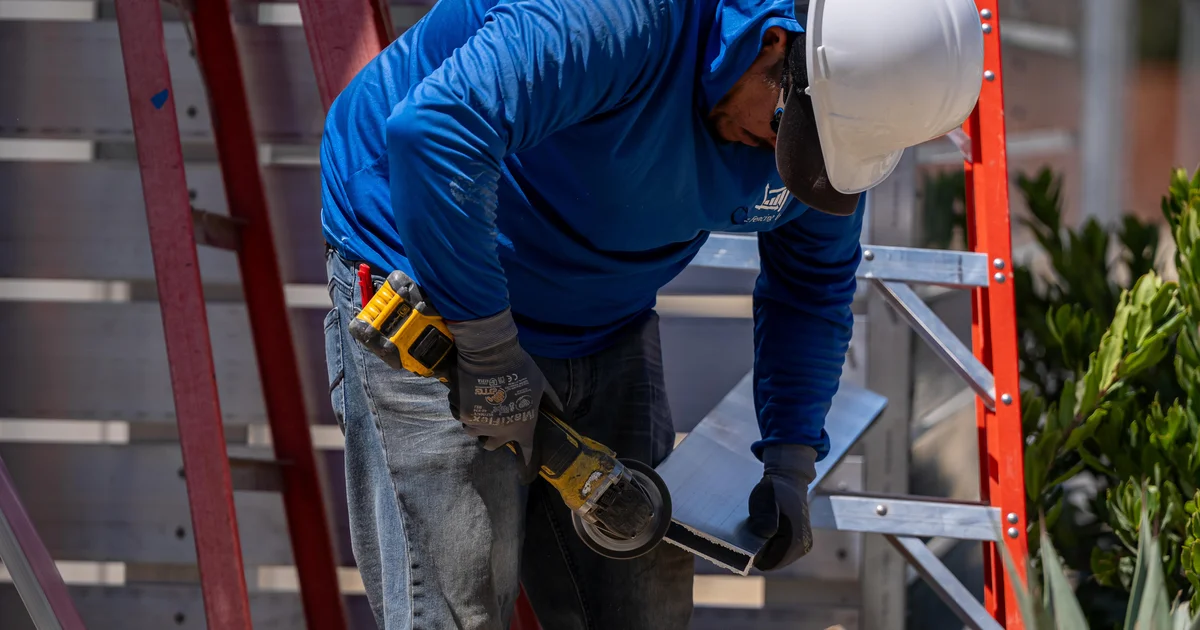
Rep. Haley Stevens, a Michigan Democrat, on Thursday introduced the Blue Collar Social Security Fairness Act. The legislation would allow people in construction, nursing, manufacturing and other physically demanding professions to receive full Social Security benefits beginning at age 60—seven years earlier than the current full retirement age.
Under current law, Americans born after 1960 become eligible for full retirement benefits at 67. They can begin claiming Social Security at 62, but doing so results in a permanent reduction of up to 30%. The penalty declines incrementally for those who wait until ages 63 through 66.
Stevens argues that blue-collar employees should not be expected to remain in physically taxing jobs well into their 60s, when the demands of that work may become increasingly difficult to manage.
“Michiganders who work with their hands shouldn’t be forced to wait until their bodies give out to retire,” Stevens said Thursday as she announced the measure in Washington, D.C. The congresswoman lost to Abdul El-Sayed in Michigan’s Democratic Senate primary in August.
The proposal arrives as Congress and the public continue to weigh options for closing Social Security’s long-term financial gap. The program is paying out more in benefits than it collects in revenue, and the latest report from the Social Security trustees estimates that the trust fund supporting retirees and survivors could run out of money by the end of 2032—sooner than earlier projections suggested.
If lawmakers do not act, beneficiaries could face a reduction of more than 20%, according to the trustees’ projections.
The average retired worker received $2,071 per month in Social Security benefits as of January, according to the Social Security Administration.
How would the bill work?
Under Stevens’ bill, workers in physically demanding occupations would earn points based on both their age and the number of years they spent in qualifying jobs. For example, an employee would receive one point for every year worked between ages 35 and 44.
To retire with full benefits at 60, an individual would need at least 15 points or 20 years of employment in eligible professions, including jobs such as roofing and manufacturing.
The legislation would direct the Social Security commissioner to establish a list of qualifying occupations and revise it once every three years.
The bill defines an eligible occupation as one that “impose[s] on an individual substantial physical demands that may be reasonably expected to diminish the ability of the individual to perform such occupation, or other occupations imposing substantial physical demands, at an advanced age.”
Experts have proposed several other strategies for improving Social Security’s finances, including removing the income cap on wages subject to Social Security taxes. That threshold is currently $184,500. Another option would be to increase the payroll tax rate.
In July, Sen. Elizabeth Warren of Massachusetts and Sen. Bernie Moreno of Ohio urged Congress to lift the payroll tax cap. The bipartisan lawmakers said the change would make the system more equitable by requiring high earners to contribute the same proportion of their income as low- and middle-income workers.
A 2025 survey by the Bipartisan Policy Center, which included more than 4,000 Americans, found support for lifting or eliminating the cap among 65% of Democrats and 62% of Republicans. The poll also showed that most households earning over $200,000 annually favored the change.