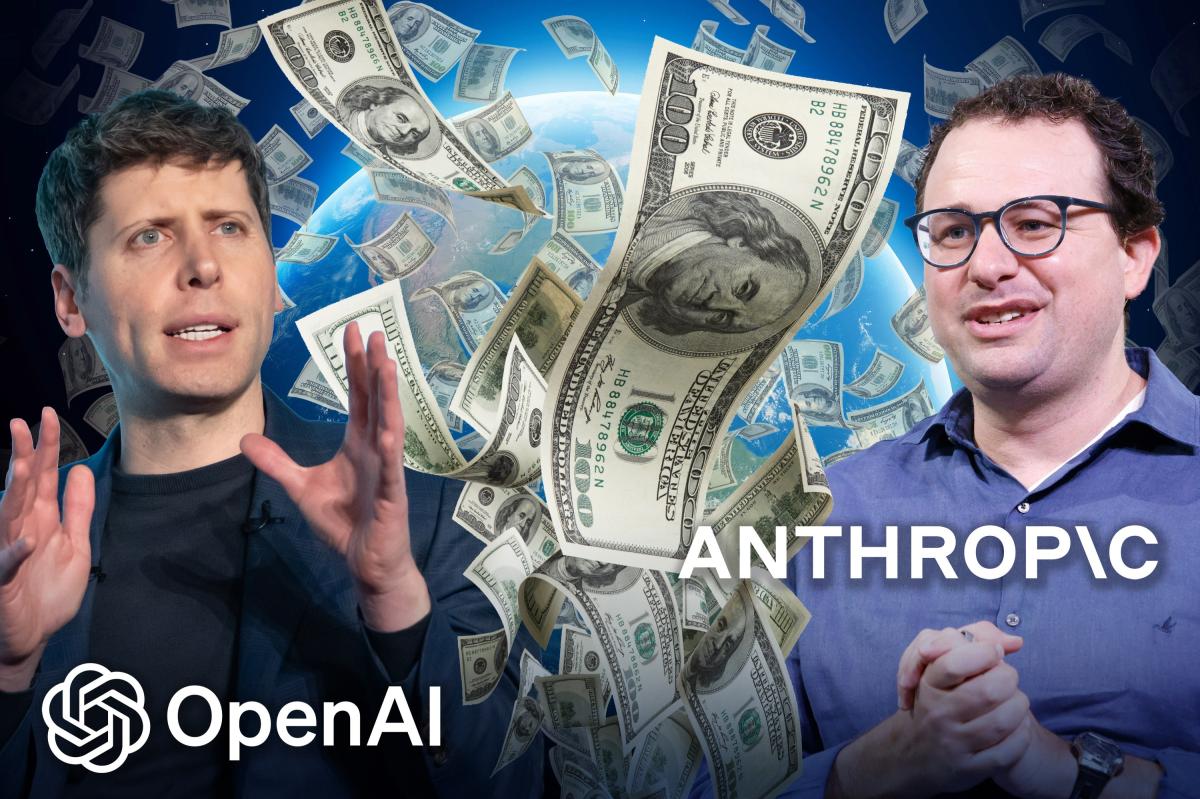

The anticipated public listings of OpenAI and Anthropic could set off one of the largest philanthropic windfalls in modern history, potentially freeing up an estimated $430 billion in charitable commitments — a scale that echoes the era of America’s Gilded Age industrialists.
As both artificial intelligence leaders move closer to blockbuster IPOs that analysts believe could value each company at more than $1 trillion, their related charity promises may translate into an extraordinary surge of global giving, according to The Economist.
“This could be a moment where hundreds of millions of lives can be improved, and there may not be many moments like that in history,” Nick Allardice of GiveDirectly, a nonprofit that provides cash assistance to people in poverty, told the publication.
For Anthropic, the potential philanthropic impact is especially striking. Forbes estimates that the AI company could ultimately direct roughly $110 billion to charitable causes based solely on a pledge from its seven co-founders, who have committed to donating 80% of their personal wealth.
A further $60 billion could flow through donor-advised funds tied to Anthropic employees, bolstered by the company’s practice of matching worker donations into those charitable accounts.
OpenAI’s giving is structured differently, centered on the nonprofit OpenAI Foundation, which is designed to channel the company’s growing financial resources into major philanthropic grants.
Because the foundation controls 26% of OpenAI’s equity, a successful public offering could leave it with an estimated $260 billion available for charitable distribution.
Combined, the projected charity funds linked to OpenAI and Anthropic would amount to about 1.3% of total US GDP, placing the potential AI philanthropy boom in the same conversation as the historic giving of the Ford, Rockefeller and Carnegie foundations from the late 19th through the mid-20th centuries.

The donations would also blow away the philanthropic wave of the Internet boom, where those companies gave away about $230 billion between 1990 and 2018, according to The Economist.
But the AI companies’ donations are not set in stone, as their IPO estimates continue to fluctuate with no set date yet on when the companies’ public offerings will hit the market.
It also remains to be seen if the companies, their leaders and the employees will commit to give away as much as they promise to, but current trends keep the outlook positive.
Big tech often likes to spend its funds on tangible endeavors that seek to do the most good for society, such as earlier this summer when the two AI companies and Stripe, a payments firm, led a $500 million donation to find a vaccine for cold and flu viruses.
Coefficient Giving, an American philanthropic advising and funding organization, said it helped give out $1 billion in the first half of the year, matching the funds donated in all of 2025.
Last month, the company also said it increased its commitment to GiveWell, another charity, to $1 billion.