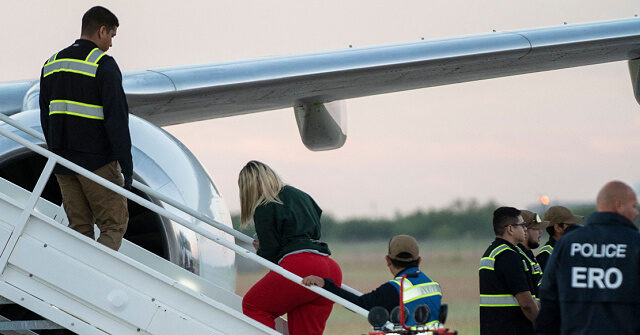

The Supreme Court ruled Tuesday that the Trump administration may resume deporting migrants to countries other than their countries of origin while the justices consider whether the policy is lawful.
In a brief, unsigned 6-3 order, the court paused a ruling from U.S. District Judge Brian Murphy that had rejected the Department of Homeland Security’s third-country deportation policy. The justices offered no explanation for the decision but agreed to hear full arguments in December.
Acting Attorney General Todd Blanche celebrated the ruling in a post on X, describing it as support for the administration’s position in the legal battle.
“Now for the second time, SCOTUS just granted our stay in conducting all third-country removals of illegal aliens,” Blanche wrote. “Again, this is entirely lawful and a critical tool for immigration enforcement. Unlike the lower court, SCOTUS waited to hear from both sides before making the decision.”
The policy allows federal officials to deport migrants to “third countries”—nations not identified in their original removal orders. The administration has relied on the policy because many migrants’ home countries refuse to accept them. Under the government’s approach, assurances to Secretary of State Marco Rubio that deportees will not be persecuted or tortured are sufficient to permit their transfer.
ALSO READ: Why Six Flags’ X2 Roller Coaster Still Terrifies Thrill-Seekers
Solicitor General John Sauer told the justices that third-country removals are an important way to deport some of the most serious criminal offenders. He said the lower court’s order forced DHS to cancel a flight carrying 70 deportees to three countries. The State Department, led by Rubio, has reached agreements with as many as 31 nations—primarily in Africa and Latin America—with at least $410 million pledged through the end of June.
The dispute began earlier this year. In February, Murphy, a Biden appointee, ruled that the policy violated the Fifth Amendment’s due process protections because migrants received neither adequate notice nor a meaningful opportunity to explain why they feared torture. The First U.S. Circuit Court of Appeals upheld most of that decision on Sept. 18. Tuesday’s action marked the administration’s second Supreme Court stay in the case.
The court’s three liberal justices—Sonia Sotomayor, Elena Kagan and Ketanji Brown Jackson—dissented. Trina Realmuto, an attorney representing the migrants, said the ruling could expose people to immediate danger by sending them to countries where they may face persecution before they have a chance to present their claims.
Also Tuesday, Burundi said it would accept deportees from the United States who have no ties to the East African nation. A spokesperson for Burundi’s president said the arrangement would exclude people facing prosecution or suspected of having terrorist connections.
Human rights organizations estimate that more than 25,000 migrants have so far been deported to 29 countries under the policy, with most sent to Mexico. The Supreme Court is not expected to issue a final ruling until the summer of 2027.