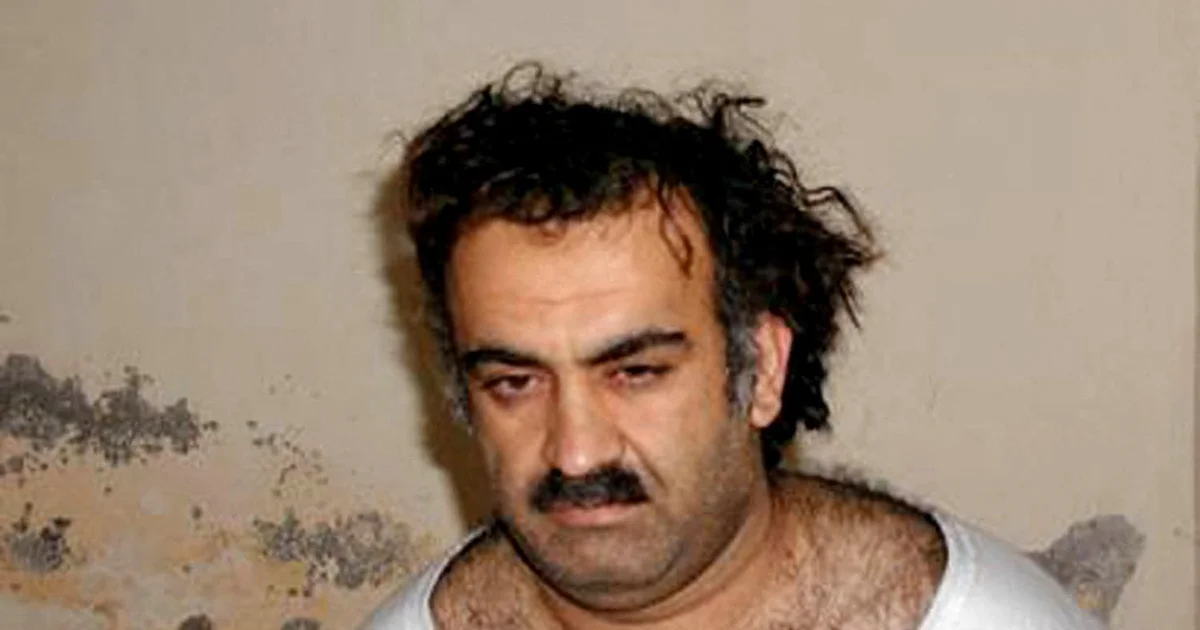

Washington — The Supreme Court on Monday declined to revive plea agreements negotiated with military prosecutors by Khalid Sheikh Mohammed, the alleged architect of the Sept. 11 attacks, and two alleged co-conspirators. The deals had been canceled by the Biden administration.
In an unsigned order, the justices rejected appeals from Mohammed, Mustafa al Hawsawi and Walid bin ‘Atash. Their challenge sought to overturn a lower-court ruling that blocked a military judge from enforcing the agreements reached in 2024 with prosecutors and later rescinded by then-Defense Secretary Lloyd Austin.
The decision leaves the government’s cancellation of the plea deals intact. Justice Brett Kavanaugh did not take part in the court’s review of the case.
Mohammed, Hawsawi and bin ‘Atash were captured in 2003 and later charged before a military commission with crimes tied to the planning and execution of the Sept. 11 attacks. Five of the charges carry the possibility of a death sentence. In August, the judge overseeing the proceedings scheduled the trial to begin in June 2028, although that timetable depends on both sides completing required legal steps and meeting key deadlines.
The cases have been delayed for years, largely because of disputes over whether prosecutors can use evidence obtained during the men’s interrogations. Before arriving at Guantanamo Bay in 2006, the defendants were held at secret CIA detention sites and subjected to so-called “enhanced interrogation techniques,” which included torture. They were formally charged in 2008.
Pleas discussions began in 2023 after retired Brigadier General Susan Escallier was appointed the Convening Authority for military commissions. Military attorneys reached agreements with the defendants the following year, and Escallier approved the deals in her role overseeing the Guantanamo military court.
The agreements called for the three men to plead guilty to every charge connected to their alleged involvement in the 9/11 attacks and receive life sentences rather than face capital punishment. Soon after the deals became public, however, Austin announced that he was revoking them.
ALSO READ: California Coast Shark Attack Details Emerge After Smuggling Attempt
A military judge ruled in November 2024 that Austin had acted unlawfully in voiding the agreements, concluding that they remained valid and enforceable. A military appeals court later determined that the defense secretary lacked authority to cancel the deals because the defendants had already begun fulfilling one of their terms.
The Justice Department subsequently asked the D.C. Circuit to intervene and rule that Austin had properly withdrawn from the pretrial agreements. The appeals court sided with the government last year, holding that Austin “indisputably” possessed the authority to end the deals.
“The Secretary acted within the bounds of his legal authority, and we decline to second-guess his judgment,” the D.C. Circuit panel wrote.


