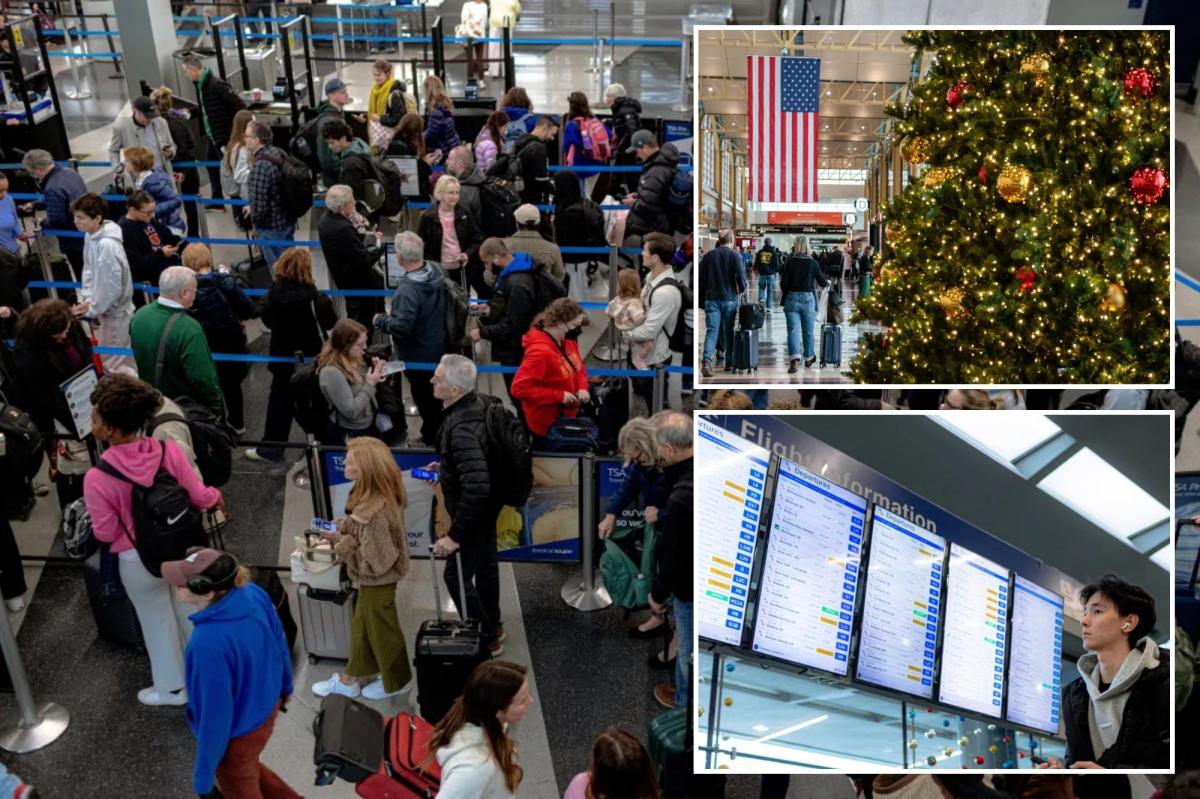

As airports prepare for one of the busiest Thanksgiving travel periods in the US, analysts are cautioning passengers against a simple booking choice that can increase the risk of delays: selecting a departure after 9 a.m.
Hopper data shows that flights leaving after 9 a.m. are typically twice as likely to be delayed as those scheduled between 5 a.m. and 8 a.m.
The warning comes as delays and cancellations emerge as the leading concern for American travelers, with 69% identifying them as their top consideration when booking a flight, according to a Hopper consumer survey.
The Federal Aviation Administration said a storm system delivering heavy rain, strong winds and thunderstorms has moved through the Gulf Coast and Southeast and is approaching major airports across the Mid-Atlantic and Northeast through Thanksgiving Day.
Recent technical disruptions have further unsettled travelers.
On Nov. 13, a telecommunications problem triggered an FAA ground stop that disrupted flights across the country.
The stoppage halted departures nationwide and contributed to more than 12,400 cancellations, according to the FAA and the US Department of Transportation.
Follow The Post’s live updates on Thanksgiving travel: flight delays, weather, traffic, more
A separate outage briefly prompted another ground stop at Chicago O’Hare International Airport on Nov. 24, Fox News Digital previously reported.
How the clock turns against travelers
Data from the Bureau of Transportation Statistics, analyzed by DelayGuard, found that only 11% of US domestic departures scheduled before 8 a.m. between 2023 and 2025 arrived at least 15 minutes late.
Commercial aircraft commonly operate several flight segments each day, meaning a storm, congestion or runway problem at one airport can create delays across subsequent routes. AirDelay analysis found that late-arriving aircraft account for 41% of all delay minutes in the US.
Early-morning departures are less exposed to that domino effect.
“The aircraft has spent the night at the airport, so there is no late inbound flight to wait for,” DelayGuard reported. Morning crews are also just starting their shifts, meaning earlier disruptions are less likely to interfere with boarding, according to the analysis.
Travelers whose early flights are disrupted also have more opportunities to find another departure later that day.
MORE STORY: Denny’s Faces Backlash Over Tribute to Nvidia CEO Jensen Huang: ‘Just Put the Pancakes On’
By contrast, evening delays often leave passengers with far fewer rebooking options, according to AirDelay and CLEAR.
Passengers willing to set a 4 a.m. alarm may also find cheaper fares on a 6 a.m. flight than on a 10 a.m. departure, The Points Guy reported.
“Taking a morning flight gives you a greater chance of having a plane and crew ready to go,” Gary Leff, a Texas-based travel industry expert and author of the “View From The Wing” blog, told Fox News Digital.
“There’s an opportunity to address maintenance issues overnight. So [there’s] a likelihood of starting the day with an aircraft that’s ready,” Leff said.
“Crew have limits in their duty day. They could run out of allowable time with late flights that get delayed,” he added. “Early flights mean starting fresh, and you aren’t risking your pilots or flight attendants ‘timing out.’”
Why the day matters
The day of the week can also influence a flight’s chances of arriving on time.
Tuesday is consistently the most punctual day at major US airports, with fewer than 19% of departures arriving late, according to Bureau of Transportation Statistics records reviewed by DelayGuard. Wednesday ranks close behind.
Sunday is the least reliable, with delays affecting about one-quarter of flights, DelayGuard reported.
Leff said delays tend to build as the day progresses.
“Delays stack throughout the day. If you’re on the third or fourth flight operated by your crew or aircraft that day, there were several opportunities for them to get delayed during the day,” Leff said.
Travel timing can also make a difference to a passenger’s budget during the holiday rush.
Returning home on Sunday can be the most expensive choice, with average round-trip domestic fares reaching $604. Travelers who wait until Monday or Tuesday pay about $350 on average, according to Hopper’s 2026 Holiday Travel Index.
Aviation officials recommend allowing extra time for the trip to the airport, signing up for airline alerts and monitoring conditions through the FAA’s National Airspace System status portal.
“Early flights mean more recovery options,” Leff said. “Not only are there more same-day options left on the schedule, but available seats are less likely to have been taken by other passengers that were delayed.”


