
The cryptocurrency ecosystem finds itself at a crucial crossroads, balancing the challenge of scaling with the need to maintain its core principles of decentralization and transparency. Recent strides by fintech leaders like Stripe and Circle highlight this ongoing dilemma. Stripe is discreetly working on a highly efficient blockchain named Tempo, designed to enable swift payments and stablecoin exchanges.
Meanwhile, Circle has unveiled Arc, an open Layer-1 blockchain optimized for stablecoin finance, with USDC as its native gas token.
Christian Catalini, Co-Founder and Chief Strategy Officer of Lightspark, poses critical questions about our progress. Are we developing a universal open money protocol, or simply building branded, exclusive infrastructure reminiscent of traditional financial systems’ closed networks?
Technological evolution often mirrors a pendulum, swinging between decentralization, scalability, and eventual recentralization spurred by distribution, branding, and network effects. The early internet serves as a case in point. Open and interoperable protocols like TCP/IP and SMTP encouraged innovation and widespread use.
Nevertheless, major platforms such as social media companies have developed proprietary ecosystems, securing value through user retention and data monopolies. Cryptocurrency seems to be approaching a similar pivotal moment. As blockchain networks expand, the urge to scale may require compromises that undermine the decentralized ideals that initially launched the movement. If cryptocurrency mirrors the internet’s path, there is a danger that dominant entities could eclipse open protocols, emphasizing control over collaboration.
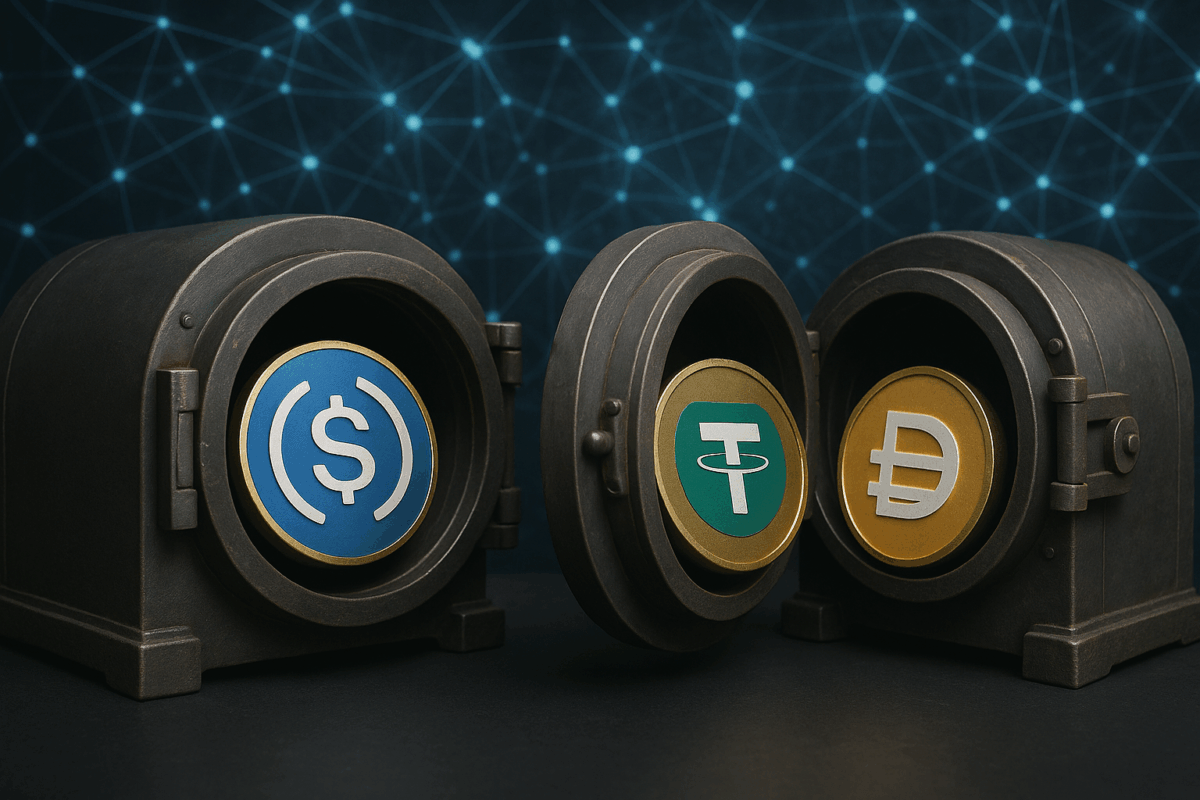
Stablecoins have become a significant innovation in tackling the notorious volatility of cryptocurrencies, offering a link between fluctuating digital assets and the stability akin to fiat currencies. By anchoring their value to assets like the US dollar, stablecoins like USDC and USDT facilitate practical applications in payments, remittances, and decentralized finance (DeFi).
However, this stability comes at a cost: governance and reserve management often reintroduce central actors. Issuers like Circle and Tether maintain reserves—typically in Treasuries, cash equivalents, or other low-risk assets—to back their tokens on a 1:1 basis. This centralization mirrors traditional financial systems, where trust in the issuer is paramount. Circle’s Arc and Stripe’s Tempo may exemplify this shift.
Arc is designed as an EVM-compatible Layer-1 chain tailored for stablecoin-native applications, promising seamless integration for enterprises while emphasizing compliance. Tempo, backed by crypto VC firm Paradigm, positions itself as a blockchain for efficient stablecoin payments, potentially routing all USD stablecoin transactions through Stripe’s infrastructure. These resemble the Visa and Mastercard model—efficient and user-friendly, but ultimately controlled by a few entities—now transplanted onto blockchain rails.
Decentralization, while ideologically appealing, proves expensive in practice. Although gas fees are certainly not what they were, networks like Ethereum prioritize security and immutability, and come with high transaction fees and slow processing times during peak demand. To mitigate this, most transactions are migrating to Layer-2 (L2) solutions, which batch operations off the main chain (Layer-1) to reduce costs and increase speed.
Users willingly trade trust and control for convenience, echoing consumer behavior in traditional tech. For instance, rollups on Ethereum process transactions off-chain before settling on the mainnet, slashing fees dramatically. As frictions diminish, aggregators emerge to dominate, much like how search engines and app stores consolidated power on the internet. In crypto, this dynamic applies to money itself, where L2s enable faster, cheaper transfers but risk centralizing influence around a handful of operators with keys that can potentially freeze assets.
The ultimate victors in this landscape will be those who control the “last mile”—the direct interfaces with consumers, merchants, and institutions. Onchain technologies excel at lowering digital verification costs through transparent, immutable ledgers. However, offchain elements like identity verification, regulatory compliance, and credit assessment remain bottlenecks where value is captured.
Power accrues where frictions endure. For example, while blockchain can verify transactions instantly, KYC/AML requirements and credit scoring still rely on traditional systems, giving incumbents an edge. This hybrid reality means that even as crypto democratizes finance, entrenched players can leverage their off-chain strengths to dominate on-chain ecosystems.
Two primary strategies are unfolding among key players. Stablecoin issuers like Circle are commoditizing the underlying rails while erecting their own walled gardens. Tools such as Circle’s Cross-Chain Transfer Protocol (CCTP), which enables seamless USDC transfers across blockchains without traditional bridge risks, and the Circle Payments Network (CPN), which connects institutions for global stablecoin movements, pave the way for Arc’s integration.
Arc builds on these by offering configurable privacy, foreign exchange engines, and compliance features, positioning Circle as a one-stop shop for stablecoin finance. Conversely, exchanges, fintechs, and neobanks treat stablecoins as loss leaders to bootstrap user growth, while investing in their own L2s or proprietary chains. Robinhood, for instance, is exploring similar L2 developments to compete. These approaches aim to capture network effects, but they also fragment the ecosystem.
In the long run, if interoperability is compromised, the crypto revolution may circle back to square one—albeit with even larger financial incumbents wielding unprecedented power. Blockchain interoperability is essential for seamless cross-chain interactions, preventing silos that stifle innovation.
Without it, we risk a fragmented landscape where branded rails dominate, much like today’s payment networks. Yet, there’s hope: open standards could prevail if the community prioritizes collaboration over competition.
The pendulum’s swing isn’t inevitable; deliberate choices today will determine whether crypto scales as an open protocol for everyone or becomes a fortified domain for the few.