
Election security has remained a defining focus for President Trump for years. More recently, he has urged congressional Republicans to advance a voting regulation bill and used a live primetime speech Thursday night to elevate the issue once again. Yet during the early months of his second administration, the federal government has also sharply reduced the ranks of employees responsible for helping safeguard U.S. elections.
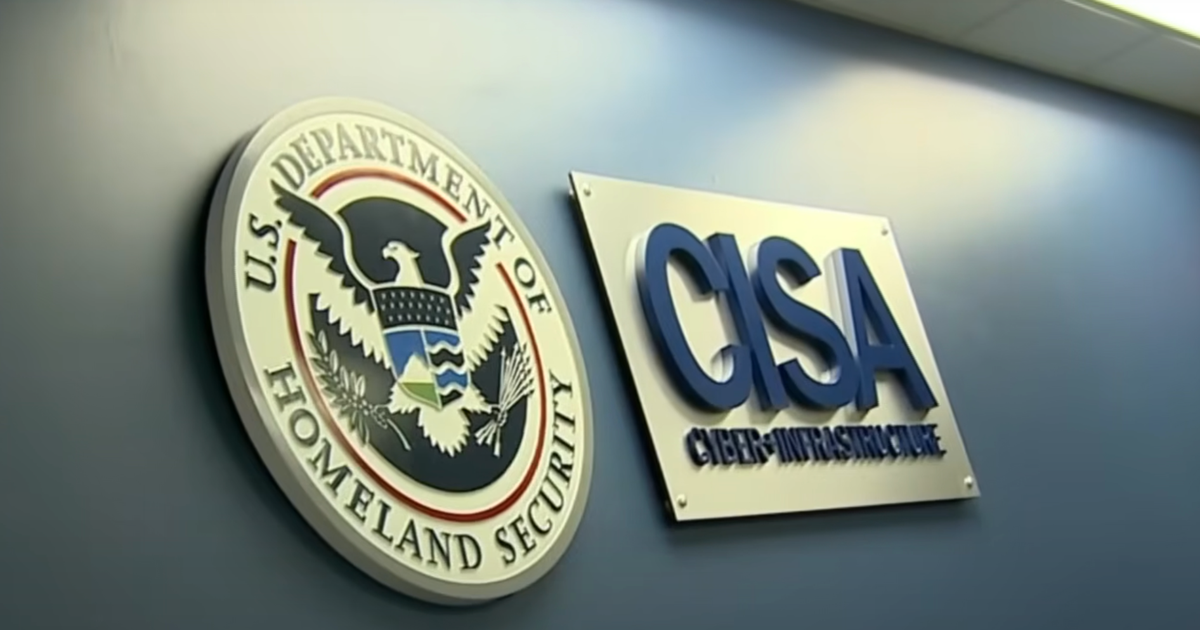
At the Cybersecurity and Infrastructure Security Agency, the nation’s leading federal cyber defense organization for election systems and other critical infrastructure, nearly 1,000 staff members had either departed or been taken off active duty by the middle of 2025 — close to one-third of CISA’s workforce.
The departures came in several forms: some employees were dismissed, others quit or were put on administrative leave, while additional positions disappeared as contracts lapsed or programs were discontinued. Overall staffing hovered near 2,500, a steep drop from roughly 3,400 the year before. The shift was also visible in federal budget documents. The Biden administration’s fiscal 2025 request sought about $3 billion for CISA, while the Trump administration’s fiscal 2026 proposal asked for approximately $2.4 billion and projected 2,649 staff positions.
CISA was created in 2018 during Trump’s first term, drawing bipartisan backing, new investment and widespread approval. But the agency became a political flashpoint after Trump’s 2020 loss, when then-director Chris Krebs called that election “the most secure in American history.” Trump rejected the assessment as “highly inaccurate” and removed Krebs from his post.
After Mr. Trump returned to the White House for his second term, the changes came quickly. In February 2025, 17 CISA employees focused on election security were placed on administrative leave, and the agency’s wider election-security work was put under internal review.
CISA later withdrew federal support for the Elections Infrastructure Information Sharing and Analysis Center, a key resource designed to help state and local election officials defend voting-related systems against cyberattacks and other digital threats.
The agency also scaled back and eventually ended its partnership with the Multi-State Information Sharing and Analysis Center, which had offered state and local governments cybersecurity assistance, including network monitoring and alerts about emerging threats and vulnerabilities.
CISA has said the reductions would save about $10 million a year, reduce overlapping services and allow the agency to focus on its most essential responsibilities. But the changes have left states leaning more heavily on their own IT departments, fusion centers, private cybersecurity firms and informal networks with other states to replace services that had previously been provided at the federal level.
In May, Democratic Sen. Mark Warner, the vice chairman of the Senate Select Committee on Intelligence, acknowledged the cuts had left them vulnerable when he formally asked DHS to justify reports that CISA was no longer providing states and localities with election-security support.
In the House, state officials asked Congress to restore or extend federal cybersecurity programs and grants, telling lawmakers that state and local entities were facing escalating threats but lack the personnel and resources available to the federal government or major private companies.
FBI, Justice Department and ODNI cuts putting elections at risk
While CISA is the major agency securing U.S. elections, there are other groups and task forces across the government working to ensure the integrity of elections that have also been slashed.
The Trump administration disbanded the FBI’s Foreign Influence Task Force, with Attorney General Pam Bondi dissolving the unit on Feb. 5, 2025, her first day in office. The task force — which was created during Mr. Trump’s first administration in the wake of Russia’s 2016 election-interference operation — was charged with investigating covert foreign-influence activity, including campaigns targeting U.S. elections. At the time, Bondi said ending the task force would free resources for more pressing priorities and reduce the risk of politicized or abusive enforcement.
At the Justice Department’s Civil Rights Division, senior career attorneys responsible for voting-rights enforcement were also reassigned as part of a broader shake-up, and the Justice Department also withdrew from several voting-rights cases while redirecting the Voting Section toward voter-roll maintenance and suspected fraud.
At the Office of the Director of National Intelligence, then-Director Tulsi Gabbard announced a restructuring that would reduce ODNI’s workforce by more than 40% and gutted the Foreign Malign Influence Center. FMIC had previously served as the intelligence community’s central hub for integrating intelligence on foreign efforts to manipulate American political attitudes and housed the Election Threats Executive. At the time, ODNI claimed the center duplicated work.
In April 2025, Secretary of State Marco Rubio shut down the Counter Foreign Information Manipulation and Interference office, a successor to the Global Engagement Center whose work included countering Russian, Chinese and Iranian information operations that could affect American political debate.
Most recently, the Trump administration removed all remaining members of the bipartisan U.S. Election Assistance Commission. On July 9, the White House fired its two Democratic commissioners, while its remaining Republican commissioner resigned, leaving the four-seat commission with no active leadership.
Historically, the EAC has been a national election clearinghouse, accrediting voting-system testing laboratories, certifying voting systems and distributing federal election grants — all while maintaining the national mail voter-registration form. The White House said the president was able to remove commissioners who are not aligned with his election-security objectives.
Olivia Gazis
contributed to this report.