
The U.S. military said Monday that it struck an alleged drug-trafficking boat in the Pacific Ocean, killing two people aboard.
U.S. Southern Command (SOUTHCOM) said in a post on X that the strike, which took place Sunday, targeted a vessel “operating along established narco-trafficking routes in the Eastern Pacific.”
“Confirmed intelligence revealed the vessel’s active involvement in narco-trafficking,” the military said.
“This operation is a clear and decisive reminder that SOUTHCOM is taking the fight directly to the cartels,” U.S. Southern Command said.
Grainy black-and-white footage released with the announcement showed a vessel cutting through the water moments before a large explosion. The military did not specify the type of craft, but it appeared to be a long semi-submersible vessel, commonly known as a “narco sub.”
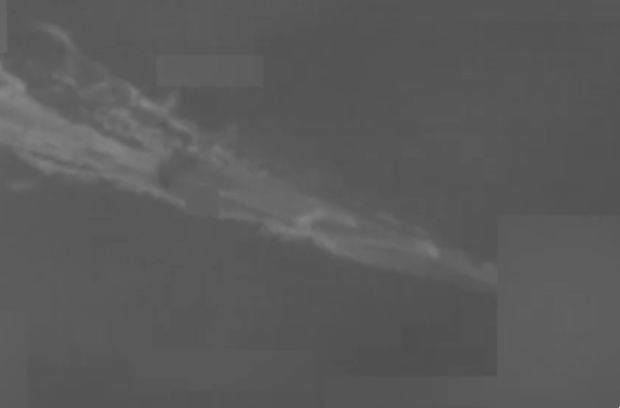
SOUTHCOM
Narco subs do not fully submerge, but they are frequently used by international drug traffickers because they can be difficult for law enforcement to detect.
“We are committed to imposing total systemic friction on narco-terrorists — disrupting their operations, dismantling their leadership, and eliminating cartel terror across the region,” Gen. Francis L. Donovan said in a statement Monday.
The U.S. military began Operation “Southern Spear” last September, after President Trump argued that Washington was effectively at war with drug cartels operating from Latin America.
Since the campaign began, more than 200 people have been killed in strikes across the eastern Pacific Ocean and the Caribbean Sea.
The Trump administration has not provided definitive evidence that the vessels it has been striking are involved in drug trafficking.
Critics of the strikes have questioned the overall legality as well as their effectiveness. Part of the argument has been that the fentanyl behind many fatal U.S. drug overdoses is typically trafficked over land from Mexico, where it is produced with chemicals imported from China and India.
U.S. lawmakers have previously demanded that the Pentagon release “unedited video” of the very first strike that the military conducted after reports emerged that the U.S. chose to conduct a follow-on strike on survivors of its initial attack.
Some lawmakers have questioned whether that follow-on strike constituted a war crime. The Defense Department and several congressional Republicans have insisted the survivors may have still been in the fight, warranting the follow-on strike.
The Pentagon’s watchdog said in May that it planned to look into whether the U.S. military followed an established targeting framework when carrying out the strikes. However, the evaluation is focused specifically on what’s known as the six-phase Joint Targeting Cycle and not on the legality of the strikes, the inspector general’s office said.
In June, the U.S. military conducted a strike in the Caribbean against a boat accused of smuggling drugs in the region, killing two people and leaving six survivors.
contributed to this report.


