
The same Iranian-made Shahed drones that frequently target the city of Lviv in Ukraine are now being countered by weapons developed just a few miles away. These weapons are produced in clandestine facilities where former students and office workers tirelessly assemble kamikaze drones and interception systems around the clock.
Originally an improvised response to wartime needs, this initiative has evolved into one of the world’s most rapidly expanding military drone industries. According to a Ukrainian official, Kyiv is now at the forefront of battlefield innovation within NATO and could provide valuable insights to the U.S. and Israel, who are also dealing with similar Iranian drone technology across the Gulf region.
“Drone technology has fundamentally altered the situation on the frontline,” stated Lviv Mayor Andriy Sadovyi in an exclusive interview with Fox News Digital. “In perhaps six months to a year, we may possess the capability to deploy 1,000 drones simultaneously.”
POLAND SEEKS ANSWERS AFTER PENTAGON SCRAPS PLANNED US ARMORED BRIGADE ROTATION
During a military technology exhibition held at an undisclosed location in western Ukraine, Ukrainian-made drones were showcased, highlighting their technological advancements. (Efrat Lachter/Fox News Digital).
“With deeper collaboration between Ukraine, the United States, Israel, and Europe, we can develop specialized equipment that will secure our victory,” Sadovyi emphasized.
Dmytro, CEO of a Ukrainian drone manufacturer producing roughly 1,000 drones a week, told Fox News Digital, “We are three or four steps ahead of other countries…this is a new kind of war,” he said. “It is a war of IT technology.”
Cheap drones now allow small battlefield units to identify and destroy tanks, armored vehicles and even sophisticated air defense systems that once required expensive missiles or fighter aircraft.
That transformation is visible throughout western Ukraine, where defense technology hubs, secret workshops and testing facilities now operate, while in the cities air raid sirens regularly interrupt daily life.
Drone components and battlefield systems assembled at a Ukrainian manufacturing facility in an undisclosed location in western Ukraine. (Efrat Lachter/Fox News Digital)
Inside the workshop Fox News Digital visited, workers moved rapidly between tables stacked with propellers, fiber-optic cable and other classified drone components. The workers say they no longer see themselves as civilians temporarily helping the war effort. Many now view drone production as essential to Ukraine’s survival.
Vitaliy, one of the technicians assembling kamikaze drones destined for the front line, said he now builds hundreds of drone components a day. “Targets will be vehicles, tanks, troopers, positions,” he told Fox News Digital.
NATO ALLY POLAND WARNS RUSSIA, BELARUS PUSHING ILLEGAL MIGRANTS TOWARD ALLIANCE — AND THE US
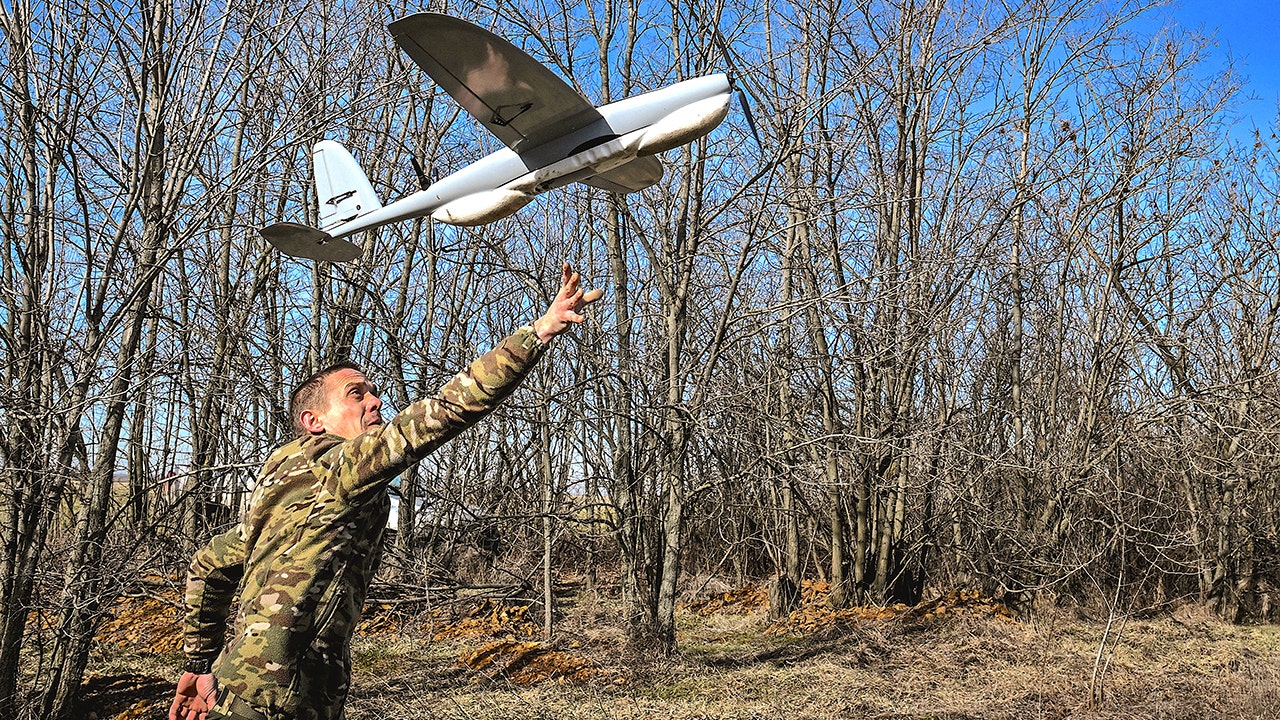
A soldier launches an RQ-35 Heidrun drone used for reconnaissance and artillery fire correction in the Zaporizhzhia, Ukraine on Feb. 22, 2026. (Dmytro Smolienko/Ukrinform/NurPhoto via Getty Images)
Referring to President Donald Trump’s statement that he will end the war, Vitaliy said, “I feel honored because I’m helping my country to get peace much faster,” Vitaliy added. “Peace through strength — this is our motivation. But it is mostly on us, for sure,” he said.
Ukraine’s domestic drone production has expanded at a staggering pace. Ukrainian Deputy Defense Minister Serhiy Boev said earlier this year the country aims to produce more than seven million drones in 2026, up from roughly four million in 2025.
From AI-assisted battlefield systems to drones resistant to Russian electronic warfare, Ukraine’s wartime innovations are exposing vulnerabilities in traditional Western military doctrine.
At another defense technology hub in Lviv, rows of interceptor drones, unmanned ground vehicles and remotely operated weapons systems fill a showroom demonstrating Ukraine’s rapidly evolving battlefield ecosystem.
“We have around 250 tech companies in the system,” said Volodymyr Cherniuk, co-founder of Iron, a Ukrainian defense technology cluster.
Some drones are designed for reconnaissance. Others for evacuation, logistics or direct strike missions. One heavy-lift drone used for nighttime attacks has earned the nickname “Baba Yaga” from Russian troops, which Cherniuk translated as “boogeyman.”
Another interceptor drone is designed specifically to hunt Iranian-made Shahed drones that Russia uses in nightly attacks on Ukrainian cities.
UKRAINE’S ‘SPIDER’S WEB’ DRONE STRIKE BURNS OVER 40 RUSSIAN WARPLANES, MOSCOW CALLS IT ‘TERRORIST ATTACK’
“They can go 300 kilometers per hour,” Cherniuk said. “One hundred grams is enough to shut down a Shahed.”
“We have a lot of Americans, Canadians, Europeans who come here and want our data, feedback from the front line,” Dmytro said.
The remains of a Russian-made, Iran-designed Shahed-136 drone, known in Russia as a Geran-2, are displayed with other recovered drones, glide bombs, missiles and rockets in Kharkiv on July 30, 2025. (Scott Peterson/Getty Images)
As Fox News Digital reported from Lviv, air raid sirens repeatedly echoed across the city, a reminder that western Ukraine remains within reach of Russia’s expanding drone campaign.
Russia has dramatically escalated its aerial assaults in the recent week after the end of the short ceasefire, launching massive drone barrages targeting cities and logistical hubs across Ukraine, including areas near NATO territory close to the Polish border.
Ukraine has also increasingly demonstrated its ability to strike deep inside Russian territory with long-range drone attacks targeting areas around Moscow and Russian energy infrastructure.
But the evolving drone war has also increasingly spilled beyond Ukraine and Russia’s borders into NATO territory.
In recent weeks, drones linked to Ukrainian long-range strike operations entered the airspace of Baltic alliance members including Latvia, Lithuania and Estonia, triggering political fallout and renewed concerns about regional air defenses. Latvian Defense Minister Andris Sprūds resigned after drones crashed near fuel storage facilities close to the Russian border.
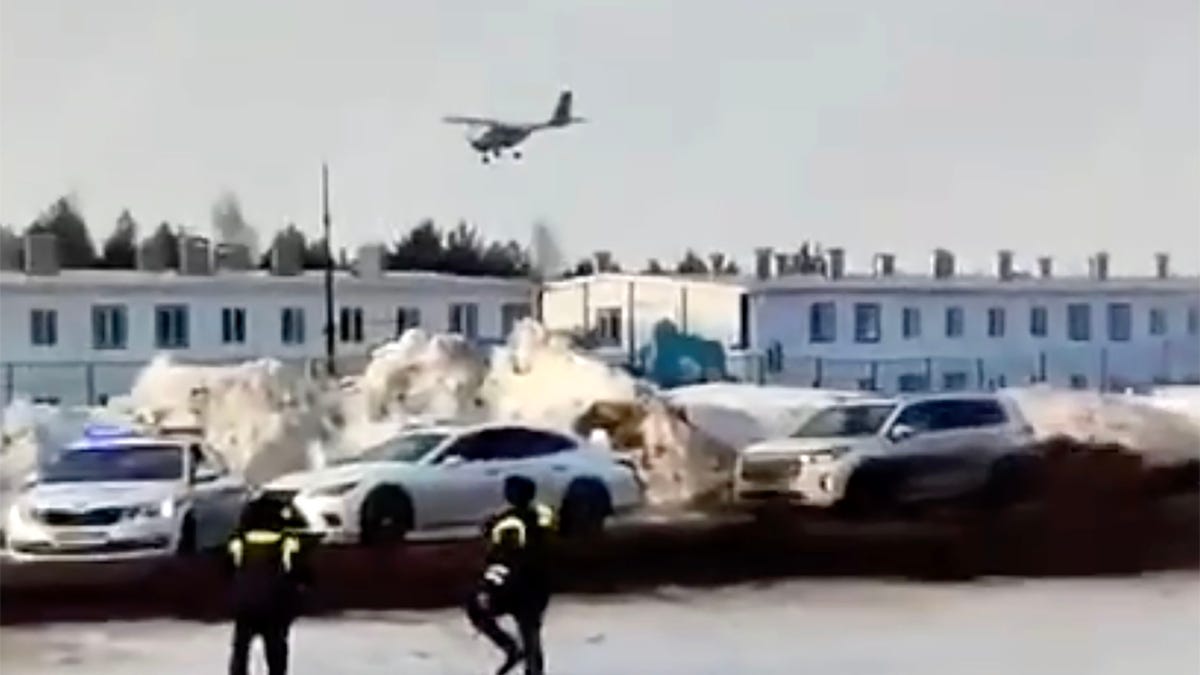
A Russian plant assembling Iranian Shahed drones is targeted in a mass Ukrainian drone attack on Tatarstan (East2West)
Ukrainian and Baltic officials blamed Russian electronic warfare and GPS spoofing for redirecting the drones off course, arguing Moscow is increasingly using electronic warfare not only defensively, but also to create instability and political pressure inside NATO countries.
The incidents underscore how the same Iranian-designed Shahed drones Russia uses nightly against Ukrainian cities — and similar long-range drone technologies increasingly used by both sides — are reshaping modern warfare far beyond the battlefield itself.
<!–>
–>