In a significant development concerning Middle Eastern diplomacy, Secretary of State Marco Rubio has delineated a new ‘red line’ for Iran as the United States continues its negotiations to bring an end to the ongoing conflict in the region, amidst fresh military strikes.
On Friday, U.S. military forces launched airstrikes targeting Iranian oil tankers, which were allegedly attempting to circumvent President Donald Trump’s imposed blockade. This action marks a notable escalation in the tense standoff.
A senior U.S. official informed Fox News that the targeted vessels were Very Large Crude Carriers (VLCC), describing them as “massive, empty ships trying to make it back to Iran.”
According to the U.S. Central Command, the operation involved U.S. fighter jets deploying precision munitions to disable two Iranian-flagged tankers by striking their smokestacks, effectively immobilizing them.
The airstrikes occur in the context of a fragile ceasefire agreement between the U.S. and Iran. President Trump has asserted that these military actions do not violate the ceasefire terms, a claim that has been disputed by Iranian officials.
In response, Iran’s Foreign Minister Abbas Aragchi criticized the move, stating, “Every time a diplomatic solution is on the table, the U.S. opts for a reckless military adventure,” reflecting the tense diplomatic atmosphere.
The fresh hostilities come while Washington and Tehran have been debating a one-page US proposal to reopen the Strait of Hormuz and cease hostilities for 30 days as both sides negotiate a larger deal to end the war, according to Iranian sources.
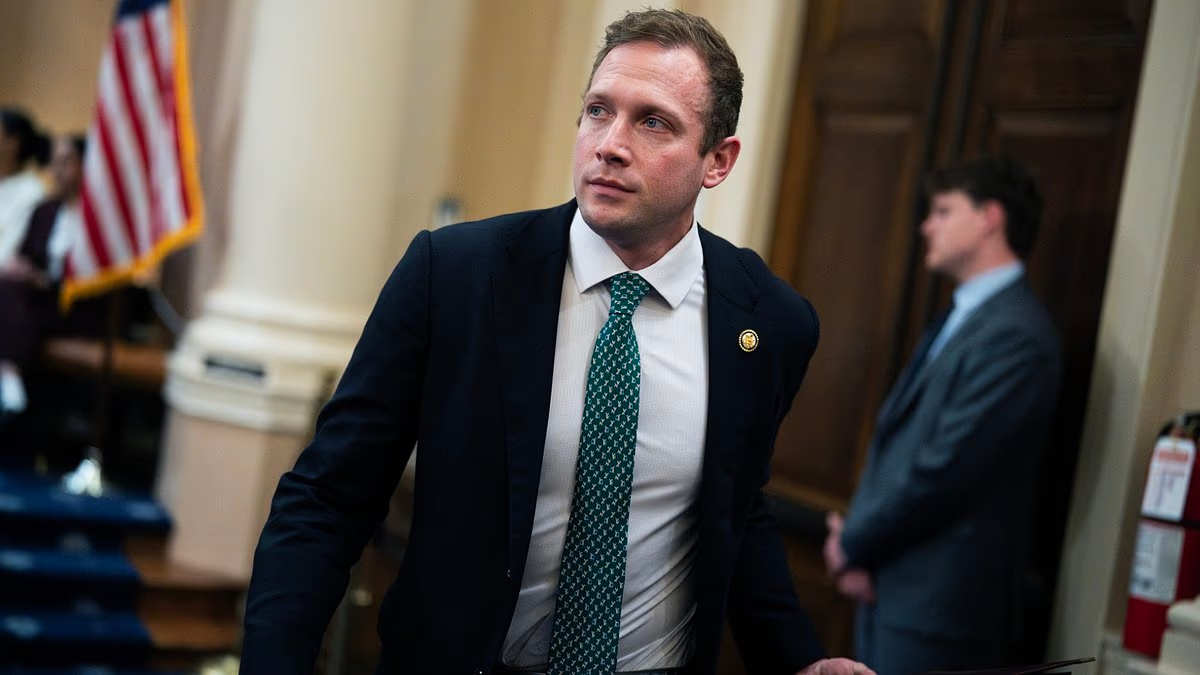
‘The red line is clear- if they threaten Americans, they’re going to get blown up!’ Rubio declared in an interview from Rome, where he met with Pope Leo on Thursday.
If US forces in the Middle East are targeted by Iran, that would cross the Trump administration’s ‘red line,’ Secretary of State Marco Rubio said on Friday
Vessels wait in the Strait of Hormuz as the US continues to blockade Iran
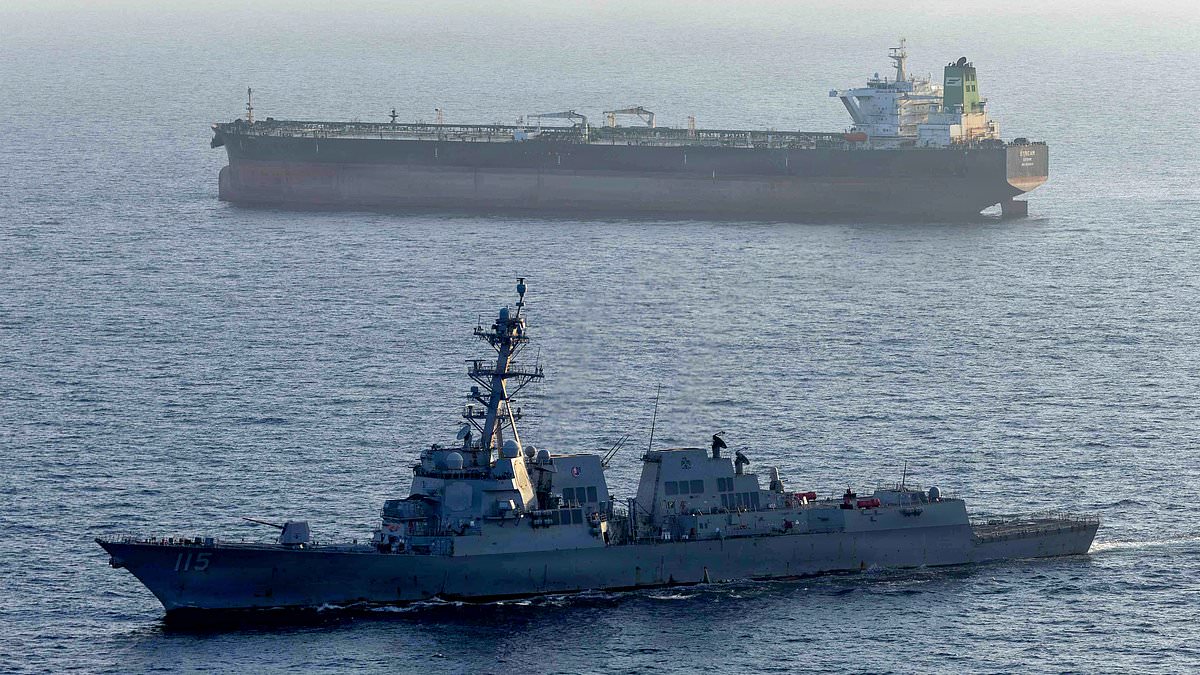
USS Rafael Peralta implementing a maritime blockade against the Iran-flagged crude oil tanker vessel Stream. the US ship was attacked by Iran on Thursday but was not struck
‘If you were a missile-launching guy, whatever they call that job, and you’re sitting there and you fire a missile at the United States and we saw you fire it, we’re going to hit you. Of course we are. Who doesn’t do that?’
Rubio added: ‘If I were one of these Iranians on a fast boat and they tell you, “Hey, your mission is to go after a US destroyer,” you’re probably not going to survive. I think that’s a red line.’
US Central Command said on Thursday that its forces intercepted an ‘unprovoked’ Iranian attack on three of its vessels as they transited the Strait of Hormuz to the Gulf of Oman.
‘U.S. Central Command (CENTCOM) eliminated inbound threats and targeted Iranian military facilities responsible for attacking U.S. forces including missile and drone launch sites; command and control locations; and intelligence, surveillance and reconnaissance nodes.’
The USS Truxtun, USS Rafael Peralta and the USS Mason were targeted, though no US assets were hit with fire.
Previously, Trump announced a ceasefire with Iran in early April in the hopes that negotiations between VP JD Vance and Iranian officials in Islamabad, Pakistan, could yield a deal to wind down the war.
Though the trip finished without an agreement, both US and Iran have exchanged fire in smaller strikes that have prompted questions over whether the ceasefire is really in effect.
‘It’s just a love tap,’ Trump said of the Thursday strikes. ‘The ceasefire is going. It’s in effect.’

‘It’s just a love tap,’ Trump said of the Thursday strikes. ‘The ceasefire is going. It’s in effect’
Reports indicate that the Thursday strikes targeted sites near Qeshm Port, a key oil site in the Strait of Hormuz used for commercial and military operations.
Facilities in and around Bandar Abbas, Iran’s main southern port, home to a naval base, were also hit.
Last week, Trump announced Project Freedom, an effort to reopen safe passage in the Strait of Hormuz.
The new operation prompted immediate backlash from US allies in the region, including Saudi Arabia and Kuwait. The two nations, which were reportedly blindsided by the operation, suspended US access to their airbases.
The President later shelved the operation after speaking with Saudi Crown Prince Mohammed bin Salman.