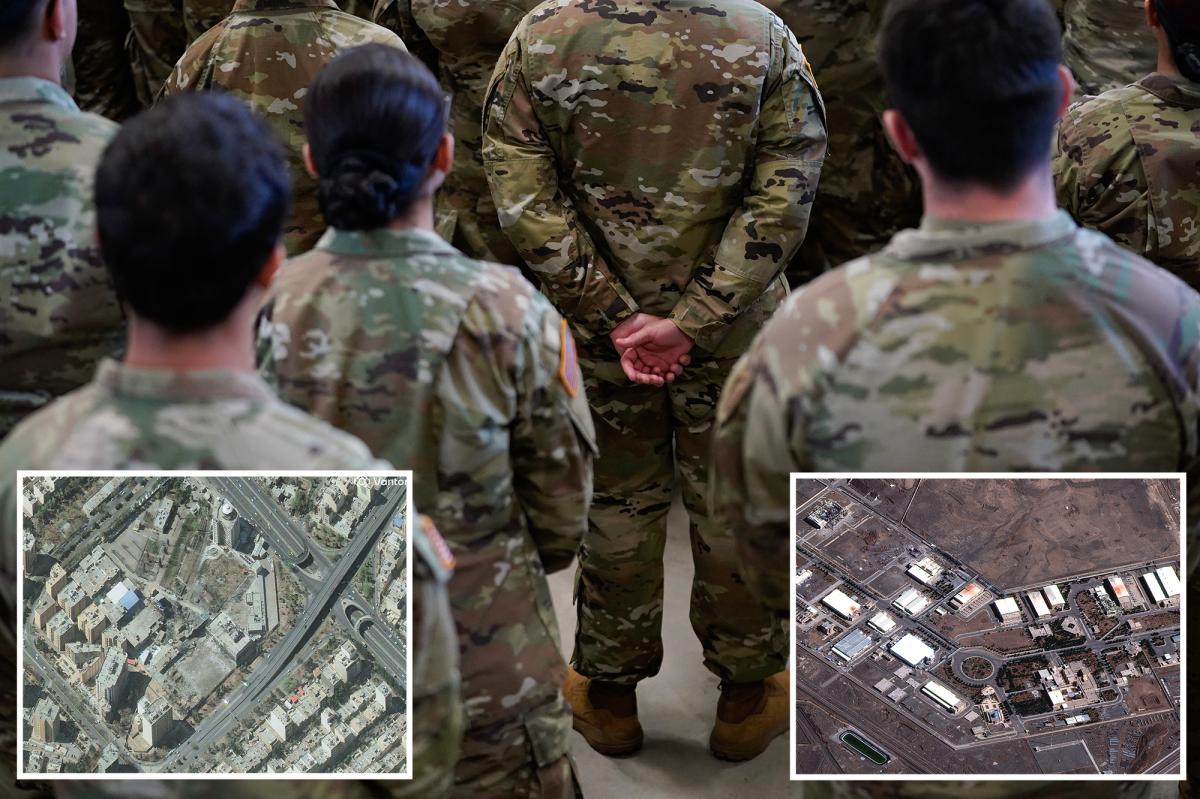


Neutralizing Iran’s most fortified nuclear bunker may be crucial to bringing an end to the ongoing conflict in Iran. However, this endeavor might necessitate deploying commandos directly into the Islamic Republic.
Western intelligence sources have dubbed this heavily fortified site “Pickaxe Mountain.” Nestled over 330 feet beneath a mountain, it surpasses the depth of the Fordow Uranian Enrichment Plant, which was targeted by the United States in the previous year.
President Trump has consistently emphasized halting Iran’s nuclear weapon development as a primary objective of the war. Tehran has been actively working to obscure and protect its substantial stockpile of over 900 pounds of enriched uranium.
While airstrikes on Iran’s nuclear facilities have commenced, many experts argue that completely dismantling Iran’s nuclear program may ultimately require the presence of ground forces.
Last summer, the United States and Israel coordinated a series of airstrikes on Iran’s nuclear sites during the 12-Day War. President Trump proclaimed that these actions had fully dismantled Tehran’s nuclear initiative.
Nonetheless, the Islamic Republic swiftly took measures to reinforce its installations and continue the enrichment process. According to U.S. officials, Iran still possesses over 900 pounds of uranium enriched to 60%, a level that could potentially lead to the creation of at least 11 nuclear bombs with relatively minimal additional processing.
The material is believed to be spread between Iran’s Fordow enrichment plant and its Isfahan nuclear complex.
That’s where Tehran is believed to be building a new enrichment plant, according to the Washington-based Foundation for Defense of Democracies (FDD) think tank.
Iran is also accused of creating a new, deeply fortified facility at Pickaxe Mountain, located about a mile from its Natanz enrichment plant.
Little is known about the nuclear facility, with Israeli outlets reporting that it could be about 330 feet below the mountain base, more than 30 feet deeper into the ground than the Fordow plant.
Rafael Grossi, the director general at the UN’s International Atomic Energy Agency, said he was told “it’s none of your business,” when inquiring about the work being done at the site last year.
Andrea Stricker, the nonproliferation program deputy director and research fellow at the FDD, said that the US and Israel cannot claim to fulfill their goals of the war without securing the Pickaxe Mountain site and the other nuclear facilities.
“Before the United States and Israel end major combat operations against Iran, they must complete two urgent tasks. First, they must neutralize Pickaxe Mountain,” Stricker wrote in a briefing.
“Second, they must recover or eliminate HEU (highly enriched uranium) stocks to prevent them from falling into the hands of surviving leaders of the Islamic Republic, other adversarial states, or Tehran’s terrorist proxies,” she added.
Since Iran’s nuclear program has been able to bounce back repeatedly following airstrikes, then forces on the ground may be the only way to get the job done, Trump suggested.
The president, however, said US troops would not be sent until Iran’s defenses allowed for the safe arrival of soldiers, noting that a special unit could be sent at some point to directly tackle Tehran’s nuclear facilities.
“At some point maybe we will,” Trump told reporters over the weekend. “We haven’t gone after it. We wouldn’t do it now. Maybe we will do it later.”
Annika Ganzeveld, the Middle East Portfolio Manager for the Critical Threats Project at the American Enterprise Institute, said the latest strikes on Iran, including Thursday’s assault on the Taleghan 2 facility, may signal a new phase of the war directly targeting the nuclear facilities.
“With Iran’s launchers and defense systems degraded, it allows the US and Israel to make attacks on that front,” Ganzeveld told The Post.