
The International Criminal Court (ICC) has not responded to the unfolding situation in Manila as of yet.
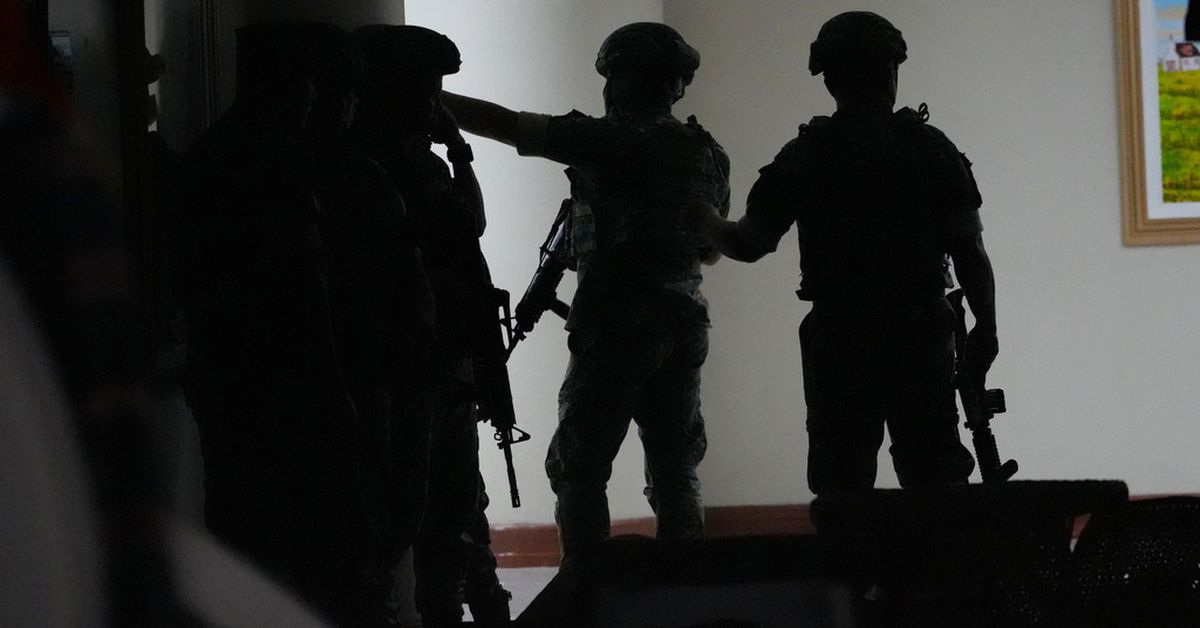
Senate President Alan Cayetano made a brief appearance before members of the press inside the Senate, stating that security personnel informed him of gunfire in the building. However, he shared no further specifics before quickly departing.
“Emotions are running high here,” Cayetano remarked.
“This is the Philippine Senate, and reportedly, we are under attack,” he added.
A large group of journalists, who have been documenting the tense events, were instructed to remain on the second floor. Some were eventually permitted to exit the premises following the arrival of Interior Secretary Juanito Victor Remulla Jr. accompanied by police officers.
In related news, the ICC issued an unsealed arrest warrant on Monday for Dela Rosa, a former national police chief. Dela Rosa is known for implementing the anti-drug operations under former President Rodrigo Duterte, during which thousands of minor offenders lost their lives.
Originally issued in November, the warrant charges dela Rosa with the crime against humanity of murder of “no less than 32 persons” between July 2016 and the end of April 2018, when he led the national police force under Duterte.
Dela Rosa, 64, has vowed to fight the ICC arrest order and said that he would seek all legal remedies. He also called on his followers on Wednesday night to gather in the Senate to prevent what he said was his impending arrest.
National Bureau of Investigation agents tried to arrest dela Rosa on Monday, but he managed to dash to the Senate’s plenary hall and sought the help of fellow senators. Cayetano said then that he would cite the government agents involved for contempt.
Duterte was arrested in March last year and flown to the ICC’s headquarters in The Hague for detention. He remains detained by the ICC in the Netherlands and is facing a trial for alleged crimes against humanity for the killings in his brutal crackdown, in which dela Rosa has been named as one of several co-perpetrators.
“We should not allow another Filipino to be brought to The Hague, the second one after President Duterte,” dela Rosa said, addressing his followers in a Facebook message and blaming politics for his predicament.
“This is unacceptable,” dela Rosa said.
He said that he was ready to face any allegations before Philippine courts, but he denied condoning extrajudicial killings when he led the police force. Duterte has also made the same denials, although he openly threatened suspected drug dealers with death while he was in office.
Hundreds of police officers have been deployed outside the Senate to maintain order, sparking complaints from dela Rosa and allied senators.
“If I have something to answer for, I will face those in our local courts and not before foreigners,” dela Rosa told reporters in the Senate, which took him into “protective custody” on Monday when he reappeared after months of absence.
Five senators called on dela Rosa to surrender to authorities in a proposed resolution, but his allies opposed the move in a heated exchange on Wednesday in the Senate, where 13 of 24 senators friendly to dela Rosa wrested control of its leadership on Monday.
Dela Rosa has been critical of President Ferdinand Marcos jnr but pleaded emotionally before television cameras on Monday for the president not to bring him to The Hague.
Duterte and his daughter, the current vice president, and political allies like dela Rosa have been the harshest critics of Marcos. Vice President Sara Duterte, once a political ally of Marcos, has blamed the president for allowing what she said was “the kidnapping” of her father and his handover to a foreign court.
After winning the presidency in 2016, Duterte designated dela Rosa, a loyal ally, as head of the national police force, which enforced the brutal campaign against illegal drugs.
Dela Rosa also once headed the police force in the southern city of Davao, where Duterte was a long-time mayor and built a political name for his extra tough approach to crimes.
“My role was to lead the war on drugs, and that war on drugs was not meant to annihilate people,” dela Rosa said when he was asked about the huge death toll.
“When the lives of police officers came under threat, of course they needed to defend themselves,” dela Rosa said.
Duterte withdrew the Philippines in 2019 from the ICC, in a move human rights activists say was aimed at escaping accountability.
The ICC, however, said that it retained jurisdiction over crimes committed when the Philippines was still a member and successfully moved to have him arrested, the first former Asian leader to fall into such disgrace.
NEVER MISS A STORY: Get your breaking news and exclusive stories first by following us across all platforms.