
In a secluded town roughly six hours from San Francisco, potential homeowners have a rare opportunity to purchase an affordable beach house for less than $400,000, a rarity along California’s coastline.
This hidden gem is Crescent City, home to around 7,000 residents and located in California’s northernmost county. Remarkably, about 80% of the surrounding area consists of state or national parks.
“Living here feels a bit like being on an island,” shared Adam Goldstein, who relocated to this rugged coastal community eight years ago, in an interview with the San Francisco Chronicle.
The Chronicle’s analysis reveals that homes within walking distance or a short drive from the beach in Crescent City have an average price of $353,000 — significantly more affordable than in other coastal towns.
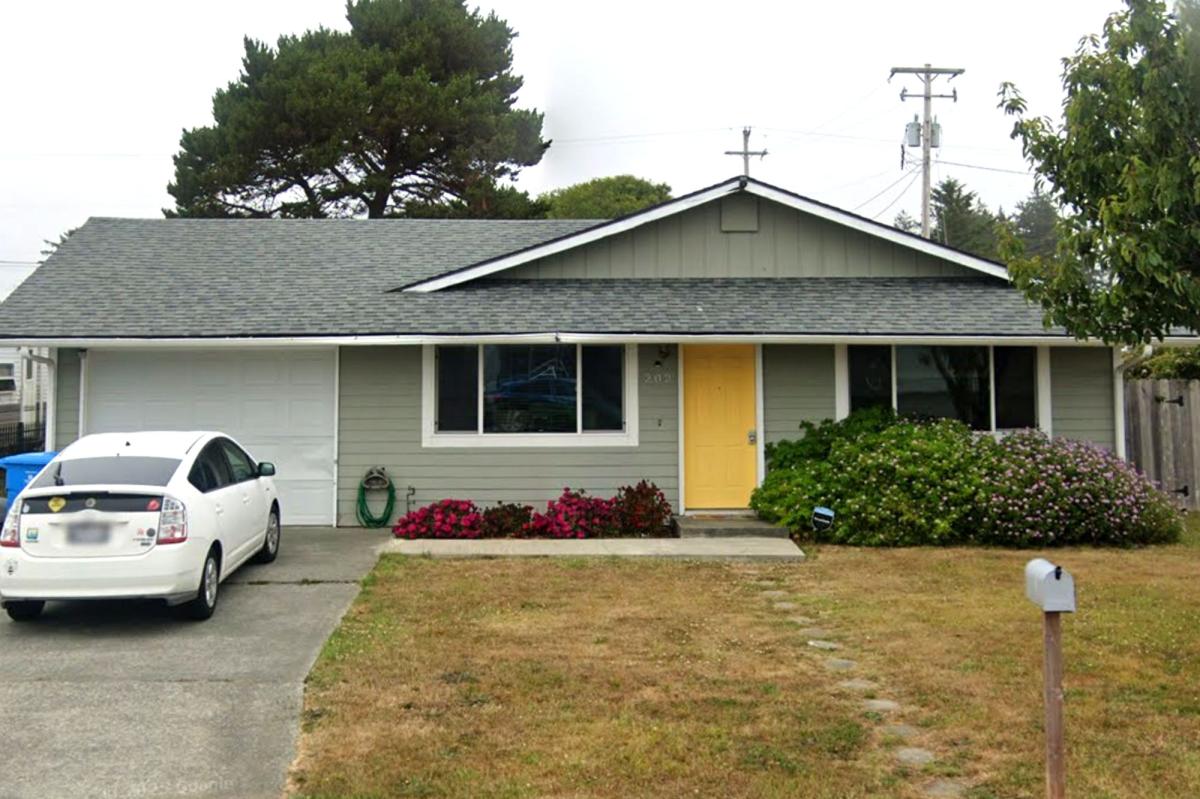
For instance, a 4-bedroom, 2-bathroom home spanning over 1,300 square feet is currently listed on Zillow for just $325,000.
A 4 bedroom 2 bathroom home that is just over 1,300 square feet is listed on Zillow for $325,000.
Another home that sits on 1,147 square feet and has 3 beds and 1 bath is going for $315,00.
While the homes are far cheaper than the millions of dollars people would have to spend to get property in other coastal cities like Malibu or Santa Monica, it is still pricey for the residents who live in the area and have poverty rates higher than the state average.
“It is quote-unquote affordable,” Eric Wier, Crescent City manager told the Chronicle. “But that doesn’t mean it’s affordable for the people who live here.”
Low wages, coupled with limited economic opportunities make it difficult for residents to afford a home, especially when the median value has more than tripled since 2000, the paper reported.

“That’s what’s making it difficult for us, we’re really dependent on the out-of-area buyer,” Kurt Stremberg, a longtime real estate agent told the paper.
The area is also not without its geological challenges — while boasting stunning ocean views, there are only two roads in or out with sections frequently shutting down due to storms and landslides.
Highway 101’s Last Chance Grade shuts down on average nine times a year, according to the Chronicle, and the only other option is a detour that adds another hour to the drive.
But the city has plans to build a $3 billion dollar tunnel in hopes of fixing the problem and Cindy Vosburg, director of the local chamber of commerce told the Chronicle a state jobs initiative is injecting millions of dollars to revive the city’s infrastructure and bring new life to the area.
“Just like any other community we go through the highs and lows — and right now we’re at a high,” Vosburg said.
So, the secret affordable coastal town might not be so secret in the near future.
“We have redwoods, we have the ocean, we have this amazing setting, and we need to lean into it,” Wier told the paper.