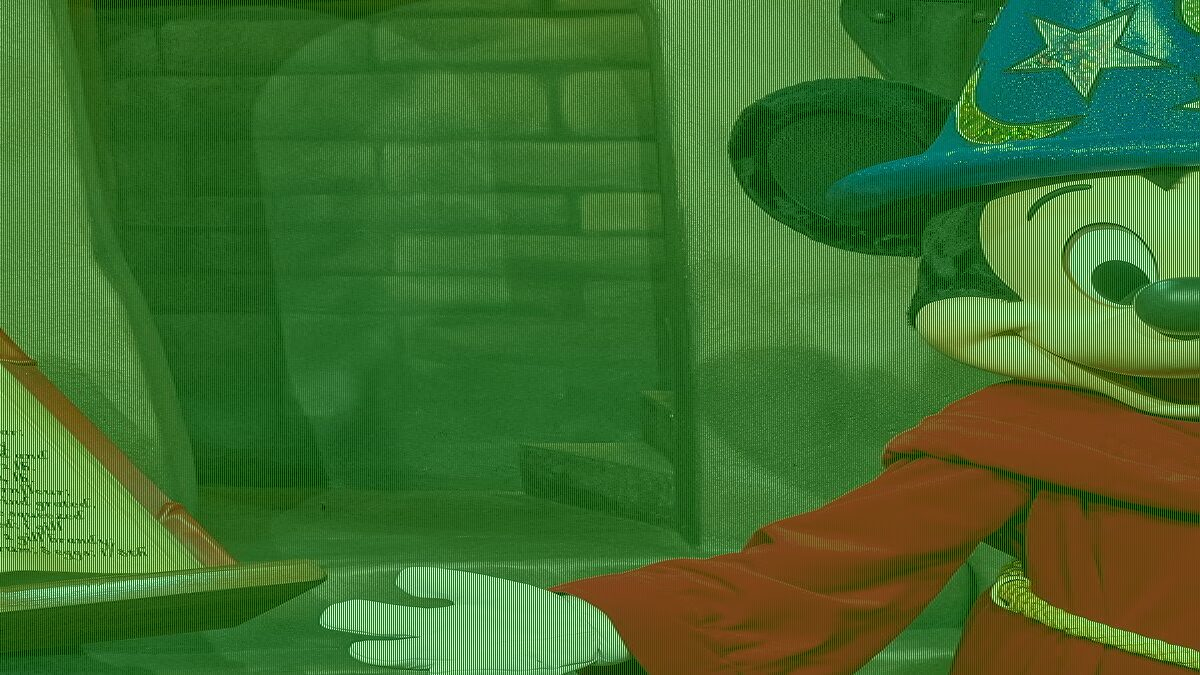
Disney World visitors are reacting with mixed feelings to newly approved patents covering AI-powered characters designed to build emotional connections through guests’ personal memories.
For many families, a Disney World trip includes the unforgettable moment when children meet Mickey Mouse, a princess or another beloved character.
That familiar experience could eventually take a high-tech turn, with artificial intelligence changing how characters communicate with visitors at the Orlando, Florida, resort.
Disney Enterprises has received approval for patents titled “AI-generated creative content based on shared memories” and “an emotionally responsive artificial intelligence interactive character.”
The technology includes software designed to store memories for an AI character. According to the patent, the character could invite a guest to share a personal memory and then use that information to create a stronger sense of familiarity during the interaction.
The system could also access a digital “memory bank.” The patent says that bank may adapt over time, highlighting similarities between stored memories and those shared by a guest to make the relationship between the visitor and the AI character feel closer.
In practice, the concept could give robotic Disney characters more individualized conversations with park guests. Some fans see the potential for a deeper, more immersive experience, while others are uneasy about the idea of machines remembering personal encounters.
Although the patents were approved in September, they attracted wider attention this week after several Disney bloggers highlighted the documents online.

Disney World fans are divided over a newly approved patent for AI characters that could use guests’ memories to create emotional connections (stock image)

Meeting Mickey Mouse or another favorite character is a major highlight for many families visiting Disney World. The proposed AI technology could permanently reshape those encounters at the Florida theme park (stock image)
The patent news quickly sparked a lively debate on Reddit, where Disney fans shared both excitement and concern about the proposed system.
One Reddit user called the idea “super cool,” suggesting it could significantly improve immersion inside the parks. However, the commenter also warned that the technology raised serious privacy questions.
“There’s a big privacy issue here,” the user wrote, comparing the concept with a brief conversation between a visitor and a costumed cast member. Unlike an AI system, the cast member is unlikely to retain the details after speaking with many other guests.
The commenter added that an AI character could record and analyze an entire interaction, potentially leading to targeted advertising through the Disneyland app or the sharing of personal data with outside companies.
Other users said they would find it “completely creepy” if a robot remembered them. Another questioned whether sufficient safeguards would prevent the AI character from developing responses that could become unsettling or inappropriate.
“Terrible idea,” one critic wrote, arguing that Disney’s magic comes from the people behind the characters rather than simply from a recognizable face or costume.
KEEP READING: Cornell 7 Defendant Seeks Dismissal From Lawsuit
The same user said they felt fortunate that their children had visited the parks before the technology began influencing the experience on a larger scale.
“Hard pass,” another Reddit comment read. A different user urged Disney to “keep it human,” expressing frustration over the growing presence of AI in everyday experiences.

Disney had already drawn attention in November after unveiling an AI-powered Olaf robot at Disneyland Paris capable of walking and speaking like the Frozen character

The advanced Olaf robot navigates its surroundings using a combination of remote control and artificial intelligence programmed to respond and adapt to its environment

To make Olaf as authentic as possible, the team used a branch of artificial intelligence called reinforcement learning
Back in November, Disney made headlines when it introduced an AI-powered Olaf robot at Disneyland Paris, which could walk and talk just like the Frozen character.
The high-tech device can move around through a combination of remote operation and AI that’s programmed to adapt to surroundings.
Kyle Laughlin, product and technology leader at Disney, called it ‘one of the most expressive and true-to-life characters built.’
‘From the way he moves to the way he looks, every gesture and detail is crafted to reflect the Olaf audiences have seen in the film,’ he said.
To make the snowman’s movements as authentic as possible, engineers relied on a type of AI called reinforcement learning.
This is where a robot learns to make intelligent decisions through trial and error by interacting with its environment.
The technology allowed the robot to practice thousands of motions inside a computer simulation until his real-life movements looked natural.
‘It takes humans years to perfect our motor skills for walking, and it takes additional years of practice to perform acrobatic motions that only a few of us can master,’ Laughlin said.
‘Deep reinforcement learning is a technology that helps robots acquire such skills in a shorter amount of time.
‘To make this technology scale well, we need fast and parallel simulation.’
Despite this feat, Olaf is still ultimately operated by a Disney staff member holding a remote control, Tech Radar reported.


