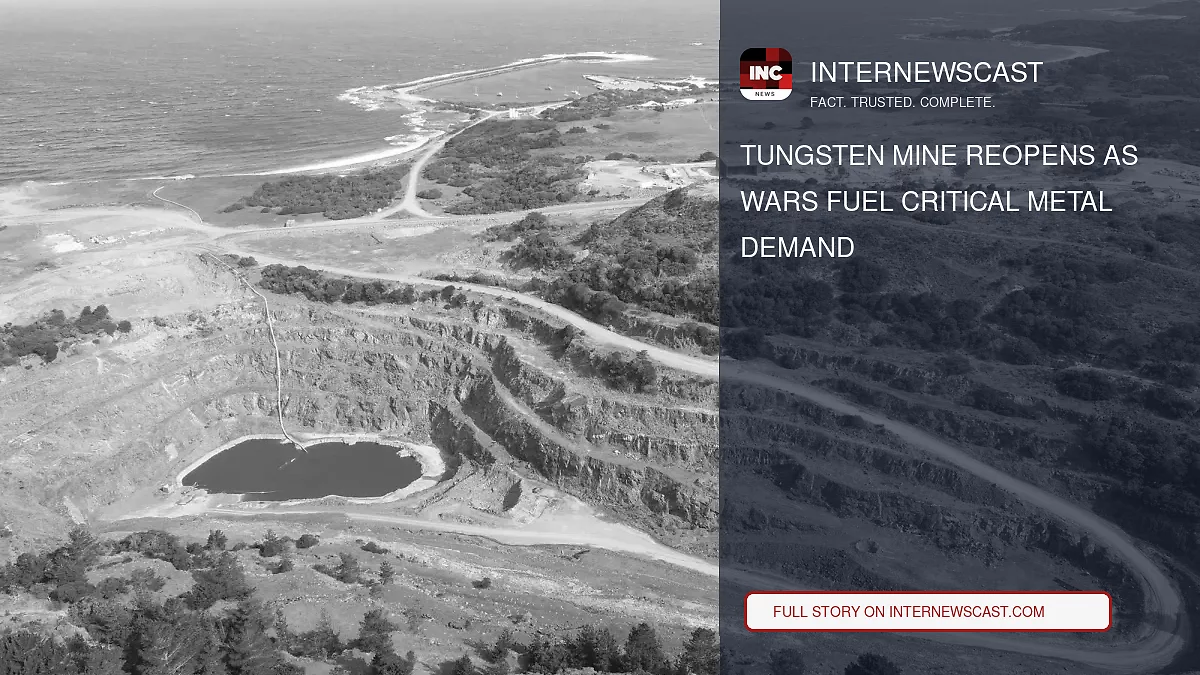

A tungsten-rich mine in Australia is coming back to life at a moment that feels strikingly timed, as major conflicts around the globe drive fresh demand for metals used in modern warfare.
Set on King Island, the Dolphin Mine holds one of the largest tungsten deposits on the planet. The tough, high-density metal is prized in defense manufacturing, especially for armor-piercing rounds and hardened armor plating.
For more than 100 years, the site’s fortunes have risen and fallen with the rhythm of war and peace. Today, the once-quiet operation is again drawing attention, as investors position themselves for a potential boom in the global tungsten market.
The Dolphin Mine began operating in 1917, supplying material for munitions during World War I. But by 1920, with the fighting over and tungsten prices shaken by the return of peace, the mine was forced to close.
Its story repeated itself as the world edged toward another conflict. Operations resumed in 1938 ahead of World War II, and the mine would later fade and revive again during the Korean War and the Vietnam War.
A surge in weapons production during the Cold War helped keep the Dolphin Mine running for a period, but its momentum finally ran out. Just a year after the Berlin Wall came down in 1989, the site slipped into what looked like lasting abandonment.
For three decades, the mine’s open pit sat flooded and dormant. Then, in January 2022, redevelopment work began — only weeks before Russian President Vladimir Putin ordered the full-scale invasion of Ukraine.
In 2026, the push to increase tungsten production is gathering pace as wartime demand strengthens. The mine’s first underground ore extraction and delivery are expected to take place in September.
It also comes amid a global rush to secure rare minerals at a higher rate than China, which produces the bulk of the world’s tungsten supply.
Beijing has ramped up its military power in recent years as it eyes the annexation of Taiwan, an event that could lead to a major war in the Pacific region.
The Pentagon has previously warned that China would make its move against Taiwan within the decade after it has built up enough resources to launch an attack.
The US has also joined the rush to secure metals of war, including a recent $1.6 billion deal to mine one of the world’s largest untapped tungsten reserves in Kazakhstan.
The metal is one of the key components for America’s air defense missiles, which are reportedly running low after months of war with Iran.
The Trump administration, which denies the shortage, is ramping up missile production, fueling a surge in investment in critical metal mines.


