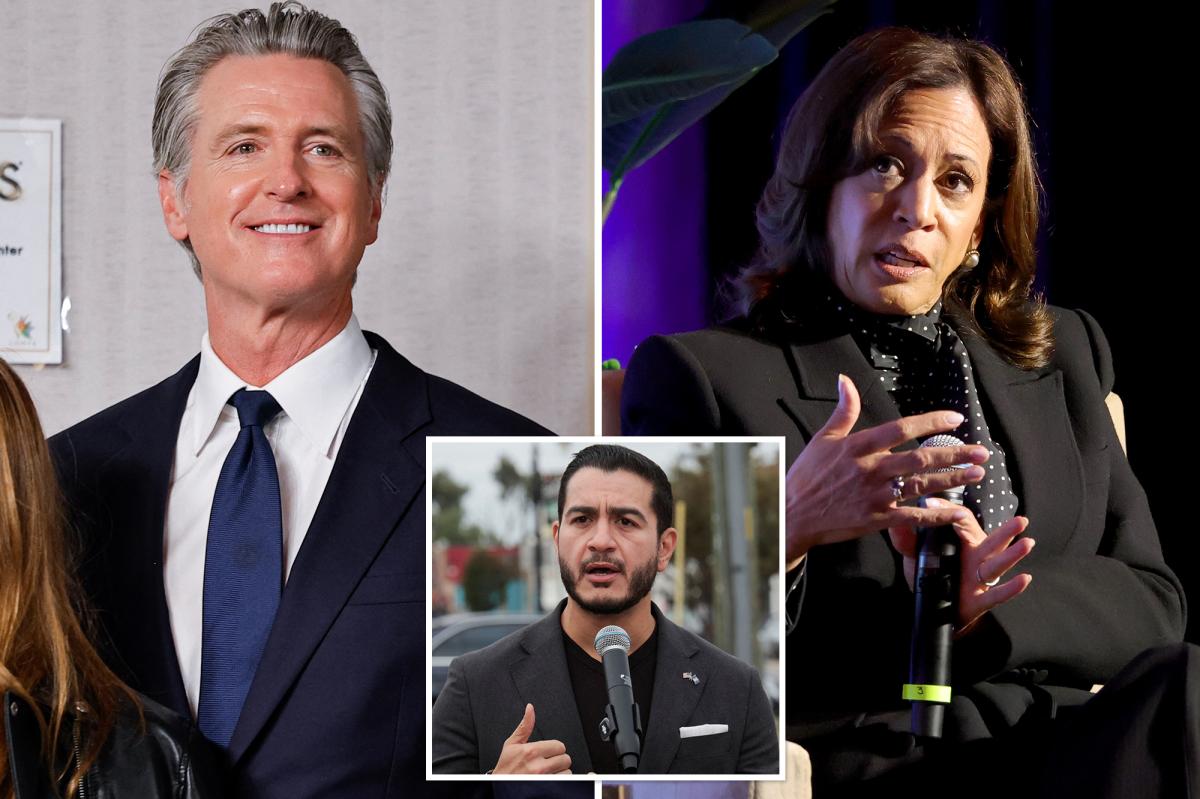

Kamala Harris is encountering a cool reception across the Midwest—with one notable exception.
The former vice president is set to visit Detroit on Tuesday at the invitation of Democratic U.S. Senate nominee Abdul El-Sayed. Elsewhere, however, vulnerable Democrats have made clear they would rather keep the party’s 2024 presidential nominee at a distance.
“No thanks,” Iowa Democratic gubernatorial nominee Rob Sand told Politico when asked whether he wanted Harris to campaign on his behalf.
“Let’s move on. We need some new leadership.”
Senate candidates in Iowa and Kansas have publicly separated themselves from Harris, The New York Times reported. Democratic nominees in Texas and Arizona likewise told the newspaper they do not intend to campaign alongside her.
Kansas Senate nominee Adam Hamilton told Politico that he must reach Republican voters whose “worldview may be a bit different than Kamala Harris.”
The pointed rebukes come as Harris’ prospects for a third presidential bid appear to be weakening—even in her home state. A UC Berkeley Citrin Center-POLITICO poll found that only 28% of California voters would be excited by a Harris campaign in 2028, a 13-point drop from March.
Resistance is also evident among Democrats and Democratic-leaning voters. Fifty-five percent said they would not be excited about Harris running again, while just 10% said she would have a better chance than California Gov. Gavin Newsom.
Newsom may have added a layer of political calculation to the discussion. In an interview broadcast by CNN last week, he said he did not expect Harris to run again, but added that he would “bow down” if she entered the 2028 contest.
Democrats who spoke with The Times and The Associated Press said Harris—the first woman and first Black person to serve as vice president—could energize the party’s base ahead of the November midterm elections. Others, however, see her as a reminder of the unpopular Biden administration and her decisive 2024 loss to President Trump.
El-Sayed, who is working to strengthen his support among Black voters in Michigan, is taking a different approach.
The progressive former Detroit health director said Harris’ appearance could help bring together Democratic factions divided over the war in Gaza during the 2024 campaign.
“We’re building an electoral coalition here,” El-Sayed told The Associated Press before the two appeared together.
Harris and El-Sayed were scheduled to discuss Black maternal health before joining a voting-rights forum hosted with the local NAACP chapter, according to The Times.
The alliance could provide advantages for both politicians.
Michigan’s sizable Arab American population strongly condemned the Biden administration’s support for Israel, deepening tensions within the Democratic coalition before Harris narrowly lost the state to Trump.
El-Sayed told MS NOW that some Black voters were left with “hurt feelings,” believing Arab American voters had not done enough to help Harris defeat Trump. He said the visit could create an opening to mend that rift.
“She understood just how frustrating that moment was and the challenges with the Biden-era policy toward Gaza going into 2024,” El-Sayed told the network. “This is an opportunity for us to come together.”
While other Democrats have shown far less enthusiasm, Harris has publicly brushed aside the snubs.
“I support them in doing whatever they need to do to win,” she told MS NOW this month.
Harris is scheduled to campaign in Nevada with Democratic gubernatorial nominee Aaron Ford and in Georgia with Sen. Jon Ossoff, according to the AP. She is also expected to appear with two Democratic congressional candidates in California.
A July fundraising document obtained by the Times presented Harris as a potentially valuable midterm surrogate and sought money to support her political travel. But she has said she is in no hurry to decide on her 2028 plans.
“Right now, midterms, midterms, midterms,” Harris recently told former US women’s soccer star Megan Rapinoe on a podcast.