
A 31-year-old woman died Sunday after an alligator severed her arms while she was swimming with friends in Central Florida’s Econlockhatchee River, marking the latest in a series of recent attacks that also injured a child and prompted state officials to renew warnings about dangerous “nuisance alligators.”
On Monday, the Florida Fish and Wildlife Conservation Commission (FWC) issued an urgent advisory, saying alligators that begin to link people with food must be reported right away so they can be “removed from the wild.”
FWC officials said Sunday’s fatal incident, described in a 911 call, was the second alligator attack in Central Florida within 24 hours and the third reported in the area over the past week.
“Bad, real bad please, hurry … she’s losing a lot of … please hurry … ” a distressed caller told dispatchers, according to emergency audio obtained by local media Monday. “Someone got bit by a gator….”

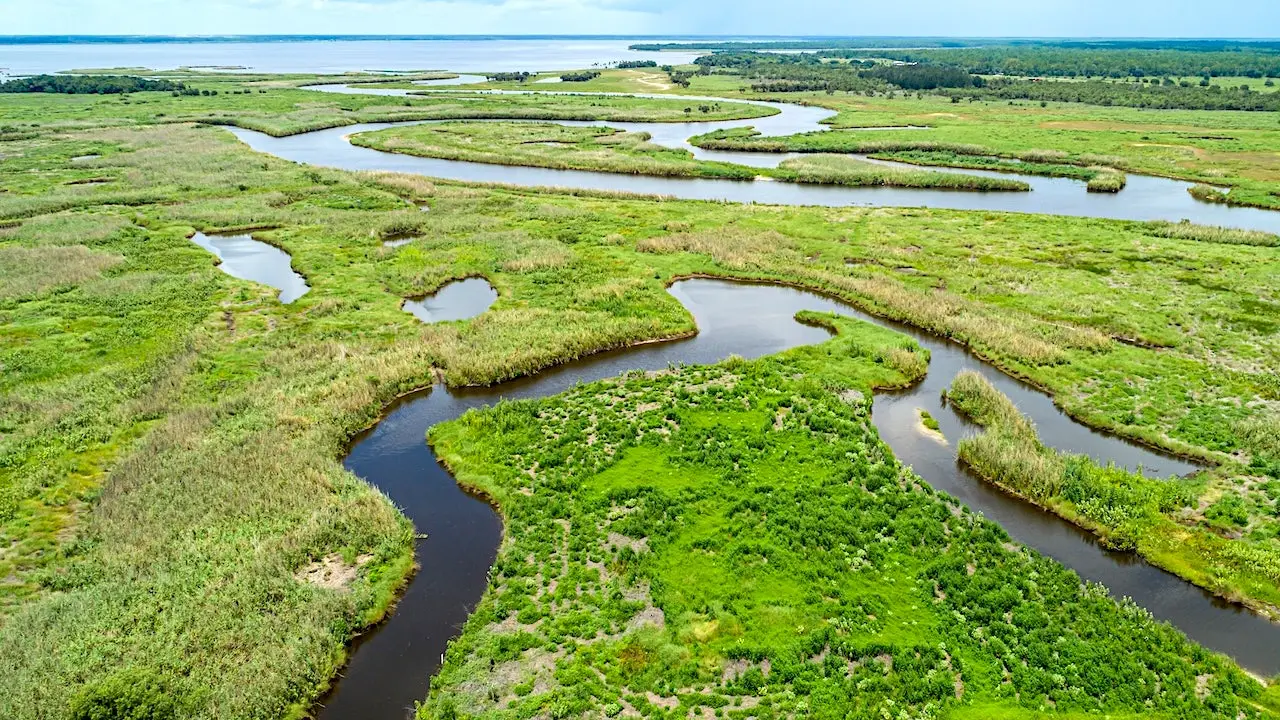
The Little Big Econlockhatchee Wildlife Management Area was the site of the deadly alligator attack, as Florida officials urged the public to quickly report alligators that may have become a threat to people. (Jeffrey Greenberg/Universal Images Group)
According to the FWC, the woman had been swimming near the Barr Street Trailhead in the Little Big Econ State Forest. She was rushed to a hospital under a trauma alert but later died from her injuries, officials said. Her identity had not been made public as of Monday.
“The FWC extends its deepest sympathies to the family and loved ones of the victim during this difficult time,” FWC press secretary Ashlee Brahier Sklute said in a statement to News Agency.

Three people were attacked by alligators in Central Florida in recent days, including a 31-year-old woman who died after the encounter. (iStock)
EXCLUSIVE: Unmasking the Church: Hugh Jackman's Faith and Emily Watson's Chilling Accusations
FWC officers, the Seminole County Sheriff’s Office and a trapper responded to the river.
“Multiple agencies and a contracted nuisance alligator trapper have responded to the scene,” Sklute said, detailing the ongoing investigation. “Trapping efforts are ongoing.”
The fatal attack came one day after a child was bitten in the hand by an alligator while fishing from shore at Nelson Fish Camp near Umatilla in Marion County, FWC said. The child was taken to a hospital for treatment, and an FWC officer later captured and killed an alligator that measured 8 feet, 7 inches, according to the FWC.
A week earlier, a snorkeler was bitten by an alligator in the Rainbow River in Marion County, prompting officials to temporarily close the waterway while FWC and deputies searched for the animal. Authorities later removed an 8-foot alligator, and the snorkeler was released from the hospital.
FWC says serious injuries from alligators are rare, but the agency warns that alligators are active across Florida, especially during courtship and mating season in spring and early summer. Florida is home to about 1.3 million alligators, and the animals live in all 67 counties, according to FWC.
“The FWC places the highest priority on public safety and administers a Statewide Nuisance Alligator Program (SNAP) to address complaints concerning specific alligators believed to pose a threat to people, pets or property,” the agency wrote in its statement to News Agency.
“People with concerns about an alligator should call FWC’s toll-free Nuisance Alligator Hotline at 866-FWC-GATOR (866-392-4286),” they said. “When someone concerned about an alligator calls the Nuisance Alligator Hotline, we will dispatch one of our contracted nuisance alligator trappers to resolve the situation.”
A few safety recommendations for individuals coming into contact with an alligator, according to FWC: “Keep a safe distance” and “keep pets on a leash and away from the water’s edge.”
“Pets often resemble alligators’ natural prey,” FWC warns. “Swim only in designated swimming areas during daylight hours and without your pet. Alligators are most active between dusk and dawn.”
Also, “never feed an alligator; it’s illegal and dangerous.”
“When fed, alligators can lose their natural wariness and instead learn to associate people with the availability of food,” the FWC added. “This can lead to an alligator becoming a nuisance and needing to be removed from the wild.”