
Buried 15 to 20 feet beneath the Nevada soil, behind 3-foot-thick reinforced-concrete walls, a steel vault door and a heavily guarded access tunnel, a Pentagon contractor proposed building a 5,000-square-foot underground fortress.
The facility was intended to hold what the contractor called acquired “exotic material or tissue,” including recovered hardware and biological samples associated with unidentified anomalous phenomena, or UAP. The Pentagon uses the term for unexplained events involving objects or activity in the air, space or at sea.
The proposal was not a work of science fiction. It appears in a 538-page declassified contractor report released by the Department of War as part of the Trump administration’s latest disclosure of UAP records. The documents show how close a private company came to constructing a secure repository under a $22 million Pentagon program.
The vault plans offer a glimpse into the scope of the Advanced Aerospace Weapon System Applications Program, which Pentagon correspondence also identified as the Advanced Aerospace Threat Identification Program.

A section of a July 2009 report by Pentagon contractor Bigelow Aerospace Advanced Space Studies details architectural plans for a 5,000-square-foot underground vault in North Las Vegas intended to store recovered hardware and biological samples. (Department of War)
Launched in 2008 with a $10 million congressional earmark secured by then-Senate Majority Leader Harry Reid, D-Nev., and the late Sen. Daniel Inouye, D-Hawaii, the initiative was presented as a study of foreign aerospace threats over a 40-year horizon.
DIA briefing notes from May 2009 indicate that Reid was seeking technological “leaps” in 12 fields, including advanced propulsion, stealth, directed-energy weapons, space-time travel and the effects of advanced craft on pilots.
Behind the scenes, however, contractor Bigelow Aerospace Advanced Space Studies, or BAASS, was preparing to obtain and preserve physical materials.
When the Defense Intelligence Agency solicited bids in August 2008, BAASS was the only company to apply. The North Las Vegas firm was founded by longtime Reid supporter Robert Bigelow, and the DIA awarded it the contract the following month.
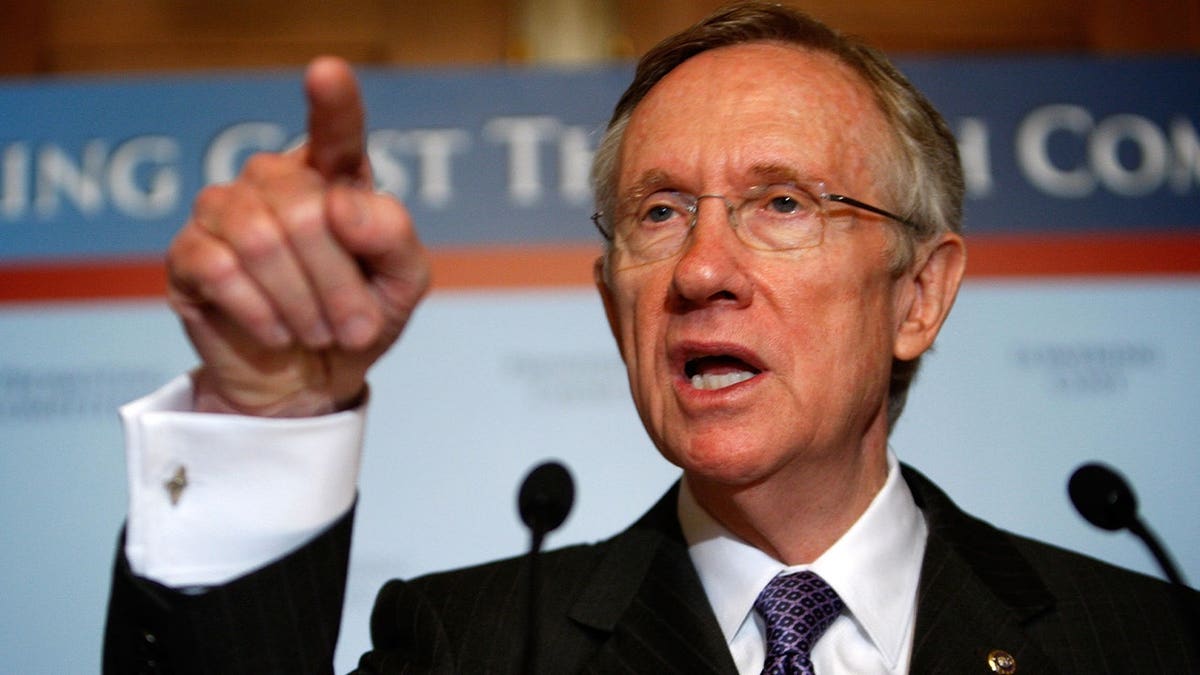
Then-Senate Majority Leader Sen. Harry Reid speaks at a news conference on Capitol Hill in Washington, D.C., on Oct. 21, 2009. (Alex Wong/Getty Images)
Within weeks, BAASS occupied an unassuming building on South Polaris Avenue in Las Vegas and began converting it into a fortified compound. The company installed soundproof offices, electronic deadbolts, tinted windows, surveillance cameras and an 8-foot perimeter fence, while removing company names and logos from the exterior.
By May 2009, the company had expanded to 47 full-time employees, including scientists, engineers and former military and law enforcement investigators. BAASS was also searching for five more buildings in the Las Vegas Valley to accommodate a 5,000-square-foot laboratory, storage for physical evidence and a secure conference room.
Meanwhile, the company’s administrator prepared blueprints for an underground bunker at Bigelow Aerospace’s North Las Vegas complex. The site was protected by razor wire, surveillance cameras and armed guards with military backgrounds around the clock.
A satellite image depicts a purported UFO spaceship at night amid an FBI investigation and claims involving alien evidence near Area 51. (Getty Images Creatives)
“The need for a highly secure underground vault operated by BAASS became apparent” as the company pursued and acquired recovered hardware and biological samples from corporations, private individuals and groups in other locations, including Brazil, according to the July 2009 10-month report.
The design called for several security doors along a concrete access tunnel leading to the buried facility. Any portions visible above ground were to be “extensively camouflaged,” the report said.
Reid also sought to place the program behind one of the military’s most restrictive secrecy systems, limiting its exposure to outside scrutiny.
In a June 24, 2009, letter to Deputy Defense Secretary William Lynn III, Reid warned that investigators had found “several highly sensitive, unconventional aerospace-related findings” that required “extraordinary protection.”
He said ordinary classification procedures were insufficient, arguing that foreign intelligence services could target the program’s methods and that public disclosure might discourage private-sector partners from participating.
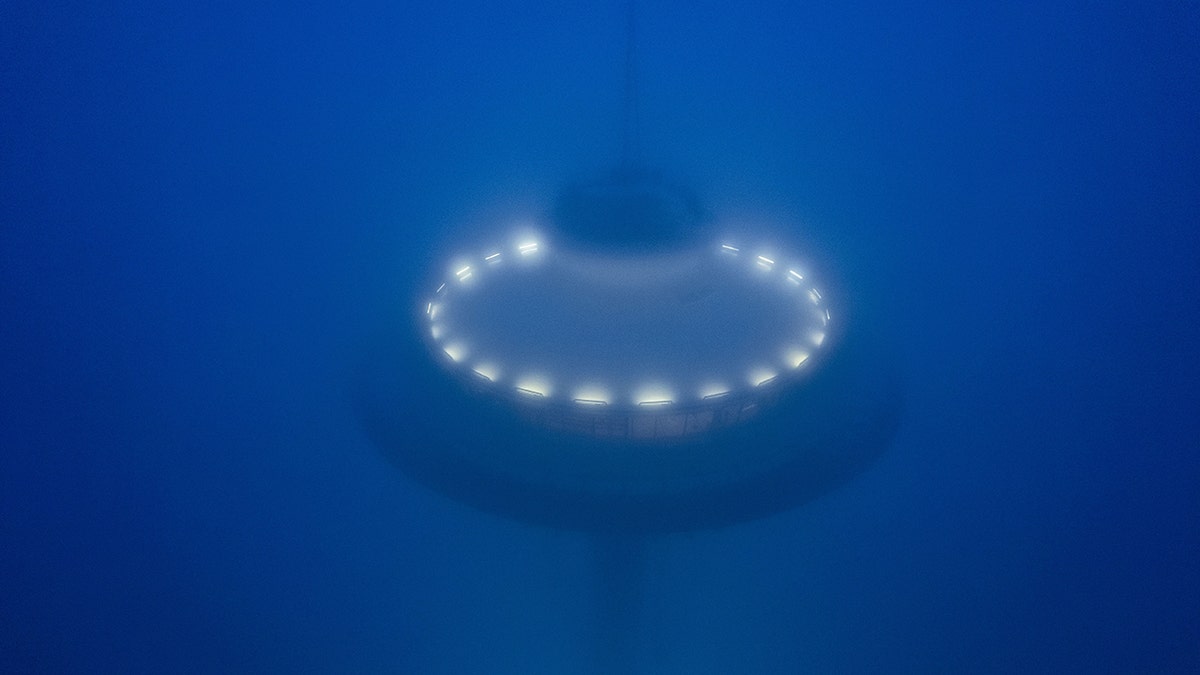
According to Marine Technology News, one of Enigma’s most compelling witness accounts describes two unidentified illuminated objects seen underwater from a boat. (iStock)
Reid asked Lynn to place parts of the effort within a Restricted Special Access Program governed by a “Bigoted Access List,” a tightly controlled roster that would limit knowledge of the program’s existence to a small group of approved officials.
In an attachment to the letter, Reid proposed a 14-person access list. It included Reid, Inouye, Lynn, Senate aide Robert T. Herbert, seven government and military officials and three BAASS contractors.

A witness drawing in the July 2009 BAASS report shows a cigar-shaped object estimated to be 100 meters long during Brazil’s 1977 Colares UAP wave. (Department of War)
DIA officials, however, reached a far less favorable assessment when they reviewed the program’s actual work.
During its first year, BAASS paid outside scientists to produce 26 papers examining concepts such as warp drives, wormholes, antigravity, invisibility cloaking and machines controlled by the mind, according to contract records.
An office within the DIA initially described the papers as credible academic surveys, noting that several had received favorable peer reviews, including from researchers at Sandia National Laboratories. But agency leaders declined to place the program under top-secret classification rules.

An attachment to then-Senate Majority Leader Harry Reid’s June 24, 2009, letter to Deputy Defense Secretary William Lynn III proposes a 14-person “Bigoted Access List” composed of government officials and BAASS contractors. (Department of War)
In a Nov. 13, 2009, memo, DIA Deputy Director Letitia A. Long formally denied Reid’s request for heightened secrecy.
“All program documents delivered to [the Defense Warning Office] during FY 2009 (the first year of the program) were unclassified because the contractor had not established a secure facility, and program employees were being vetted for clearances,” Long wrote.
Long added that federal rules prohibit the DIA from classifying basic scientific research unless it has a clear connection to national security. The agency, she wrote, was “unaware of any report containing information sufficiently sensitive and vulnerable to require extra protection.”

A witness sketch reproduced in the July 2009 BAASS report depicts a cylindrical object and its flight path during Brazil’s 1977 “Operation Plate” UAP investigation in Santo Antônio do Tauá. (Department of War)
Later that month, DIA Director Lt. Gen. Ronald L. Burgess Jr. and Lynn met with Reid and told him that the contractor’s reports were of “limited value to DIA.” They recommended moving the project outside the intelligence agency, Burgess later wrote in a December 2010 memo.
Congress added another $12 million for the initiative in fiscal year 2010, bringing total funding to $22 million and producing 12 more technical reports. The DIA nevertheless declined to extend the contract beyond its second year.
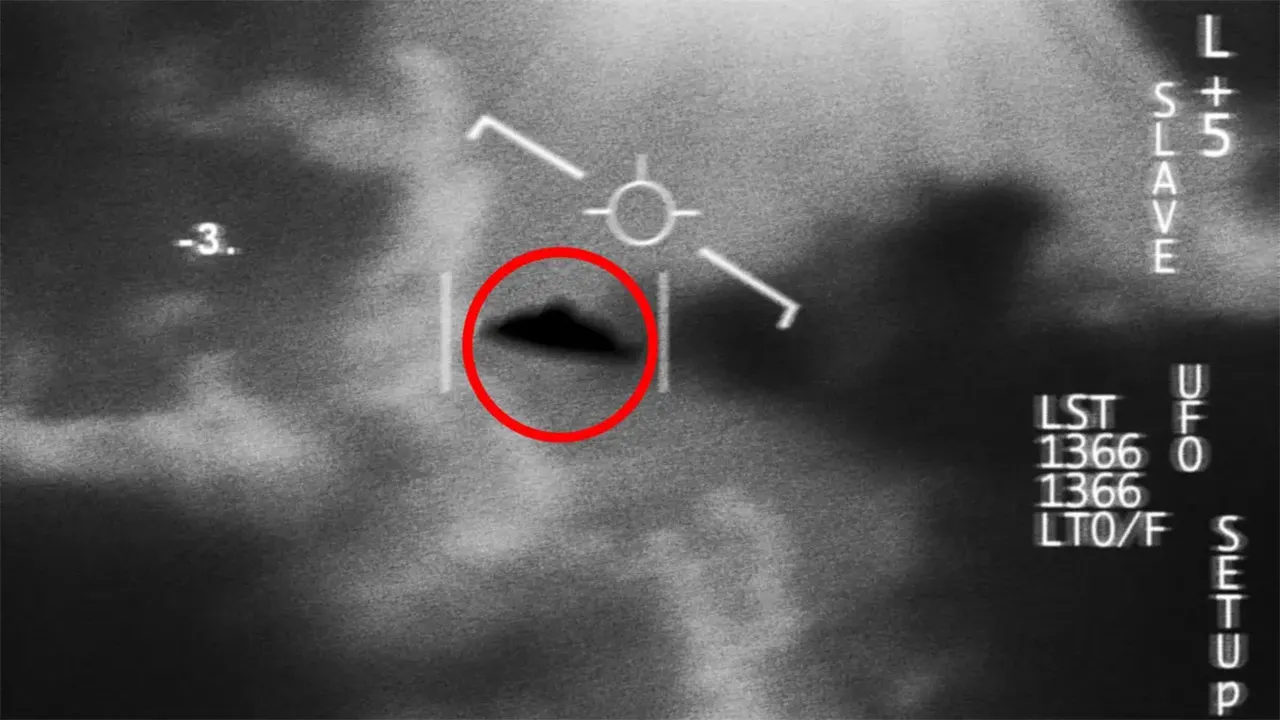
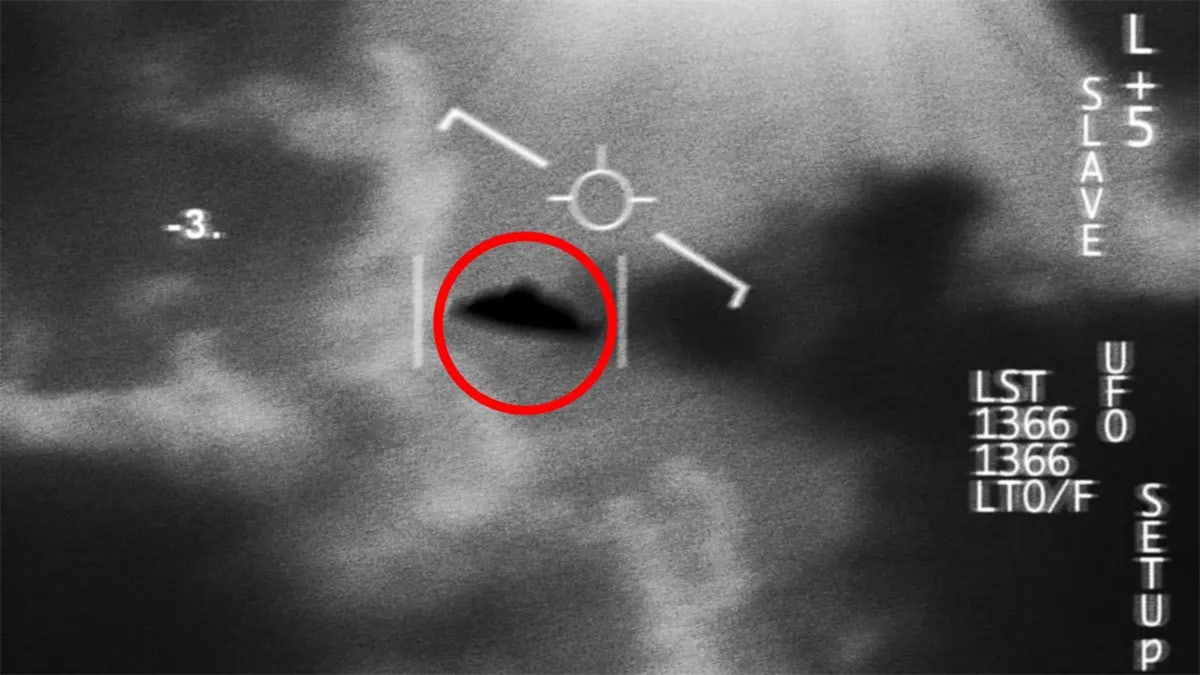
The Pentagon’s eighth UAP release under the Presidential Unsealing and Reporting System for UAP Encounters, or PURSUE, also included three newly declassified infrared and electro-optical sensor videos. U.S. Central Command submitted the footage to the All-domain Anomaly Resolution Office, known as AARO.
The recordings were captured aboard U.S. military platforms in 2020, 2023 and 2026. They show sensors panning and zooming across unidentified “areas of contrast,” including a 54-second clip from 2026 in which a sensor follows two separate objects before intermittently losing contact.
Pentagon officials emphasized that the descriptions accompanying the videos do not represent analytical conclusions about the objects’ nature or significance. They also said no information about UAP encounters was redacted under President Donald Trump’s transparency directive.
News Outlet contacted the Pentagon and AARO for comment.