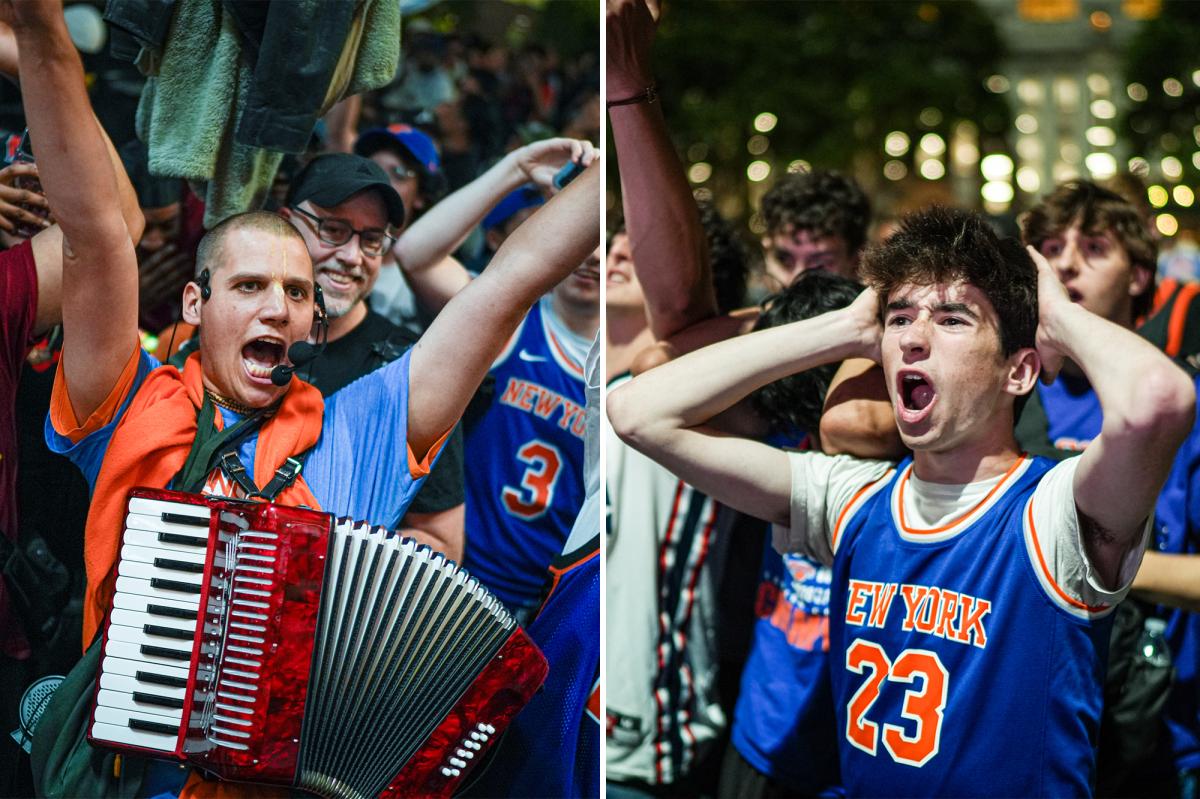


The city is currently gripped by a palpable sense of unease.
Fans of the New York Knicks are caught in a frenzy, with both die-hard supporters and fair-weather followers experiencing what one psychologist describes as a collective “manic episode.” The excitement and stress surrounding the team’s performance have reached fever pitch.
Adding to the tension is the recent Game 3 defeat against the San Antonio Spurs, which has only intensified the anticipation of the Knicks potentially making their long-awaited return to the NBA Finals. The team is deeply embedded in New York City’s culture, and the lingering effects of pandemic isolation have only heightened emotions, according to Dr. Ryan Fuller, who spoke with The Post.
“There’s no doubt that moods are contagious, and everyone is feeling it,” explained Fuller, who serves as the executive director of New York Behavioral Health.
“When we’re this enthusiastic, our physiological responses kick in. Our nervous systems are on high alert, brimming with energy. Our fight-or-flight instincts are activated, making us restless and eager to connect, as we’re inherently social beings.”
Fuller points out that the “collective mental health impact” is particularly pronounced due to the prolonged gap since the Knicks last had a shot at the NBA championship. The team’s previous Finals appearance was in 1999, and the last time they secured a championship title was back in 1973.
The “anticipatory anxiety” is at an all-time high, and much more intense than if Knicks fans were more accustomed to the witnessing their team make it through the playoffs, he explained.
“People are anxious about the game because they’re afraid we’re going to lose, but they’re also excited. And if you look physiologically, anxiety and excitement look very, very similar,” Fuller said.
“If you’re really, really, really excited and you’re being bombarded with dopamine.”
A symptom of these bursts of brain hormones is the wild behavior by fans whether the Knicks win or lose, he explains.
Huge brawls broke out after the Knicks won the first two series games last week as well as following their Game 3 loss Monday.
“One thing that I think people don’t realize sometimes is really, really positive moods sometimes lead to really poor judgment,” Fuller said. “If someone is in a manic episode, they’re likely to take risks with their bank accounts on businesses that might not make sense or gamble.
“And then if we’ve got a group of people around us cheering us on, suddenly the rules may not be as important as connecting and pleasing those around us … The judgment is just impaired when people are so emotionally overwhelmed, even when it’s overwhelmed by a positive emotion.”
The most serious, die-hard fans are getting hit the hardest by the collective mania because they have tied their own identity to the team.
“It’s almost not just that [the Knicks] is a loser, but almost like you’re a loser,” said Fuller, adding that a tournament loss might feel like to some as if a loved one died.
The intense anxiety is spilling on to others — even those who might be a fan for the moment or those who are simply friends with fans.
The mania is also being amplified because of the still-lingering effects of the pandemic.
Although it’s been years since the shutdown, New Yorkers are still starved of the in-person interaction from the era before the shutdown.
The monoculture moment — and the watch parties popping up across the five boroughs — are presenting the rare opportunity to connect, setting the stage for “joy and excitement really overrunning people.”
Even those watching from home aren’t safe from the mania, Fuller warns.
“We’ve got all this energy and our muscles want to move and we’re social creatures. So we want to engage — and that means even talking to myself or the television,” he said.
While hopes are still high, Fuller warns fans not to put too much stock in the team in case it all goes wrong.
His clinical advice is to either grieve or celebrate appropriately, but remember that a championship title does not mean life or death.
When asked if New Yorkers will need more therapy after this historic moment, Fuller said: I certainly hope not. I’m going to keep my fingers crossed.”