
Share this @internewscast.com

Whether you’re experiencing your first cold of the season or your fourth, many Australians these days are waking up with a sniffle, sore throat, or just feeling unusually tired.
From June to August, Australia experiences its peak flu season. This period also sees high rates of COVID-19 along with other respiratory viruses like respiratory syncytial virus and adenovirus making the rounds.
There are times when it’s obvious you need to stay in bed: high fever, body aches, and a foggy mind are clear indicators.
If diagnosed with the flu or COVID-19, isolation and rest become essential for recovery.

But what if your symptoms are mild? Is it reason enough to call in sick, or should you push through and work? And what if you’re facing pressure to keep working?

Here’s what to consider.

Are you likely to spread it?

While it may seem like a good idea to continue working, especially when your symptoms are mild, going to work when infectious with a respiratory virus risks infecting your co-workers.
If you are in a client-facing role, such as a teacher or a salesperson, you may also infect others, like students or customers.
The risks may be even greater for those working with vulnerable communities, such as in aged care work, where the consequences can be severe.
From an organisational perspective, you are likely less productive when you are not feeling well.

So, whenever possible, avoid going into work when you’re feeling unwell.

Should I work from home?

The COVID-19 pandemic normalised working from home.
Since then, more people work from home when they’re unwell, rather than taking sick leave.

Some employees join Zoom or Teams meetings out of guilt, not wanting to let their co-workers down.

Others — and in particular, some men — feel the need to maintain their performance at work, even if it’s at the expense of their health.

A downside of powering through is that workers may prolong their illness by not looking after themselves.

Can you take leave when you need it?

Employees in Australia can take either paid or unpaid time off when they are unwell.
Most full-time employees get 10 days of paid sick leave per year, while part-time employees get the equivalent pro rata.
Employers can ask for reasonable evidence from employees to show they are unwell, such as asking for a medical certificate from a pharmacy or GP, or a statutory declaration.
The type of evidence required may differ from organisation to organisation, with some awards and enterprise agreements specifying the type of evidence needed.
While taking a sick day helps many workers recuperate, a significant proportion of workers engaged in non-standard work arrangements do not receive these benefits.

There are, for example, 2.6 million casual employees who don’t have access to paid sick leave.
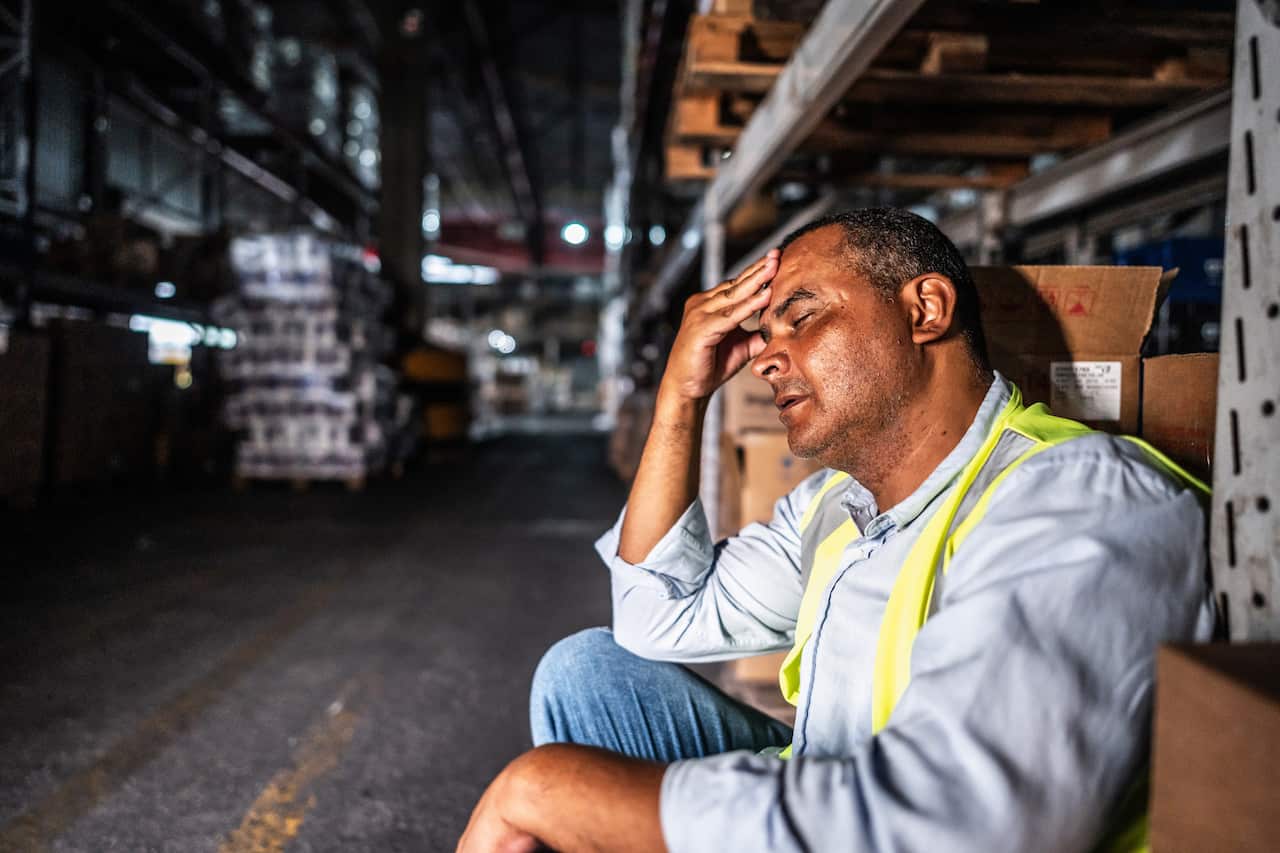
A worker in a warehouse, with his eyes closed and a hand to his forehead.

Many workers, such as those in casual employment or self-employed roles, often lack the luxury of choosing whether to take a sick day. Source: Getty / FG Trade

Similarly, most self-employed people, such as tradies and gig workers, do not have any paid leave entitlements.

Although these workers can still take unpaid leave, they are sacrificing income when they call in sick.
Research from the Australian Council of Trade Unions has found more than half of insecure workers don’t take time off when injured or sick.

So a significant proportion of workers in Australia simply cannot afford to call in sick.

Why pushing through isn’t the answer

‘Presenteeism’ is the phenomenon of people reporting for work even when they are unwell or not fully functioning, affecting their health and productivity.

Pinpointing exact numbers is challenging because most organizations don’t systematically track this, but estimates suggest that 30 to 90 percent of employees work while sick at least once annually.

People work while sick for different reasons. Some choose to because they love their job or enjoy the social side of work — this is called voluntary presenteeism.
But many don’t have a real choice, facing financial pressure or job insecurity.
That’s involuntary presenteeism, and it’s a much bigger problem.

Research has found industry norms may be shaping the prevalence of ‘involuntary presenteeism’, with workers in the health and education sectors more likely to feel obligated to work when sick due to ‘at work’ caring responsibilities.


What can organisations do about it?

Leaders set the tone, especially around health and wellbeing.
When they role-model healthy behaviour and support time off, it gives others permission to do the same.
Supportive leaders can help reduce presenteeism, while pressure from demanding leaders can make it worse. Your co-workers matter too.
When teams step up and share the load, it creates a culture where people feel safe to take leave.
A supportive environment makes wellbeing a shared responsibility.
But for some workers, leave isn’t an option. Fixing this requires policy change across industries and society more broadly, not just inside the workplace.

Share this @internewscast.com
You May Also Like

Unraveling Secrets: How ‘Love Detectives’ Helped Sergio Uncover the Truth About Infidelity

Warning: This article discusses gender-based violence. Catch the latest episode of Dateline,…
Former Bondi Rescue star Harrison Reid has managed to offload his former home in Sydney's eastern suburbs for a cool $1.5million. (Pictured)

Harrison Reid of Bondi Rescue Fame Finalizes Sale of $1.5 Million Rose Bay Property

Harrison Reid, once a familiar face on Bondi Rescue, has successfully sold…
There are ongoing steps toward treaty through the Yoorrook Justice Commission, in a completely separate process to the failed Indigenous Voice to Parliament national referendum in October 2023

Reviving Aboriginal ‘Truth-Telling’: Exploring Existing Efforts Amidst Australia’s Voice Proposal Setback

Adam Bandt, the leader of the Greens party, is urging the federal…
Teenagers who rode on bus roof sought by police

Authorities Seek Teens Involved in Bus Roof Incident

Authorities in Sydney are actively searching for two young boys who were…
One of South Australia's most notorious paedophiles has been granted parole after serving eight years behind bars.Anthony Munro, a former scout leader, served eight years of an almost 11-year sentence for the horrific abuse of a number of children between the 1960's and 1990's.

Convicted Child Offender Released on Parole

One of South Australia’s most notorious paedophiles has been granted parole after…

Unsung Heroes: The Battalion of Non-Citizen Soldiers in Australia

in brief Over 800 Torres Strait Islander men enlisted in World War…
'Dreams haunted by brother's screams': 'Life sentence' for family of murdered man

Family of Murdered Man Endures ‘Life Sentence’ as Brother’s Screams Haunt Their Dreams

John Sheffield’s act of murdering his friend and caretaker, Kenneth Magee, has…
Vaping is likely to cause cancer but not as much as cigarettes, researchers have claimed

Research Confirms Vaping Carries Cancer Risk, but Less Severe Compared to Smoking

According to researchers, vaping might pose a cancer risk, although it remains…
The house was all but destroyed in the fire.

Tragic House Fire Near Sydney Claims Two Lives

Two people have died after a house fire north-west of Sydney, which…
Northcote resident Andy Miller

Community Uproar Fails to Thwart McDonald’s on Iconic Street: What’s Next for the World’s Coolest Avenue?

A 24/7 McDonald’s has been approved to be built on one of…

Unveiling the Tragic Legacy: How a Historic Massacre Shaped Modern Australia

This article contains references to gun violence. Justin Noble recalls the harrowing…

Unraveling Today’s Anxiety: What’s Triggering Our Worry?

A protest video. An urgent news update. A detailed thread dissecting a…