
CARACAS, Venezuela — In the wake of two powerful earthquakes, Venezuelans on Friday began digging through wreckage themselves in search of missing relatives, saying official rescue crews were scarcely visible in the areas hit hardest, even as authorities presented the response as extensive and well-coordinated.
The perceived shortage of government assistance deepened the anguish of families racing against time to find survivors trapped beneath collapsed structures. By Friday, the South American country was approaching the two-day mark since the disaster struck. Relief organizations typically view the first 48 to 72 hours as the most critical window for pulling people out alive, although survival chances can improve when trapped victims have access to food and water.
At the same time, a major international relief operation was gaining momentum, with more than two dozen search-and-rescue teams from countries around the world already arriving in Venezuela or expected shortly.
Officials said the death toll from the catastrophic magnitude 7.2 and 7.5 earthquakes that hit late Wednesday had risen to at least 920, with another 3,360 people injured.
“Each person saved is a miracle,” said Jorge Rodríguez, president of Venezuela’s National Assembly.
Anxious families wait to see if their relatives survived
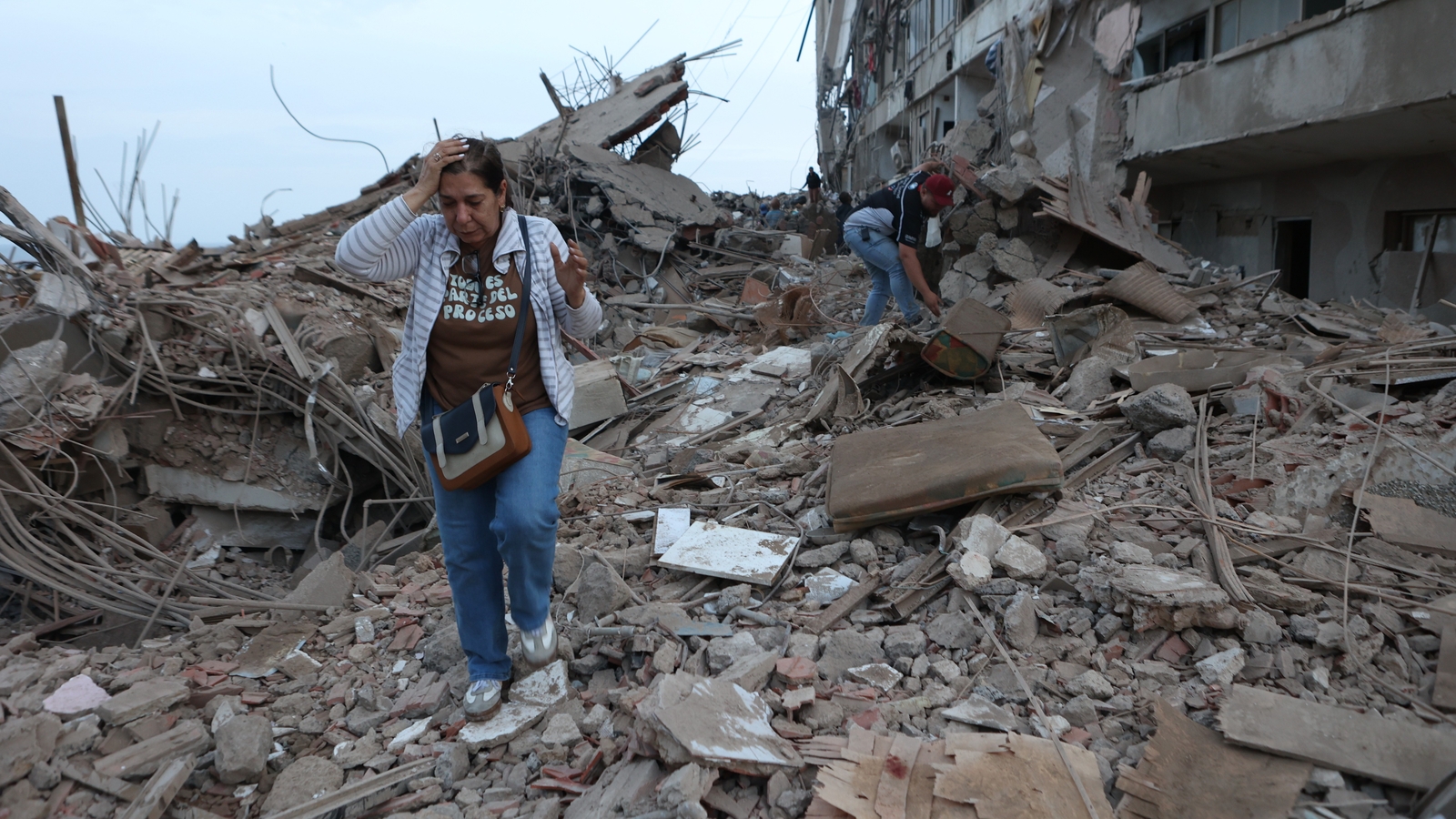
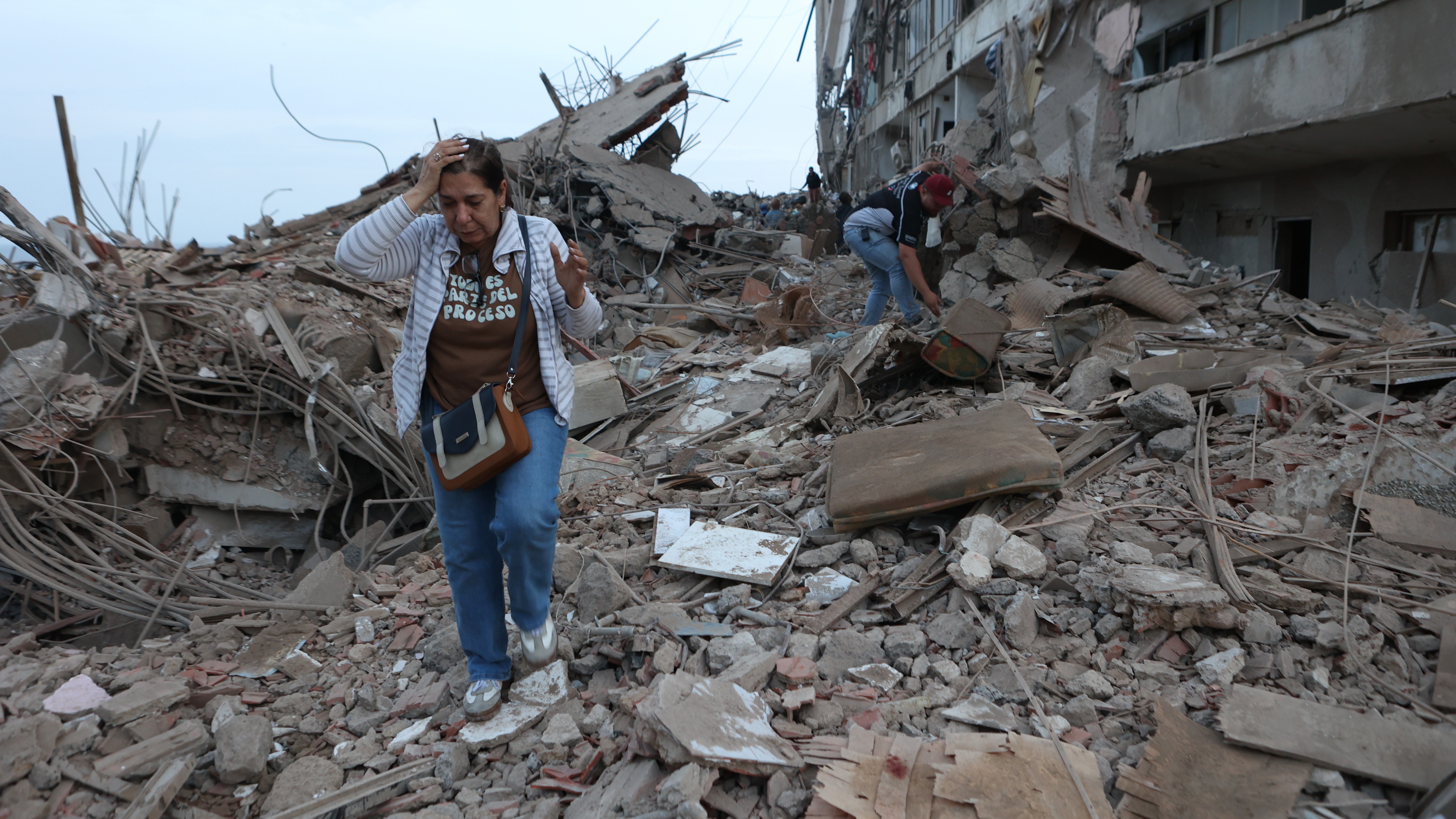
Across northern Venezuela, exhausted and frightened families combed through the remains of shattered buildings, searching for loved ones and for any fragments of the homes and lives they had lost.
Nazareth Jimenez wept against the shoulder of a relative as neighbors attacked thick slabs of concrete with hammers and power tools at a building that had been flattened into a heap of rubble. “My god, how are we going to get them out of there?” she whispered.
She was in La Guaira, the northern state just above Caracas, where some of the most severe damage was reported. Jimenez waited in torment, hoping her siblings, nephews, nieces and friends would be found alive beneath the debris.
“We’re making a call for help to governments of countries across the world,” she said, pleading for machines that would be capable of moving collapsed structures. “There are still people alive in there.”
Government forces distributed food and water to survivors in La Guaira as acting President Delcy Rodríguez said authorities were mounting a full response. She welcomed the arrival of rescuers and humanitarian aid from all over the world. Rodríguez said La Guaira had been militarized and that more help was on the way, even as residents said it was just a fraction of the aid they needed.
The number of dead was expected to climb, with thousands of people reported missing.
“We are going to rescue the people who are trapped,” she said. “We are working tirelessly on this task.”
Quakes leave millions of people reeling
The International Organization for Migration said that up to 6.76 million people in Venezuela could be affected by the quakes, some 2 million of them in Caracas alone. Loyce Pace, the International Red Cross’ regional director for the Americas, said “people are still terrified to reenter what were their homes.” Buildings across northern Venezuela were reduced to skeletons, with furniture hanging out of windows and helicopters circling overhead.
Desperation started to sink on Friday as many families still had not found their missing loved ones, and they had minimal equipment for rescue efforts. Many of them continued to sleep in the street and grew hungry.
In Catia La Mar, a community adjacent to the country’s main airport, people swarmed a civilian pickup truck that was giving out loaves of bread and water. A soldier intervened to allow the vehicle to leave. People turned the parking lot of a pharmacy into makeshift shelter by setting up tarps, hammocks and tents.
READ MORE: Reflecting Pool Vandalism Suspect Denies Trump’s Claims
Omar Reyes walked through the remains of what was once his home, calling out the names of wife and children. He received no response.
Around 20 family members have died. Two of his four children are buried in the debris.
“I’ve been left alone in this life,” he said quietly.
International aid is on the way
On the country’s main highway, caravans of state forces, emergency personnel, dump trucks and heavy machinery moved in the direction of the tragedy. A civilian pickup truck carrying thin mattresses had its windows marked with “Help from Trujillo.” Venezuela’s government said it had diverted emergency services to La Guaira state.
Firefighters from the state of Tachira, which borders Colombia, were among those being deployed for the search and rescue efforts in La Guaira.
Firefighting Gen. Antonio Briceño said 45 firefighters and a trained dog, aptly named Rescue, expected to reach affected sites in the coming days.
“We are bringing shovels, picks, hydraulic tools, drinking water, which are needed at the site,” Briceño said.
Some 1,000 emergency responders in 25 search-and-rescue teams from across the globe were on their way to Venezuela, said Jens Laerke, a spokesperson for the U.N. Office for the Coordination of Humanitarian Affairs.
The assistance included help from Germany, Chile, Switzerland, Turkey, China, Qatar, Brazil, Portugal and Canada, as well as teams from El Salvador, the Dominican Republic and Mexico.
U.S. Secretary of State Marco Rubio, who spoke to Rodríguez following the quake, said the United States was immediately deploying assistance. On Thursday night, the U.S. Treasury moved to waive sanctions until Oct. 23 to allow transactions related to earthquake relief efforts in Venezuela that would otherwise be prohibited.
Venezuelan TV on Friday showed the arrival of rescuers with dogs and equipment, including cameras and ground-penetrating radar, from Spain.
Government and rescuers face huge challenges
Media reports have shared notable moments of hope, including a young man brought out on a stretcher in the San Bernardino district of Caracas to the applause of onlookers as his tearful mother said, “Leandro, I love you.”
Venezuelan TV broadcast video of a girl covered in dust and wrapped in a sweatshirt as she emerged from rubble with the help of rescuers. Caracas metropolitan rescue team head José Luis Núñez said she was found in a 10-story building in La Guaira that collapsed and flattened “like a pancake.”
“We want to highlight this girl’s strength, determination and will to live,” Núñez said.
Despite that, the natural disaster poses a huge challenge for Rodríguez, the former vice president who took office in January after the capture and removal from power of then-President Nicolás Maduro by the United States. Venezuela has been facing economic disarray for more than a decade and many people reject the legitimacy of the political movement Rodríguez represents.
Rodríguez declared a state of emergency in an address to the nation late Wednesday. She said the government was creating a $200 million reconstruction fund for damaged hospitals and homes.
The U.S. Geological Survey said both earthquakes were centered near Moron on the Caribbean coast, about 170 kilometers (105 miles) west of Caracas. The one-two punch of the quakes, combined with the shallow seismic movements, amplified the destruction, said Marcos Ferreira, a geophysicist and researcher at the Geological Survey of Brazil.
“It is as if I am screaming and then someone starts screaming, too. That amplifies the vibration and adds to the potential hazard,” Ferreira said.
___
Janetsky reported from Mexico City. Associated Press journalists Julie Watson in San Diego and Dánica Coto in San Juan, Puerto Rico, Geir Moulson in Berlin, Suzan Fraser in Ankara, Turkey, and Teresa Medrano in Madrid, contributed to this report.
Copyright © 2026 by The Associated Press. All Rights Reserved.