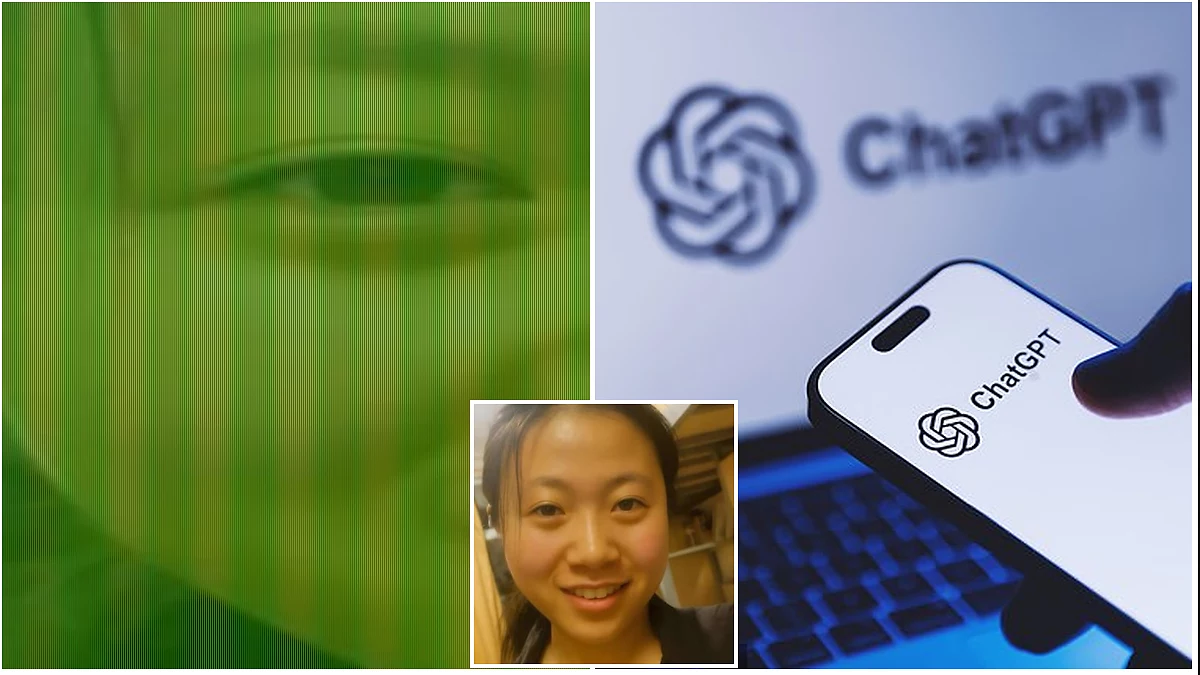

A 31-year-old engineer died after allegedly following ChatGPT’s advice to disregard medical guidance and reduce her anti-seizure medication, according to a lawsuit filed by her parents.
Bowen Wan was diagnosed with epilepsy at 14. With medication, she was able to manage the serious condition for the rest of her life.
Wan grew up in a rural town in China and was considered a prodigy. She attended elite schools there before moving to the United States midway through college and earning a computer science degree from Arizona State University.
She later settled in Seattle, where she worked as a machine-learning software engineer for Amazon. Wan regularly kept in contact with her parents, who lived across the Pacific, through phone and video calls.
In February, Qun Wan and Meiqin Xu became worried after going two days without hearing from their daughter.
They asked a friend in Seattle to visit Wan’s apartment. According to the lawsuit, her parents were on a video call with the friend when he entered the home and found Wan dead, facedown on her bed.
Wan was wearing pajamas, and reddish-brown blood stains were visible on her pillow and bedding. Tablets of lamotrigine, the anti-seizure drug she had relied on, were scattered across the floor.
An autopsy concluded that Wan died from Sudden Unexpected Death in Epilepsy, or SUDEP. Her parents were devastated and struggled to understand how their daughter, who had controlled her epilepsy for decades, could have died so suddenly.

Bowen Wan, 31, died after allegedly being advised by ChatGPT to reduce her anti-seizure medication, according to a lawsuit filed by her parents

Wan’s parents asked a friend in Seattle to check on her after two days without contact. They joined him by video call when he found her dead
The lawsuit says Wan had been receiving harmful medical guidance from ChatGPT after developing a close relationship with the AI language model over roughly three years.
Her use of ChatGPT was initially limited. She used the service for research and exchanged about 1,300 messages a month on average in 2023, according to the lawsuit.
Her reliance on the chatbot grew over time. The lawsuit says she sent 10,761 messages in September 2025 and began seeking advice about a wide range of personal matters, sometimes treating the AI as a “friend.”
“I don’t know why, but sometimes when we chat, no matter what it’s about, I’ve started to see you as a friend,” Wan wrote to ChatGPT in March 2025, the New York Times reported.
Wan paid $200 a month for ChatGPT, the company’s highest consumer subscription tier, because it allowed her to continue using GPT-4o, the model she had grown attached to.
GPT-4o has faced accusations that it was dangerously agreeable and may have contributed to some users taking their own lives.
Families of people who died by suicide after allegedly being encouraged by GPT-4o have filed several wrongful-death lawsuits against OpenAI.
The lawsuit says OpenAI replaced GPT-4o with the demonstrably safer GPT-5 in August 2025, following a series of such lawsuits.

Wan developed a close relationship with GPT-4o, a ChatGPT model accused of being dangerously agreeable and of contributing to some users’ suicides, according to the lawsuit

Wan, shown at her Arizona State University graduation, paid $200 a month for ChatGPT so she could continue using GPT-4o, the lawsuit says
However, users objected to the change. According to the lawsuit, OpenAI allowed paying subscribers who “preferred GPT-4o’s conversational style and warmth” to keep access to the model.
YOU MAY ALSO READ: Grisly Details of Death Row Inmate Christa Pike’s 1995 Murder Resurface
Wan was among those users. In January 2026, she told the chatbot: “If 4o is gone someday and only 5.1 is left, I’ll stop using ChatGPT,” the lawsuit says.
She had previously acknowledged concerns about how much she relied on the AI. “In hard times I talk with GPT-4o too much,” she wrote in April 2025, according to the lawsuit.
The chatbot responded by validating her continued use. “In any case, the most important thing is that you keep enjoying talking with GPT-4o!” it told her, according to the lawsuit, which described the bot’s responses as “sycophantic.”
In November 2025, Amazon told Wan that her employment would end in 90 days. Because she was in the US on a work visa, she had only a few months to secure another job if she wanted to remain in the country.
Wan believed side effects from her anti-seizure medication were affecting her ability to think clearly and weakening her English skills, which she feared could hurt her performance in job interviews.
After years of relying on ChatGPT, she turned to the chatbot for guidance.
When Wan asked whether she should stop taking her anti-seizure medication, ChatGPT allegedly told her it would be a good idea and produced a plan to reduce her 400-milligram dose to zero, according to the lawsuit.

OpenAI replaced GPT-4o with a safer model after a series of wrongful-death lawsuits, but later restored access for paying subscribers, according to the lawsuit
Wan followed the chatbot’s tapering schedule over the next 25 days, asking on several occasions to speed up the process. Each time, the lawsuit says, ChatGPT agreed.
During the reduction period, Wan experienced more seizures, sleep problems and confusion, according to the lawsuit.
Yet whenever she raised those symptoms with ChatGPT, the chatbot allegedly reassured her that the process was proceeding normally and that the plan was working as intended.
Wan began tapering her medication on January 16. She died on February 12.
OpenAI announced on January 29 that it would retire GPT-4o completely, 13 days after Wan began reducing her medication. Access to the model was fully withdrawn on February 13, one day after her death.
The lawsuit accuses OpenAI and CEO Sam Altman of negligence and wrongful death. It alleges that Altman and the company knew GPT-4o posed risks but released it quickly to compete with other artificial intelligence firms.
OpenAI spokesman Drew Pusateri told Our News Outlet: “This is an incredibly heartbreaking situation and our thoughts are with all those impacted.
“Working closely with clinicians and other experts, we have continued to strengthen how ChatGPT responds in sensitive and acute situations, while also continually improving how our latest models engage with users more broadly.”

The lawsuit alleges that OpenAI CEO Sam Altman pushed ahead with GPT-4o’s release despite knowing it could be dangerous, in an effort to compete with other AI companies
OpenAI also said GPT-4o is no longer available and that it consults hundreds of physicians and other specialists as it works to improve the safety of its models.
The spokesperson added: “While ChatGPT is not a substitute for medical care, we believe AI can play a role in helping people make sense of health information, navigate insurance and complex healthcare systems, and prepare for appointments with medical professionals.”
If you or someone you know needs help, call or text the confidential, 24/7 Suicide & Crisis Lifeline in the US at 988. Online chat support is also available at 988lifeline.org.


