
American automakers are lowering their projections for electric vehicle (EV) adoption due to ongoing consumer hesitancy, reduced federal incentives, and a challenging economic climate affecting the automotive industry as a whole.
On Tuesday, General Motors announced it would incur a $1.6 billion loss related to strategic adjustments in its EV plans. The company cited the elimination of the $7,500 EV purchase incentives, initially established by President Joe Biden and later revoked by President Donald Trump, as a significant factor. This tax credit officially ended on September 30.
“In light of recent U.S. policy changes, including the discontinuation of certain consumer tax incentives for EV purchases and the easing of emissions regulations, we anticipate a slowdown in EV adoption rates,” General Motors stated in a recent filing.
Ford, another key player in the automotive industry, has postponed the development of an EV manufacturing facility in Tennessee. The company informed Reuters that it intends to remain flexible, adjusting its product launch schedules to align with market needs and consumer demand, all while aiming for improved profitability.
Even Tesla, the leading EV seller in the United States, is experiencing challenges, contributing to the industry’s shifting outlook. The company saw its second-quarter sales decline by nearly 13%, and CEO Elon Musk has cautioned that the company could face some “rough quarters” ahead.
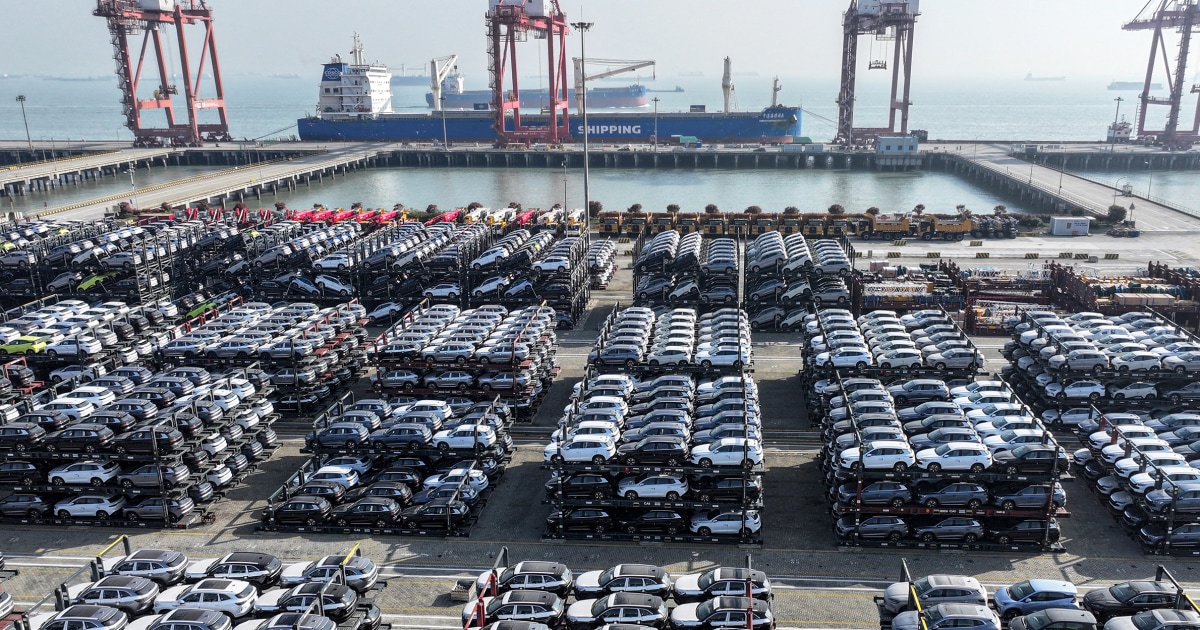
These developments pose a risk of the United States lagging in what many view as the future of the automobile industry. In July 2024, EV sales in China surpassed those of traditional vehicles. In China and nearby regions, EV costs have been decreasing more rapidly than in the U.S., largely due to heightened competition from Chinese manufacturers that now dominate the global EV market. Meanwhile, other Western countries, including Canada and the United Kingdom, are reconsidering their EV commitments, partly influenced by the new pressures arising from Trump’s trade policies.
The retreats are a turnabout from the heady ambitions for EVs that U.S. automakers signaled less than a decade ago. The highest-profile push came from General Motors CEO Mary Barra, who committed the storied automaker to a “zero emissions” future in 2017.
“No more gas. No more diesel. No more carbon emissions,” she wrote at the time.
But a series of challenges — cost concerns, sluggish adoption and the reversal in support in Washington — has left the U.S. auto industry with greater uncertainty about its EV future.
“Penetration has stalled,” said David Whiston, a senior analyst at Morningstar investment research company who covers autos.
Even before Trump’s “One Big Beautiful Bill” ended the tax credit, signs of resistance to EVs among U.S. consumers had begun to show. A survey published in August 2024 by Edmunds automotive information group showed concerns about finding charging stations and charging times, availability and reliability as the top reasons consumers would not purchase EVs.
“They said they don’t want the hassle or don’t feel like learning something new,” said Jessica Caldwell, head of insights at Edmunds.
In the second quarter of 2025, new EV sales declined by 6.3% year on year, according to Cox Automotive, which said the growth trajectory for EVs “has been curbed.” EV sales got a boost in the third quarter, but analysts said that was most likely the result of the looming expiration of the tax credit.
“The federal tax credit was a key catalyst for EV adoption, and its expiration marks a pivotal moment,” Cox Automotive’s director of industry insights, Stephanie Valdez Streaty, said in a release. “This shift will test whether the electric vehicle market is mature enough to thrive on its own fundamentals or still needs support to expand further.”
For a time, EVs seemed poised to take over the U.S. market. Following the lead of Barra of GM, Ford announced in 2018 that it planned to nearly triple its investments in electric and hybrid vehicles by 2022, with plans for 40 new such models. Barra also called for a National Zero Emission Vehicle program to help electrify the entire U.S. auto fleet.
Meanwhile, sales at Tesla, which exclusively manufactures EVs, began to accelerate, turning the groundbreaking automaker into one of the most valuable companies in the world and giving it a dominant position in the electric market.
The EV push was supercharged during the Biden administration, which introduced tough new emissions standards designed to boost EV sales alongside the EV purchasing tax credit.
But last year, Barra told NBC News that GM’s all-electric future would now play out “over decades,” though the company said it continued to target 2035 to fully electrify its fleet. In its latest filing, GM said the review of its future EV output is “ongoing” and signaled additional charges could be announced in future quarters. A GM spokesman did not respond to a request for comment.
Last month, The Wall Street Journal reported that GM had spent more to lobby the federal government in 2025 to fight clean air and fuel economy rules than any company other than Facebook parent Meta.
“What we’re committed to is the customer,” Barra said about the shift away from EVs at a Wall Street Journal event in May, the paper reported. “The customer was telling us they weren’t ready.”
Ford CEO Jim Farley said this month that EV sales could fall by around 50% after the EV tax credits expire. A Ford spokesperson did not respond to a request for comment.
The entire U.S. auto market also remains challenged by affordability issues. The average price of a new car surpassed $50,000 for the first time last month, Kelley Blue Book reported Tuesday. The average monthly auto payment in the United States is now $749 for new vehicles and $529 for used vehicles, according to the credit reporting agency Experian. U.S. households in general continue to struggle with stubborn inflation and an increasingly shaky jobs market, which has left the pace of overall monthly auto sales below pre-pandemic levels.
EVs currently cost about $7,000 more, according to Kelley Blue Book data.
Anna Vanderspek, electric vehicle program director at the Green Energy Consumers Alliance, an environmental advocacy group, said she is hopeful that the global shift toward EVs will eventually rebound to U.S. automakers as they look to stay competitive and thus filter down to U.S. consumers.
But she acknowledged the timetable for adoption has shifted.
“There’s good reason to think that this transition will continue to happen,” she said. “But now it will just happen more slowly.”