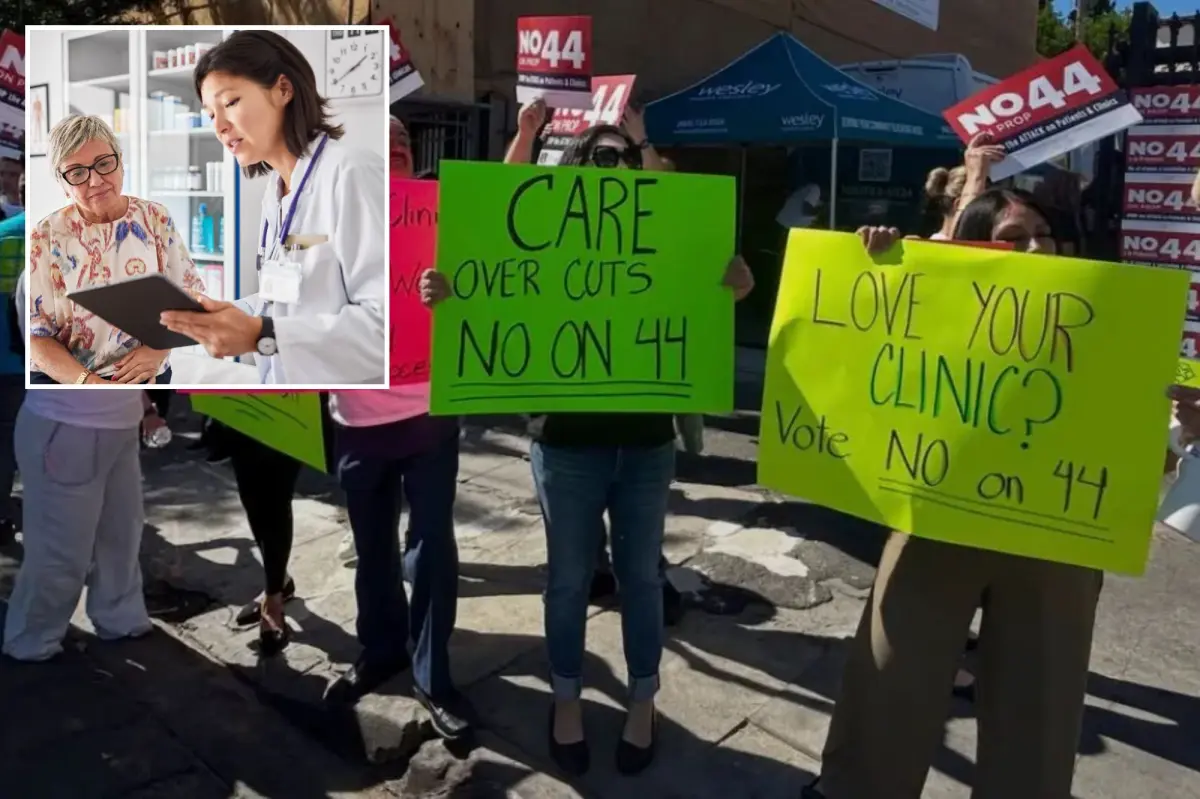

California voters decisively rejected a controversial ballot measure that would have required community health clinics to spend at least 90% of their revenue on patient care. The proposal was defeated amid warnings that its financial penalties could force hundreds of facilities to close.
Proposition 44 was overwhelmingly defeated Tuesday, with nearly 82% of voters opposed as ballots continued to be counted.
The sweeping loss marks another election setback for SEIU-United Healthcare Workers West, the powerful labor union that backed the initiative. Supporters argued that taxpayer-funded clinics were directing too much money toward excessive executive compensation and other costs rather than patient services.
The measure would have required nonprofit Federally Qualified Health Centers to allocate at least 90% of their annual revenue to healthcare services or face substantial penalties from the state.
That would have capped administrative and other expenses at 10%, representing a major departure from the current system. According to the nonpartisan Legislative Analyst’s Office, clinics now spend about 80% of their revenue on services.
Backers said Proposition 44 would curb wasteful spending and make clinic executives more accountable for the use of public funds.
“Money should not be directed towards excessive executive compensation or other non-essentials that we have seen within … our clinic system,” union spokesperson Renée Saldaña told CalMatters.
Opponents, however, warned that the broad restrictions could severely damage California’s healthcare safety net, which serves an estimated 7 million low-income residents.
An analysis commissioned by opponents projected that clinics could incur $1.7 billion in penalties during the first year alone, raising fears of widespread closures and cuts to services.
“By shutting down clinics, Prop. 44 will force millions of patients into already overcrowded emergency rooms — increasing wait times for everyone,” Dr. Susanne J. Spano, president of the California chapter of the American College of Emergency Physicians, said in a California Voter Guide.
ALSO READ: Amazon Impersonators Bind 89-Year-Old Woman, Hold Son at Gunpoint
Critics also objected to the measure’s unclear definition of healthcare spending. They argued that clinics could have faced penalties for purchasing medical equipment, hiring support personnel, expanding facilities or preserving emergency funds.
Under the initiative, California’s attorney general would have determined which expenses counted as patient care.
State officials estimated that enforcing the measure would cost tens of millions of dollars each year, with fees charged to the clinics affected.
The fiercely contested campaign also generated significant spending.
Opponents, led by the California Primary Care Association, raised about $39 million to defeat Proposition 44—more than twice the roughly $17 million collected by supporters.
“Today’s resounding defeat shows that health centers will not be bullied and that protecting the whole-patient, whole-community care we are known for will always be a priority,” association president Francisco Silva said in a statement to CalMatters.
The result adds to the union’s string of ballot defeats. California voters previously rejected three union-backed measures aimed at dialysis clinics in 2018, 2020 and 2022.
The bitter campaign has also moved into the courts.
In September, the California Primary Care Association sued the union and its president, Dave Regan, alleging that the ballot initiative was used to pressure clinics into accepting the union’s bargaining demands.
The union has called those allegations “categorically false.” The lawsuit remains pending.


