In the spring of 1960, three women traveled to Illinois’ Starved Rock State Park for a short retreat. Their trip turned deadly within hours when they were attacked while hiking.
The women’s battered bodies were discovered in St. Louis Canyon. Investigators soon arrested Chester Weger, a dishwasher who worked at a nearby lodge, and he was convicted the following year in the death of one of the victims.
Weger never stopped insisting that he was innocent. He died in June 2025, just days after a county judge rejected his latest effort to have the conviction overturned.
His relatives and legal team have continued pursuing the case, and the Illinois Prisoner Review Board is now set to consider a request for a posthumous pardon on October 6.
Weger’s attorneys say recently examined DNA evidence casts doubt on the conviction. They also argue that police pressured him into confessing, a statement he withdrew soon afterward.
One key piece of evidence was a strand of hair found clutched in one victim’s finger. Testing showed it did not belong to Weger or to any of the three women, prompting his lawyers to suggest it may have come from an unidentified assailant.
Posthumous pardons are uncommon in the United States. Fewer than 200 have been granted, most of them through state governments.
Once the review board examines the case, it will forward its recommendation to Illinois Governor JB Pritzker, who will make the final decision.

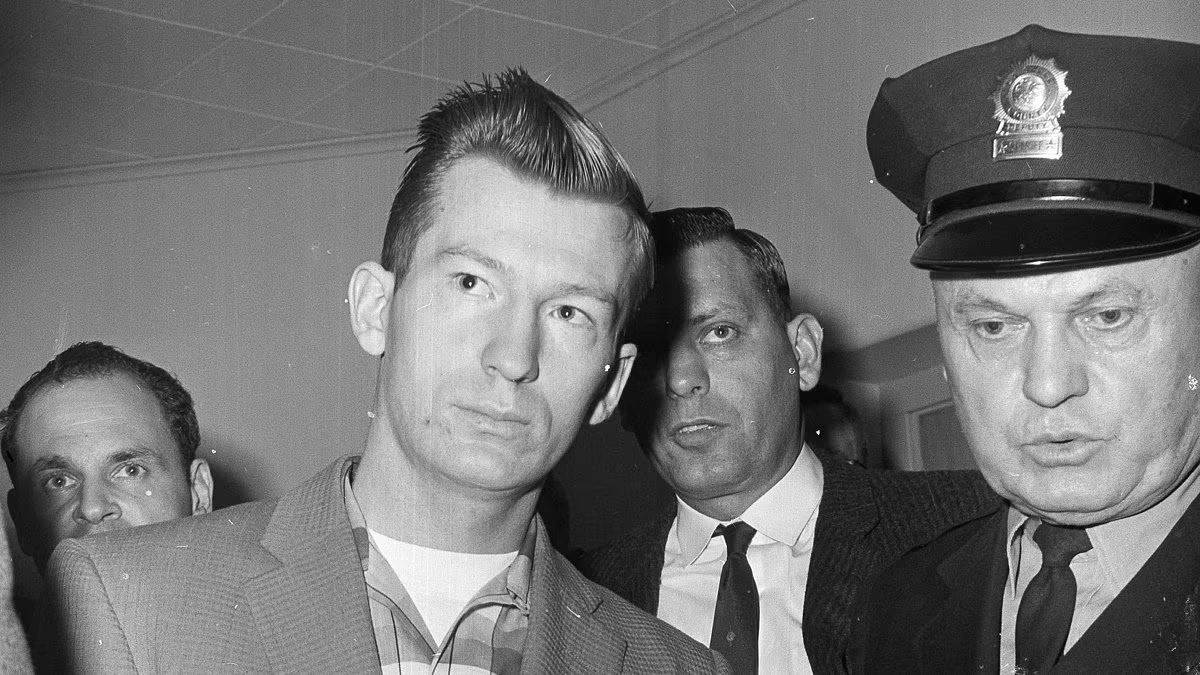
Chester Weger, pictured in 2016, was granted parole in 2019 and died last year after spending five years outside prison

Weger was convicted in the 1960 killing of Lillian Oetting. He later withdrew the confession he gave police, saying it had been coerced, and maintained his innocence for the rest of his life

Lillian Oetting, 50, Frances Murphy, 47, and Mildred Linquist, 50, were found dead at Starved Rock State Park on March 16, 1960. One of the victims’ bodies is pictured being carried from the scene
Andrew Hale, Weger’s attorney, told the Chicago Sun-Times that he believed the defense had not received a “fair shot” during the most recent evidentiary hearing. He said he remained hopeful that the governor would ultimately grant the pardon.
“I feel like this board and the governor’s office, if they take a fresh look at this, I should win,” Hale said.
When Weger died last summer, Hale told the Chicago Tribune that Weger’s loved ones were “deeply saddened that Chester’s legacy is marred by this unjust conviction.”
Weger was 86 when he died, having spent roughly six decades behind bars. He was released in 2020 after the Illinois Prisoner Review Board voted 9-4 to approve his parole.
“They ruined my life,” Weger told the Chicago Tribune as he climbed into a minivan on prison grounds following his release.
“(They) locked me up for 60 years for something I’ve never done.”
Weger emerged as a suspect almost immediately after the bodies of Lillian Oetting, Frances Murphy and Mildred Lindquist were found.
The three women, who were married to affluent Chicago businessmen, had checked into Starved Rock Lodge on March 14, 1960. Weger was working there at the time.

The victims were discovered at Starved Rock State Park in Illinois. A map showing the area is pictured above
DISCOVER MORE: Nithya Raman Backs Donald Trump’s Hollywood Tax Incentive Proposal

Weger worked at the lodge where the women were staying. He was arrested for their murders in November, 1960

Frances Murphy (left), Mildred Lindquist (middle) and Lillian Oetting (right) were last seen at the Starved Rock Lodge
Their bodies were found two days later, with shocking injuries that detectives believed were from over 100 blows.
Police began investigating Weger after lodge employees reported seeing scratches on his face, and he failed multiple lie detector tests.
Investigators then found lengths of twine at the scene that resembled those in a toolshed near the lodge.
Police argued that the twine was also used to bind a teenage girl who was raped nearby months before the killings. Weger was never tried or convicted for that crime.
By September, local police kept Weger under constant surveillance until they arrested him in November.
Weger testified that he was told multiple times by the state’s attorney and deputy sheriff that if he confessed, he would get life, but if he did not, he would be sentenced to the electric chair. The state’s attorney and sheriff’s office later denied these claims.
In a 1962 opinion, Justice Harry Hershey of the Supreme Court of Illinois said two sheriff’s deputies visited Weger at his home on November 16.
He was taken in for interrogation and served with nine warrants, and confessed to the crime. Weger recanted his confession two days later. He claimed that threats of electrocution forced him to confess to the murder.
Weger pleaded not guilty to the triple murder. He denied during his trial that he was involved in the heinous crime, but was convicted on March 3, 1961.

Murphy’s station wagon was seen parked outside the lodge after she and her friends were found beaten to death in St Louis Canyon

Weger told reporters after he was released that his life had been ruined. He tried multiple times to get parole and appeal his conviction while behind bars

Weger, pictured above in handcuffs, was given life imprisonment. His current attorney is attempting to get him a posthumous pardon
Prosecutors ultimately decided to prosecute him for Oetting’s murder instead of all three women, citing that he had already been given a life sentence. He appealed, but Justice Hershey upheld his conviction.
DNA evidence was not discovered until 2004. He asked for clemency three years later but was again denied.
On his 24th try, he was finally granted parole and was released to live with his family in 2020, where he lived in freedom for five years until his death.
Descendants of the three victims have maintained that they believe he was guilty of the crime.
Our News Outlet has reached out to Weger’s attorney and the governor’s office for comment.


