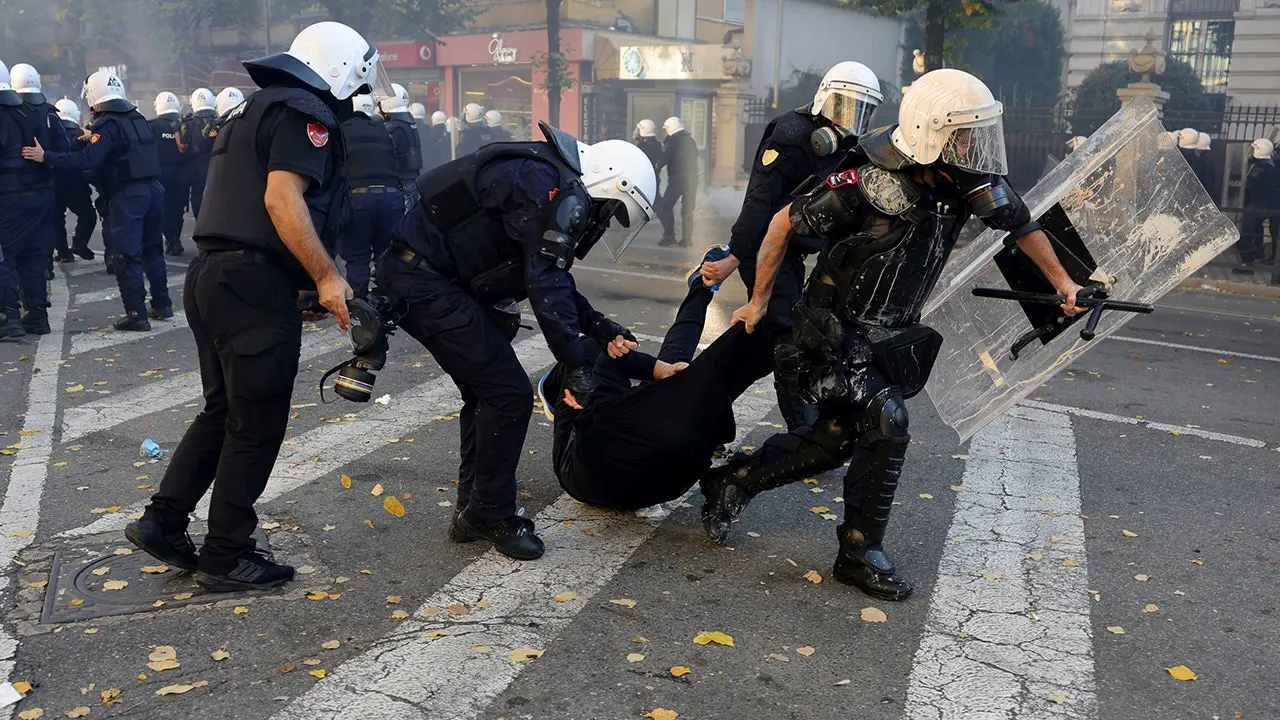

Clashes between police and opponents of Albania’s Socialist government broke out in Tirana for a third consecutive day Thursday, as Prime Minister Edi Rama insisted he would not step down.
Protesters threw rocks at a police line outside Albania’s Education Ministry, prompting officers to use tear gas and water cannons, according to The Associated Press.
The latest violence came after demonstrations on Wednesday in which protesters attacked government buildings, banks and businesses. Authorities said 89 people were injured, including 61 police officers.
“As for calls for my resignation, governments are changed through democratic elections. We had elections last year, not a revolution,” Rama told Reuters on Thursday.
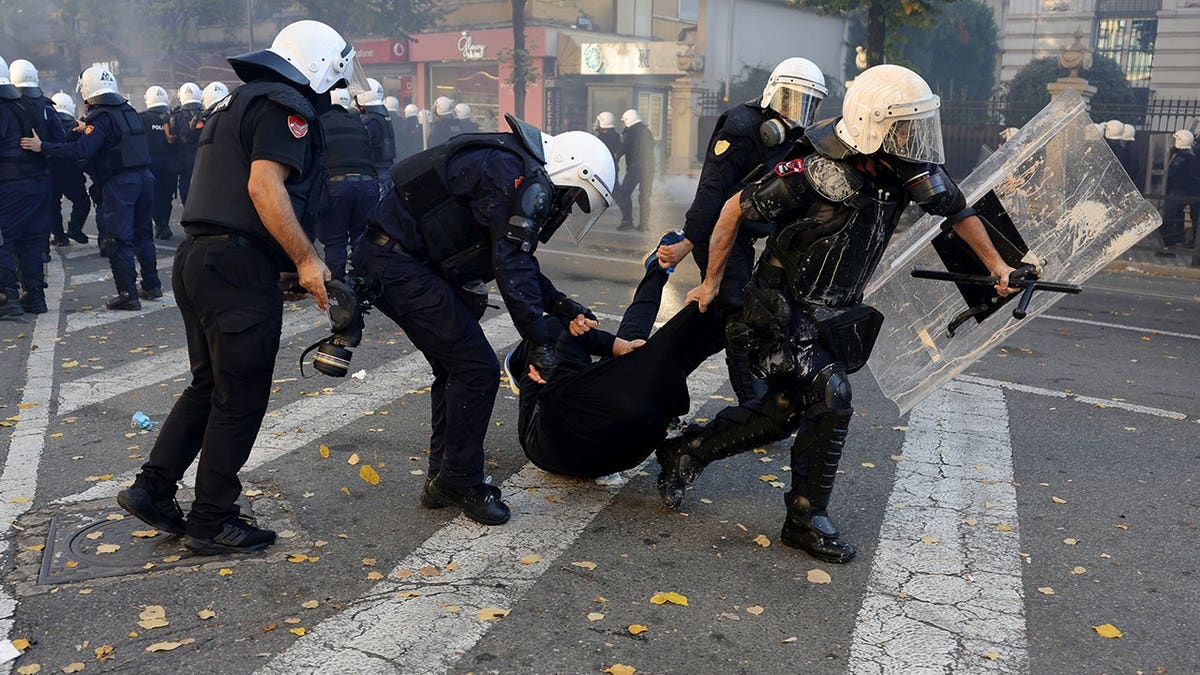
Riot police officers detain a hooded protester during clashes near the Ministry of Education in Tirana, Albania, on Tuesday, Oct. 13, 2026. (Hameraldi Agolli/AP)
“My responsibility is to listen, address legitimate concerns and keep Albania moving forward,” Rama said. “The alternative would be a betrayal of the Albanians who gave me a strong mandate to complete negotiations on European Union membership.”
Thursday’s demonstrations brought together student groups demanding education reforms and a broader anti-government movement protesting a major development project linked to Jared Kushner, the son-in-law of President Donald Trump, the AP reported.
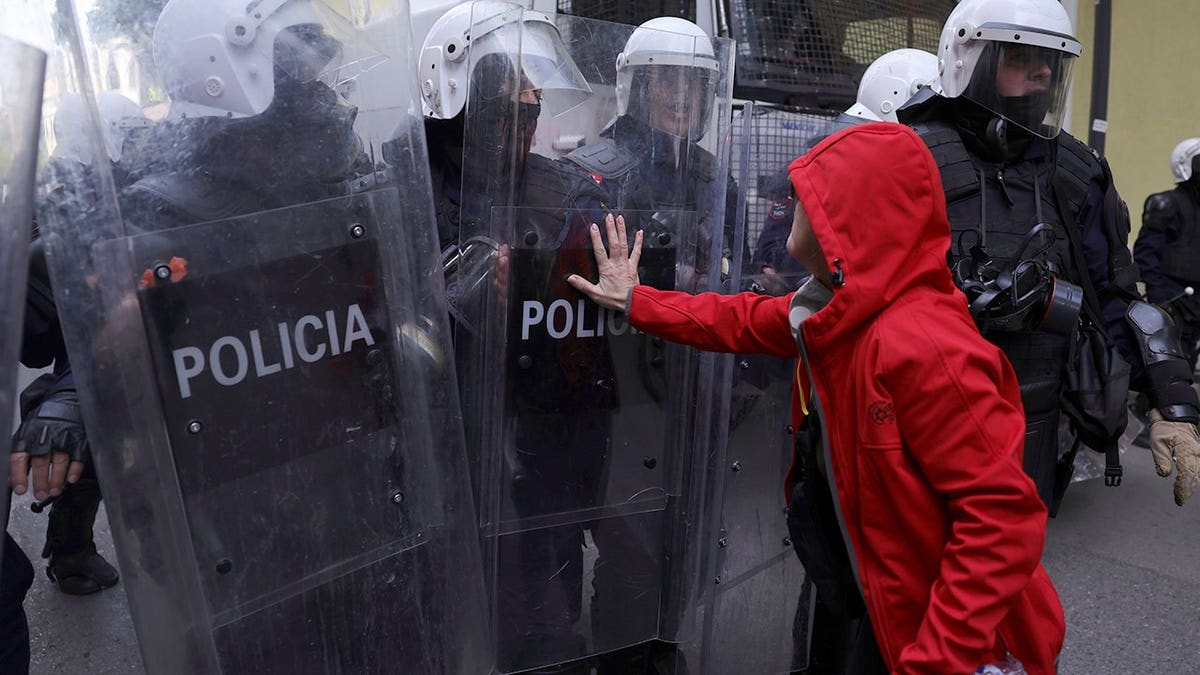
A protester pushes a riot police officer’s shield during an anti-government demonstration in Tirana, Albania, on Thursday, Oct. 15, 2026. (Hameraldi Agolli/AP)
The movement, known as the flamingo movement, is demanding Rama’s resignation over allegations of widespread corruption. Its name comes from protest signs featuring the pink bird.
RELATED: Days of Our Lives Star Robert Kelker-Kelly’s Final Moments Revealed
“The message from the streets is clear: Albanians have had enough. Public patience with Edi Rama’s socialist government has come to an end,” Agim Nesho, a former Albanian ambassador to the United States, told News Outlet on Thursday.
“The wheels are coming off Edi Rama’s socialist government. After 13 years in power, his administration faces mounting accusations of corruption, misuse of public funds, and political favoritism,” Nesho said. He pointed to poverty, unemployment, weak public services and the steady departure of young Albanians for better opportunities in Europe as sources of growing public frustration. Critics, he added, say the political elite has prospered while ordinary citizens struggle to make ends meet.
An EU delegation in Albania urged authorities late Wednesday to respond proportionately, voicing concern over “the violent escalation at the protest in Tirana.”
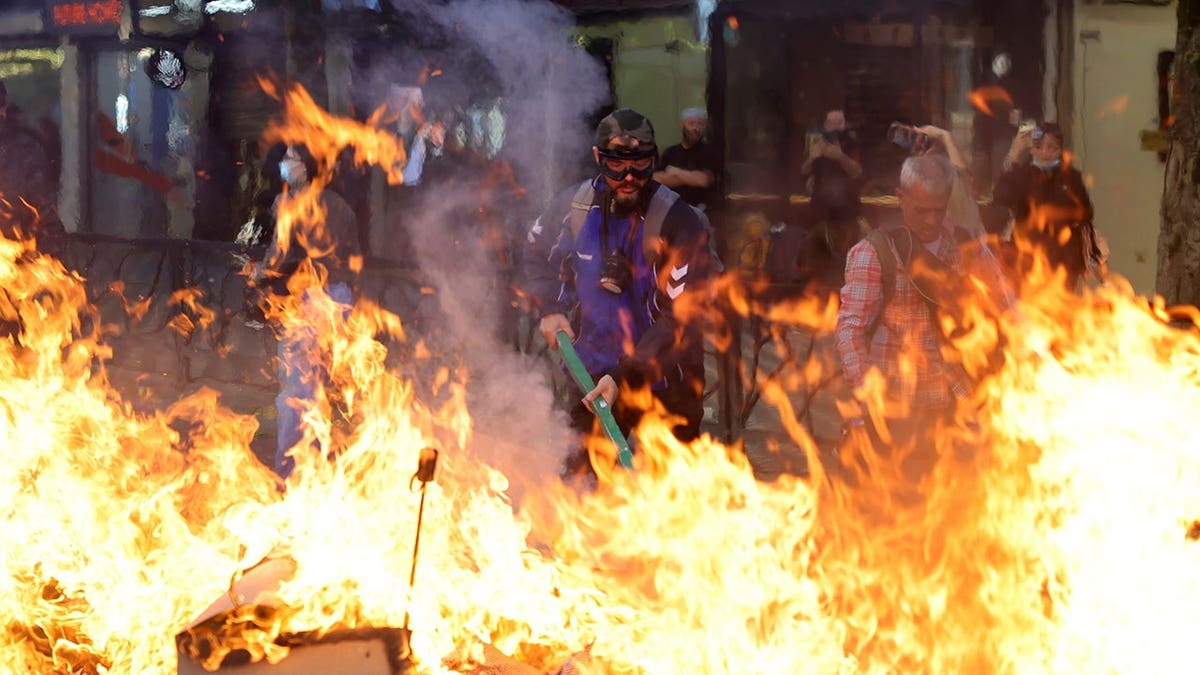
Protesters set fire to a barricade during clashes near the Education Ministry in Tirana, Albania, on Tuesday, Oct. 13, 2026. (Hameraldi Agolli/AP)
Rama won a fourth term as prime minister last year after campaigning on Albania’s goal of joining the European Union. The country hopes to secure membership as early as 2028, Reuters reported.
Student organizers told Reuters that their grievances include rising higher-education costs, insufficient financial assistance, poor university conditions and limited job prospects after graduation.
Rama said he was prepared to discuss the cost of education, but rejected the violence. “Attacking institutions, destroying public property and threatening public safety have nothing to do with the legitimate demands of students,” he told the news agency.
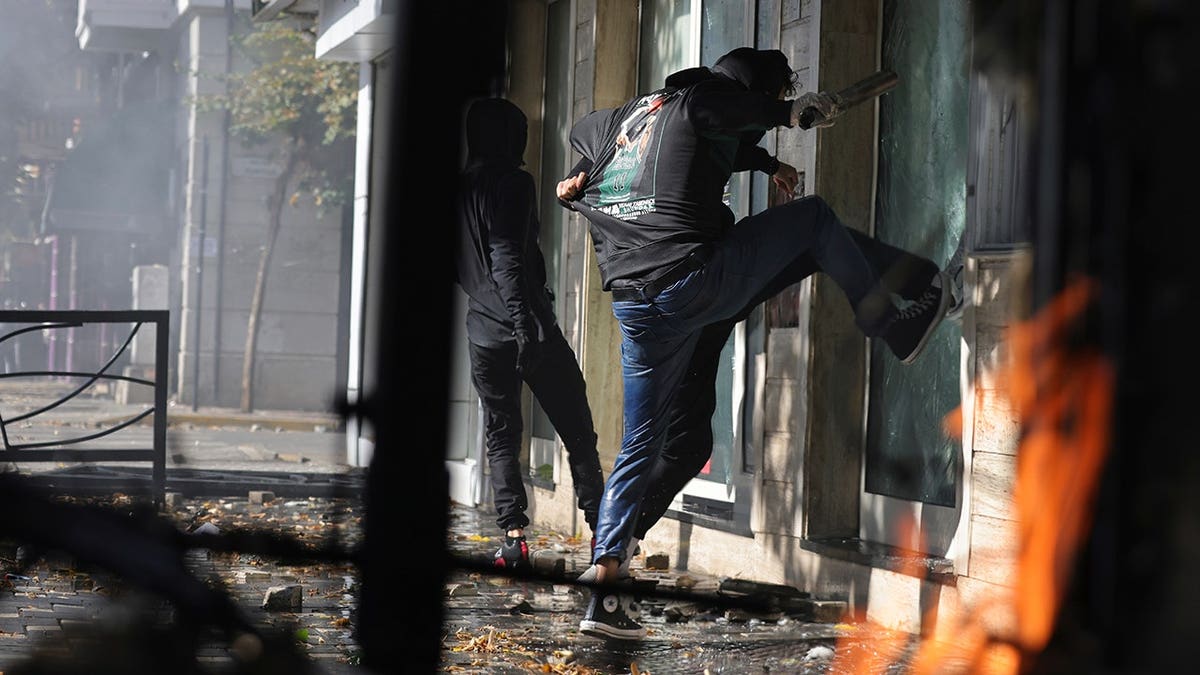
Hooded protesters smash a storefront window during clashes in Tirana, Albania, on Wednesday, Oct. 14, 2026. (Hameraldi Agolli/AP)
“Corruption must be confronted and, as the EU itself has recently reaffirmed, Albania is tackling it as never before,” Rama said. “Perhaps some forces, at home and abroad, do not want Albania to succeed as a forerunner for EU membership. But I will not allow violence to derail Albania’s European future.”